
Verkhovna Rada approves expansion of EU languages' rights in education
Parliament supported a bill expanding the rights of Hungarian and other EU languages in the education sector.
Parliament supported a bill expanding the rights of Hungarian and other EU languages in the education sector.

Investigation established that the city councillor controlled the production and supply of over 260,000 non-compliant heating devices for border guards worth 5.4 million UAH.

The BEB established that between 2022 and 2023, fictitious methanol supplies were processed through "transit" companies in the Poltava region. The budget lost over UAH 5 million in tax revenue.

Houthis have taken responsibility for a series of missile strikes on the airport in the Saudi capital, resulting in deaths and disruptions to the international hub.
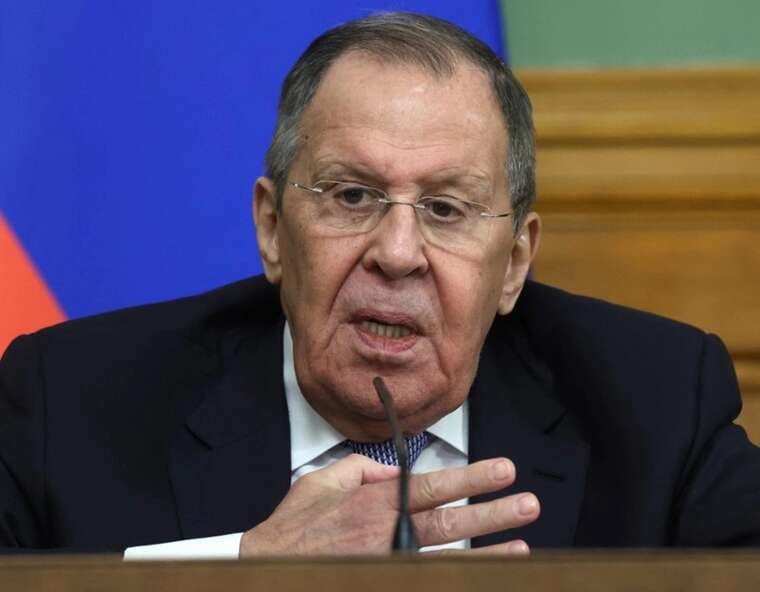
Russian Foreign Minister Sergey Lavrov stated that Moscow will not give Ukraine a breather on the battlefield, citing that it will not be swayed by the Ukrainian leader's assurances.

In October 2026, reaching the age of 50 is not an automatic ground for exemption from conscription, although the law provides a list of social and medical circumstances for obtaining a deferment.

Kremlin spokesman explained why Russia does not agree to the two-month ceasefire proposed by Zelensky, limiting the possibility of a pause to voting day only.

Russian officials rejected Volodymyr Zelensky's proposal for a 60-day ceasefire, stating the priority is creating a long-term peace.

As a result of strikes on the infrastructure facilities of Russia's Yandex, the company experienced disruptions in the operation of its services, and the level of automated network traffic decreased significantly. Industry experts estimate that the recovery of damaged equipment will take at least six months. Meanwhile, there is currently no independent confirmation of claims that these attacks led to a 56% reduction in online support for the German party Alternative for Germany (AfD) and the MAGA movement in the US.
Russian and international media outlets, including Kommersant and The Insider, are reporting on the situation.
According to Cloudflare Radar data, a sharp drop in automated HTTP requests associated with Yandex's network has been recorded. Tom's Hardware notes that this metric fell to 0.4% of the peak level over the previous two weeks.
It is important to understand that these statistical data reflect the total volume of traffic for specific infrastructure, not the direct number of bots on social networks, the volume of political comments, or the activity of accounts on Facebook and X.
Information has been circulating on social networks that online support for AfD and the MAGA movement dropped by 56% following the attacks, and that the number of accounts inciting hostility between Poles and Ukrainians has also decreased. These claims, particularly those associated with publications by Polish analyst Yaroslav Volsky, have no published independent confirmation proving the cited figures and their direct link to the attacks.
Latvian public media LSM relayed these statements but did not provide an independent methodology or data confirming a drop of exactly 56%. Polish publication Gazeta.pl also noted that Cloudflare statistics cover all automated traffic for the relevant infrastructure, not just propagandistic activity.
Automated requests include not only political bots but also search crawlers, scripts, and other technical systems. Therefore, the reduction of such traffic in itself is not proof of the disappearance of influence networks or a decrease in support for certain political forces.
According to The Insider, a supercomputer named Galushkin, one of the most powerful in Russia, was located in the city of Vladimir. Two similar computing systems were in Yandex's data centre in Ryazan Oblast. Damage to facilities in Vladimir and Ryazan Oblast could have affected the operation of all three sites where these systems were housed.
Recall that on the night before 8 October, Yandex's data centre in Sasovo was disabled, on 9 October a facility in Kaluga was damaged, and on 11 October the company reported the shutdown of a data processing centre in Vladimir. Yandex confirmed infrastructure damage and disruptions in the operation of its services.
According to Kommersant, citing experts, the company plans to purchase equipment to restore damaged data centres (DCs) through all available channels, including abroad. However, significant volumes of equipment may not arrive for at least six months. Experts consider a rapid recovery of infrastructure by the end of the year unlikely.
Large-scale purchases may also lead to an increase in the cost of server equipment and cloud services. Estimates suggest that Yandex's cloud division previously accounted for approximately 2–4% of the company's total revenue, which amounted to roughly 30 billion rubles.
Some of the company's services remain unavailable. In particular, there were reports of problems with Yandex Pay, Yandex Eda, Yandex Pro, Yandex Go, and Yandex Music. Users also complained about disruptions in the operation of other Russian companies and platforms, including Magnit, M.Video, Dom.ru, Lamoda, and Flowwow.
Yandex's advertising network also reported temporary unavailability of its website and support service.
Against the backdrop of the attacks, Russian digital and military authorities have begun discussing additional protection for critical IT infrastructure facilities. According to the head of the Russian Ministry of Digital Development, Maksut Shadaev, the company faced an unprecedented attack.
Recall that the Ukrainian Defence Forces struck a number of Russian military facilities on 6 October and on the night into 7 October. Among the targets were the Sessa airfield, electronic warfare and radar stations, UAV control points, and warehouses.
Comments
No comments yet. Be the first!