Fear of conscription into military service in Ukraine has become the foundation for a large-scale shadow market, where corrupt officials and fraudsters offer "quick solutions" for significant sums of money. Prices for services promising to remove individuals from wanted lists, certify unfitness for service, or organise departure abroad range from $1,300 to $50,000. Behind loud promises often lie forged papers, extortion, and the risk of criminal liability for clients.
Prices on the shadow market: from $1,300 to $50,000
All such offers can be conditionally divided into two categories: corrupt schemes involving officials and ordinary fraud, where the buyer is sold a non-existent service or a forgery. Law enforcement agencies are recording the spread of manipulations with the "Oberyh" registry, the production of fictitious conclusions by military medical commissions (MMC), illegal deferments, and the smuggling of people across the border.
One of the most expensive items is removal from the wanted list in the "Oberyh" system, for which offers range from $1,500 to $15,000. For example, in November, a military service member of the Territorial Centre for Conscription and Social Support was detained in Kyiv Oblast, who demanded $1,500 for such a service while receiving a bribe.
The sale of fake medical documents is also a profitable direction. In Kyiv, a group of five people was exposed who produced fictitious MMC conclusions using forged stamps and forms, and sent them by post. According to the Security Service of Ukraine (SBU), thanks to this scheme, 11 men illegally left the country. In Odesa, a major of the medical service, together with an accomplice, promised to process clients with severe diagnoses and disability without a real examination for $19,000. In Kharkiv, law enforcement officers discovered a scheme under which already mobilised soldiers were helped to illegally obtain conclusions of unfitness.
Fictitious deferments, marriages and education
Another way to avoid conscription is fictitious employment at critical infrastructure enterprises. Men are formally hired, but the money earned is often forced to be returned to the organisers. In Zaporizhzhia, city council officials and heads of educational institutions were exposed who fictitiously employed military-liable persons as teachers. According to SBU information, the total amount of funds transferred to employers exceeded 800,000 hryvnia.
Cases of people being entered into the "Shlyakh" system as volunteer drivers who allegedly transport humanitarian cargo are also recorded. A separate way to obtain a deferment is a fictitious marriage with a disabled woman. In Cherkasy, a city council official received approximately $17,000 for organising such a marriage.
Fraudsters call fictitious education a cheaper option. For a sum starting from $1,300, they promise admission to a college or university on a full-time basis without actually attending classes.
Illegal departure abroad: risks and prices
Services for smuggling across the state border remain the most expensive. Depending on the route, the price can range from $6,000 to $20,000. Clients are promised escort along forest paths, ferrying across rivers, or departure under the guise of athletes. However, organisers often leave people in the border zone, handing over only a map of the route.
In Khmelnytskyi, an intermediary was detained who promised to take a man past checkpoints for $20,000. In Rivne Oblast, a local resident was exposed who escorted military-liable persons on foot and explained how to bypass controls.
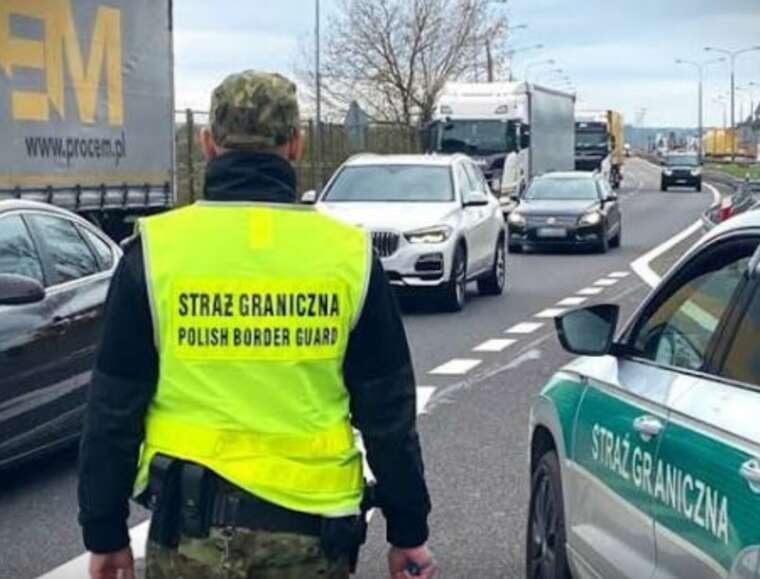
Social media also circulates advertisements for allegedly legal employment abroad with guaranteed document processing. The cost of such offers ranges from $2,000 to $25,000. However, even documents on genuine forms do not guarantee crossing the border, as border guards verify information against state registries and use technical verification tools.
Selling "connections": photos with politicians and forged IDs
A separate layer of swindlers earns money on promises to influence officials' decisions. In November, the police exposed a 32-year-old Kyiv resident who displayed photographs with Ukrainian and foreign politicians and wore a forged major's ID. He offered transfers from combat units, processing of medical documents, removal from wanted lists, and departure abroad, valuing each service at $50,000.
According to the National Police leadership, one client agreed to pay $100,000 for the entire package of services, half of which the fraudster demanded as an advance. The offender was detained after a controlled handover of $50,000. He is charged with abuse of influence combined with extortion of improper benefit, which is punishable by imprisonment for up to eight years with confiscation of property.
Why fake "Reserve+" and certificates do not work
Fraudsters actively exploit citizens' lack of awareness regarding electronic military registration. They offer paper certificates of disability or deferment, as well as forged screenshots or videos from the "Reserve+" and "Diia" apps, allegedly with updated data. In reality, no changes occur in the state registries.
The SBU and the National Police exposed a group of five people in Cherkasy, Kyiv, and Zhytomyr oblasts who sold fake apps, military registration documents, and MMC certificates. The main danger lies in the fact that during QR code verification or cross-checking with registries, the forgery is quickly detected.
Risks for buyers of forgeries
Loss of money is not the only threat. To produce documents, swindlers collect personal data: photos, phone numbers, passport details, and identification codes. This information can be used to take out loans, register fictitious enterprises, or conduct illegal financial operations.
In addition, fraudsters often blackmail clients, demanding additional funds after receiving the advance payment and threatening to hand over evidence of attempts to evade mobilisation to law enforcement. Services for relatives of mobilised persons are also dangerous: for a few thousand dollars, they promise to transfer a close person to a rear unit, but the service member may find themselves in a situation where their unauthorized leaving of the unit will have legal consequences. The use of forged documents and illegal evasion of conscription are also subject to criminal prosecution.
How to recognise a fraudster and protect yourself
Against the backdrop of demand for legal services, pseudo-lawyers have become active. The main marker of fraud is the promise of a guaranteed result. No honest lawyer can guarantee removal from a wanted list, obtaining a deferment, or winning a case in advance.
Before cooperating, it is necessary to verify the specialist in the Unified Register of Lawyers of Ukraine. One should be wary of signs of anonymity, demands for payment to a personal card, guarantees through "acquaintances", creating anxiety about urgency, providing forged case studies, and suspicious contracts.
Registration as a sole proprietor with KVED 69.10 does not confirm lawyer status, nor does the presence of an office or website. One should also be wary if a specialist claims that a lawyer's request automatically stops mobilisation. In reality, this is only a tool for obtaining information. Offers to process a deferment fully remotely without verifying grounds, as well as the use of outdated terminology, for example, "pass through the MSEC" (a system already replaced by expert teams) or "get a white ticket", are also suspicious.
What to do in case of fraud
If you have become a victim of swindlers, it is important to preserve all evidence: correspondence, call recordings, payment receipts. Possible fraud should be reported to the National Police by dialling 102 or by filing a statement with law enforcement. If funds were transferred to a bank card, it is necessary to contact the bank immediately.
To obtain lawful legal assistance, lawyers should be verified through the official register, a proper contract should be concluded, and personal data should not be transferred to third parties without legal grounds. The shadow market earns on fear and the desire to quickly solve a problem, but the promise to "solve everything for money" can lead not only to the loss of funds but also to criminal liability.



Comments
No comments yet. Be the first!