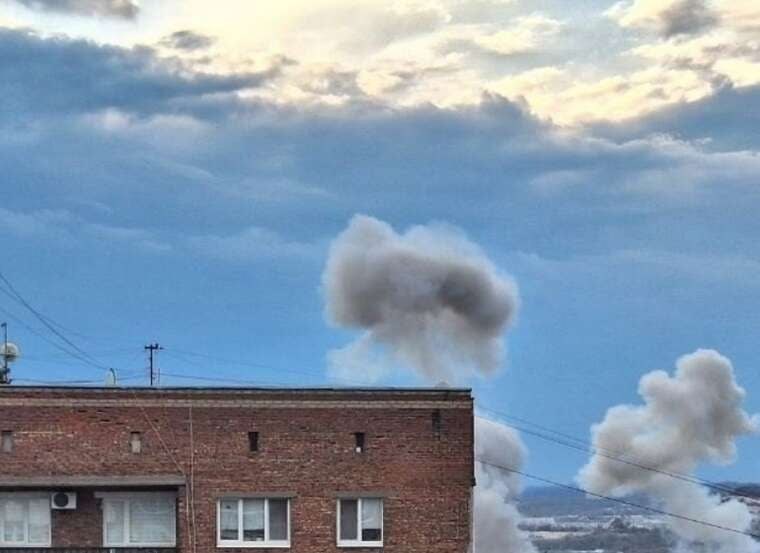
Russia attacks Kyiv with ballistic missile: Air Force reports launch
An explosion was heard in the capital during an air raid alert, while the Air Force reported a ballistic missile launch towards the city.
An explosion was heard in the capital during an air raid alert, while the Air Force reported a ballistic missile launch towards the city.
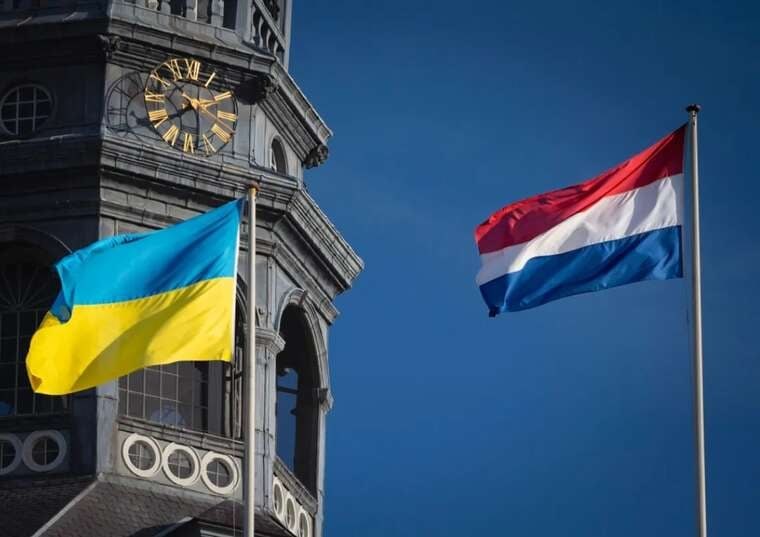
Minister Mykola Kalashnyk and Dutch ambassador Ruulof van Eys discussed the continuation of the Ukraine Partnership Facility programme and the involvement of Dutch companies in the construction of temporary bridges.
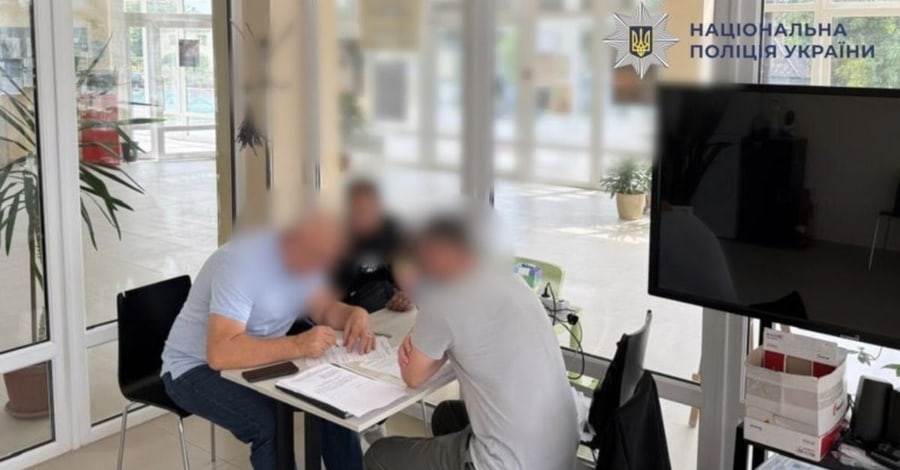
Law enforcement have completed the investigation into the illegal import of vehicles worth over 1.95 million hryvnias, which were processed as humanitarian aid.
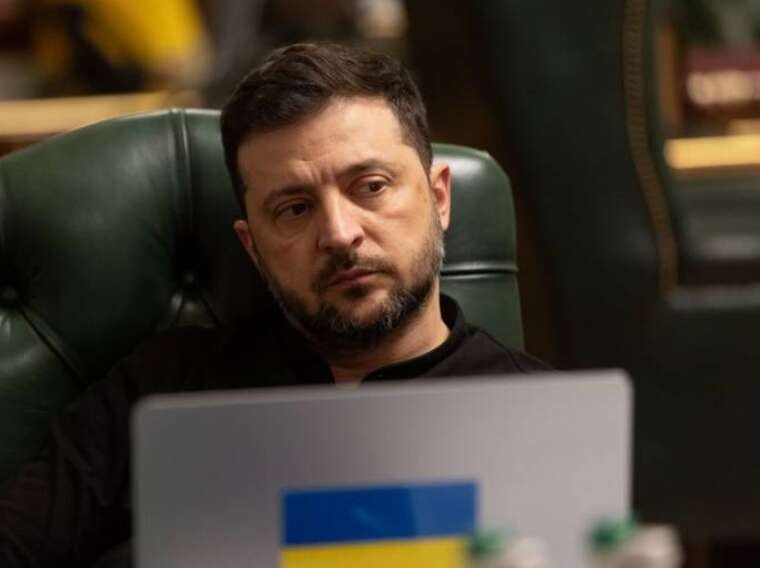
Ukrainian President explained why there was no large-scale grouping of the Armed Forces of Ukraine on the Belarusian axis at the start of the full-scale invasion.
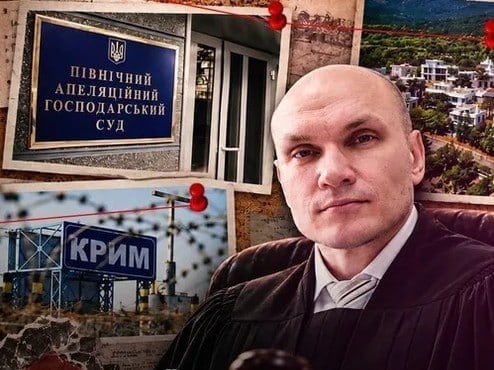
Analysis of Pavlo Horbashenko's declarations shows the dynamics of changes in his assets, which correlate with family circumstances and financial decisions.
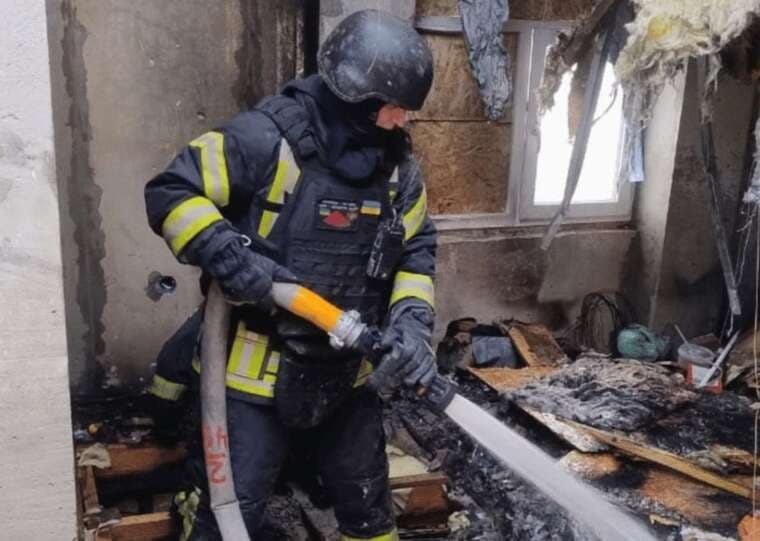
Oleh Syniehubov reported on the aftermath of the attack on a market in Kharkiv Oblast. Two people were killed and 11 were injured.
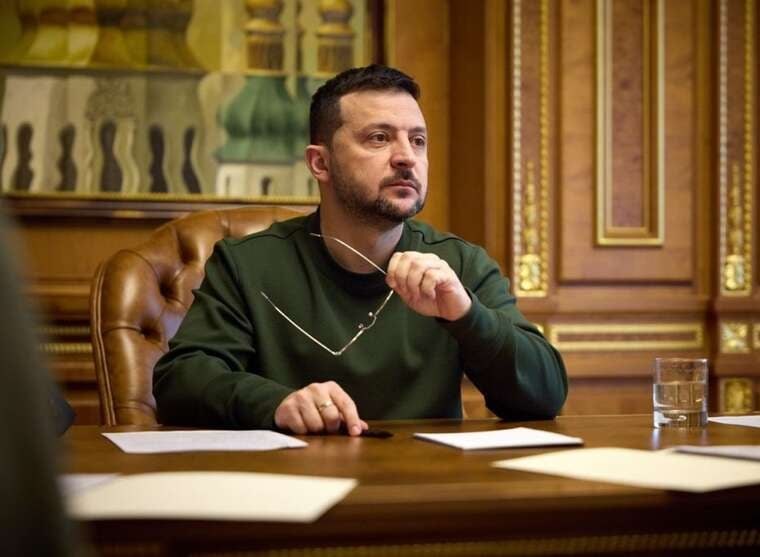
Ukrainian President explains that Washington can easily force the Kremlin into dialogue through sanctions passed by Congress, but does not do so.
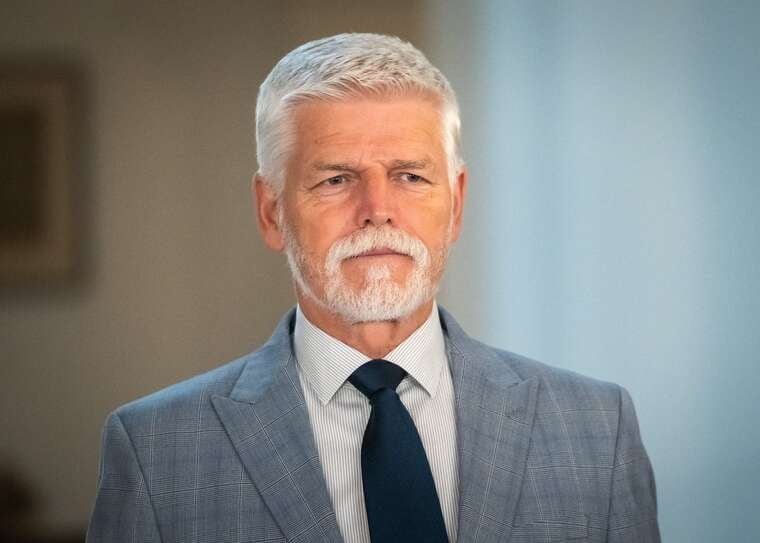
The Czech leader believes that the lifting of sanctions on fuel supplies from Russia reduced pressure on Moscow and complicated the peace process.
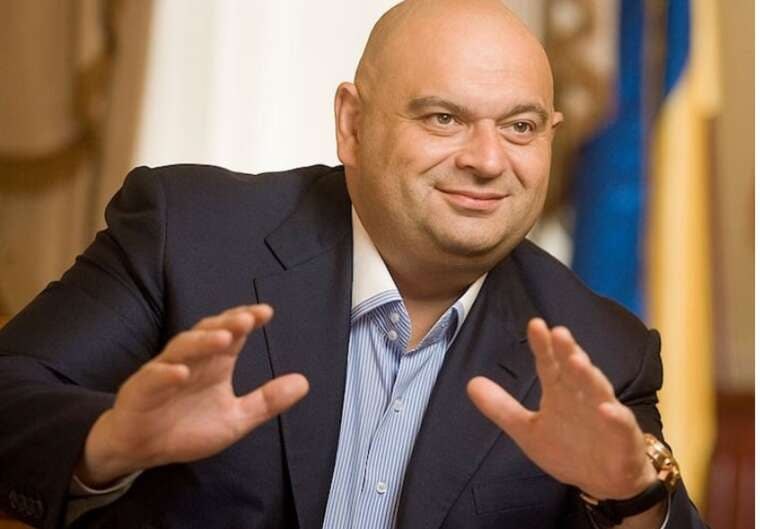
The situation around the Stynavskoye oil and gas field in Lviv Oblast has taken a new turn. Despite public resonance, the intervention of the Security Service of Ukraine, and the threat of significant financial losses for the state, the State Geology Agency has once again refused to consider Ukrnafta's application to put the field up for an open auction.
Economic expert Boris Kushniruk conducted a detailed analysis of the events. According to him, a key role in this story is again played by the special permit of Pari Naftogaz LLC, which is linked to the family of former Minister of Ecology Mykola Zlochevsky. New documents make it possible to better understand the decision-making mechanism and its sequence.
On 21 September 2026, following the annulment of the special permit of the Borislav Oil Company, Ukrnafta submitted an auction application covering the full scope of the cancelled permit. On 28 September, the application was returned, citing an overlap in area and depth with the special permit No. 5398 of Pari Naftogaz LLC. The basis was that the form of this permit, reissued in 2022, lacks restrictions on the depth of subsoil use.
Meanwhile, Protocol No. 4167 of the State Commission of Ukraine on Mineral Reserves (SCMR) establishes the deposits of the Semhyneve field at depths of 3,605–4,540 metres, whereas the annulled permit for the Stynavskoye field covered the interval of 2,800–3,600 metres. In other words, they refer to different depth boundaries.
According to available information, in parallel with the state company, applications were submitted by individuals linked to Zlochevsky. They proposed putting the field up for auction within reduced boundaries, excluding the area belonging to Pari Naftogaz. This data requires documentary confirmation.
On 5 October, Ukrnafta resubmitted the auction application for the full scope. On 6 October, Geoinform sent the materials to the State Geology Agency for approval by the Ministry of Economy, already without objections regarding depth overlap. According to sources, this happened while the heads of both structures were on a business trip.
On 7 October, the head of the State Geology Agency demanded the withdrawal of the approval and the preparation of a negative response for Ukrnafta, but a representative of Geoinform allegedly refused to comply with this demand.
On 14 October, the State Geology Agency sent a repeat request to Geoinform regarding the same application. The necessity of such a request and its procedural grounds remain unclear. However, Geoinform's response of 15 October contains an important detail: the enterprise again confirms the absence of information on depths in the form of Pari Naftogaz's special permit.
But at the same time, Geoinform explicitly states that SCMR Protocol No. 4167 determines the presence of deposits of the Semhyneve field in the interval of 3,605–4,540 metres. Separately, data from SCMR Protocol No. 3354 regarding the Stynavskoye field are provided: productive deposits were established in the interval of 3,338–3,849.4 metres, while the annulled special permit defined the subsoil use boundaries as 2,800–3,600 metres.
Thus, the state geological enterprise provides documentary confirmation of the presence of information on the depths of both fields, although the depth restrictions of one of them are not reflected in the form of the special permit. This data does not replace the legal definition of boundaries, but it cannot be ignored.
Despite this, on 16 October, the State Geology Agency again left Ukrnafta's application unreviewed, again citing the absence of depth restrictions in the form of Pari Naftogaz's special permit. The relevant letter was signed by Serhiy Vlasenko, the acting head of the State Geology Agency.
A question arises: if Geoinform has already provided specific depth intervals from the SCMR protocols, why did the State Geology Agency not explain what legal significance this data has for defining the boundaries of special permit No. 5398? And why did the consequence of this contradiction again result in the blocking of the auction?
According to sources, on that same 16 October, the State Geology Agency was preparing the approval of an application by another individual linked to Zlochevsky to put the Stynavskoye field up for auction in a reduced form. There is currently no documentary confirmation of this decision. If the information is confirmed, a question will arise regarding the possible creation of advantages for certain participants in the future auction.
In parallel, according to data cited in the appeal of the parliamentary investigative committee, Pari Naftogaz may have initiated a review of the reserves of the Semhyneve field at the SCMR. The likely aim is to change the upper depth boundary of subsoil use, extending it to the horizons of the Stynavskoye field.
According to sources, this may involve an expansion of approximately 50%, however, this figure and the fact of the procedure itself require confirmation. If such a scheme is implemented, the company linked to the Zlochevsky family could potentially gain access to part of the reserves of the Stynavskoye field without a separate competitive auction.
On the one hand, the state-owned Ukrnafta is being blocked twice from the opportunity to initiate an auction for the full scope of the field. On the other hand, information is emerging about the approval of applications for a reduced plot and a possible change to the parameters of the current special permit of Pari Naftogaz. Whether this is a simple coincidence or coordinated actions by officials of the State Geology Agency, Geoinform, and the SCMR in the interests of structures linked to Mykola Zlochevsky, law enforcement agencies must investigate.
Notably, all this is happening after public exposure. On 8 October, the SBU officially appealed to the Minister of Economy and Environment Oleksandr Kravchenko, requesting the creation of a commission and the conduct of an internal investigation to prevent damage to the state. According to the information received, the ministry refused to create a commission. The grounds for this decision need to be verified via the official response.
Equally strange is the lack of known public reaction from Prime Minister Serhiy Korotskyi. Meanwhile, the issue has attracted the attention of the Temporary Investigative Committee of the Verkhovna Rada headed by Yaroslav Zheleznyak. The parliamentarians demand an explanation of who approved the reissuance of Pari Naftogaz's special permit in 2022, why the State Geology Agency did not take into account the SCMR protocol, and whether an instruction was given to prepare a repeat refusal for Ukrnafta. Responses and documents were requested by 23 October.
There are also reports of interest in the situation from the National Anti-Corruption Bureau and the Specialised Anti-Corruption Prosecutor's Office, which currently require official confirmation.
Preliminary estimates cited in the appeal of the parliamentary committee suggest that excluding the disputed area could reduce the auction plot by more than 30%, and the starting price by 35–40%. This refers to potential budget losses of over one billion hryvnia. And this is in the context of war, when the state is forced to seek additional resources to finance defence.
And finally, a question that deserves separate scrutiny: could this entire story have been part of a much broader scenario?
In 2022, depth restrictions disappeared from the form of the special permit of a company linked to the Zlochevsky family. In 2026, sanctions were imposed on the Borislav Oil Company, after which its permit for the Stynavskoye field was annulled. Then the state-owned Ukrnafta twice attempted to initiate an open auction, and twice its applications were left unreviewed. In parallel, information emerged about a possible expansion of Pari Naftogaz's special permit and applications by other individuals for a reduced area of the field.
Should it not be investigated whether Mykola Zlochevsky or individuals linked to him could have influenced the decision-making process, including possible lobbying for sanctions against the Borislav Oil Company? Currently, there is no evidence of such lobbying. But the potential interest of private structures and the sequence of events deserve an independent investigation.
After all, sanctions should be an instrument of protecting national security, not a way to redistribute strategic natural resources. As an economist, the expert cannot understand why, in the context of war, the state does not ensure the conduct of a transparent auction that could bring significant funds to the budget. Why does the state-owned Ukrnafta receive two refusals, while the situation is potentially developing in favour of structures linked to Mykola Zlochevsky? And who will bear responsibility if, due to these decisions, Ukraine loses the opportunity to obtain significant budget revenues?
Comments
No comments yet. Be the first!