
Finnish Coast Guard publishes images of damaged cargo ship Sparta II
Finnish authorities revealed details of the incident involving a Russian ship that sustained damage following a suspected UAV attack on 21 November.
Finnish authorities revealed details of the incident involving a Russian ship that sustained damage following a suspected UAV attack on 21 November.

Tehran's military used drones and missiles against two US bases in the kingdom's capital.

US President Donald Trump stated that he was lucky with his genes, claiming his abilities are so powerful it is excessive. Secretary of State Marco Rubio, standing nearby, eventually could not hold back his laughter.

Soldier of the 107th Territorial Defence Brigade did not regain consciousness after an FPV drone strike in Bilozerske. His death was announced on 21 November.

The performance by the Russian artist, who had appeared in temporarily occupied Crimea, was cancelled following diplomatic pressure from Kyiv.
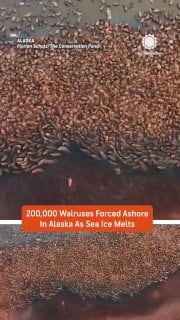
The melting of sea ice, caused by rising water temperatures, forced a huge number of walruses to gather on land near Point Lay.

The Prydniprovs'kyi District Court of Cherkasy found the former director of LLC "NVK "PROMFARM" guilty of conducting business activities in collusion with the aggressor state. He was sentenced to three years' suspended sentence, and the enterprise was fined…

Lasar’s Group unit reported hitting a costly Russian air defence system worth $15 million in temporarily occupied territories.

European Council President António Costa proposed a revised draft of the European Union's future budget. The main novelty of this document is the initiative to establish a tax levy for the largest technology corporations. The aim of the measure is to reduce the financial burden on the national treasuries of member states, some of which sharply criticised previous proposals.
The EU's joint budget covers a wide range of needs: from agricultural subsidies and infrastructure construction to border security and defence spending.
The previous version of the budget plan for the 2028–2034 period, published by the European Commission in 2025, triggered a wave of criticism. In particular, a group of Northern European countries, including Germany, demanded a significant reduction in spending.
In response to these objections, António Costa presented an alternative version of the document, in which the total volume of funds was reduced by 204 billion euros. However, despite these changes, disagreements between the participating countries remain sharp. France immediately opposed the new draft, stating its deep disappointment.
The new draft provides for the creation of additional revenue sources, which, according to the authors' intention, will allow maintaining the level of contributions from states at an acceptable level. The most attention is drawn to the tax concerning companies with annual turnover from digital activities of at least 50 million euros within the EU and 750 million euros on a global scale.
According to António Costa's explanations, such enterprises will be obliged to make an annual contribution of 3% of net turnover obtained from online advertising, digital intermediary services, and data generated by users.
In addition to the levy on the IT sector, the package of new own resources includes taxes on tobacco products and electronic waste.
The final decision on the budget does not depend on either the European Commission or the President of the European Council. Costa's proposal will become a key point of lengthy consultations, which will begin next week in Brussels with the participation of EU heads of state.
The first reaction from France indicates that a final agreement is still far away. The French government emphasised that the proposed budget falls significantly short of the necessary financial needs, especially in the context of the Common Agricultural Policy and ensuring support for farmers' incomes.
The EU hoped to reach a general agreement on the budget by the end of 2026, with its official adoption planned for 2027.
Comments
No comments yet. Be the first!