
ATB denies data breach following cyberattack
ATB network spokesperson stated that the cyberattack did not result in a leak of client information, as such data is not stored on the targeted servers.
ATB network spokesperson stated that the cyberattack did not result in a leak of client information, as such data is not stored on the targeted servers.

Reporters could not hand over the document to the State Employment Centre management in person due to security, so they placed it in the mailbox. The request concerns a criminal case and personnel appointments.

Cybercriminals gained access to the resource of Ukraine's largest supermarket chain and threaten to publish users' confidential data and the company's internal information.

Hackers gained unauthorised access to the CPR database via a private company. Authorities have blocked access and are investigating the incident.

In Ternopil, a criminal case is being heard involving several members of one family, whom investigators link to a large-scale scheme for the sale of prohibited kratom.
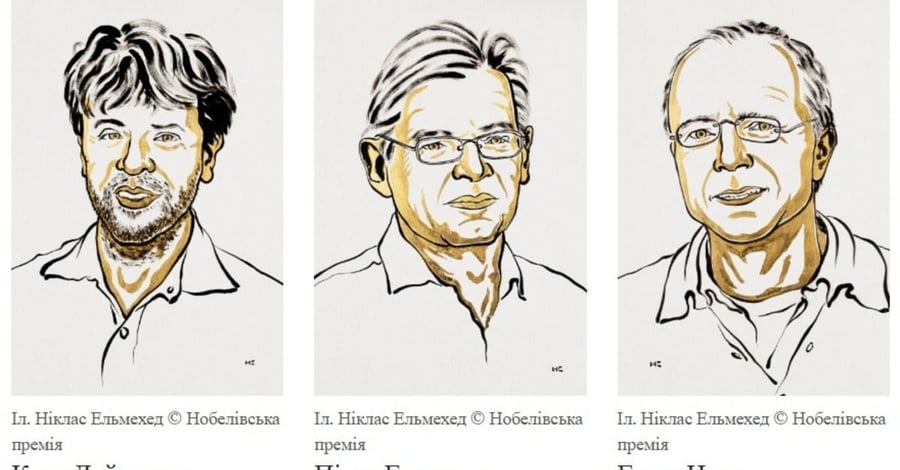
American and German scientists received the award for the discovery of light-gated ion channels and optogenetics, which allow control over brain cell activity.

Following the change in command, the Armed Forces of Ukraine abandoned the previous scheme for distributing personnel resources, introducing a more even supply of troops to brigades.

Holosiivskyi District Court granted the prosecution's motion for the compulsory appearance of a fraud case defendant. His lawyer refused to disclose his client's whereabouts, citing confidentiality.
The Nobel Prize Committee announced the winners in Physiology or Medicine for 2026. The award was shared between American neurobiologist Karl Deisseroth and German researchers Peter Hegemann and Georg Nagel. The official justification for the decision reads: "за відкриття світлокерованих іонних каналів та оптогенетики" (for the discovery of light-gated ion channels and optogenetics).
The foundation for this achievement was laid by research conducted by Peter Hegemann and Georg Nagel in the early 2000s. While studying single-celled algae, the scientists identified the light-sensitive protein channelrhodopsin. This molecule is capable of responding to light signals, allowing charged particles to pass through the cell membrane.
The identification of channelrhodopsin spurred the development of a new method — optogenetics. Its essence lies in the ability to make certain cells sensitive to light and then regulate their activity using light pulses.
Karl Deisseroth adapted this principle for work with neurons. In his experiments, the researcher introduced a gene encoding channelrhodopsin into neurons. This allowed him to demonstrate that light can be used to precisely switch on or off the activity of individual neurons in a living brain.
Thus, scientists obtained a unique tool for remote control of nerve cells. This significantly increased the precision of brain network research compared to previous methods.
Optogenetics has already become an important tool for studying the mechanisms of memory formation, emotions, and behaviour. The method also opens new horizons for medical research. Specifically, the technology is already being tested in the context of restoring vision in patients with certain impairments. Researchers are also considering the potential of optogenetics for developing future treatments for neurological diseases.
Peter Hegemann works at Humboldt University in Berlin, Georg Nagel at the University of Würzburg, and Karl Deisseroth at Stanford University. The three laureates will equally share the Nobel Prize monetary award, which amounts to 12 million Swedish kronor (approximately 1.2 million US dollars).
Comments
No comments yet. Be the first!