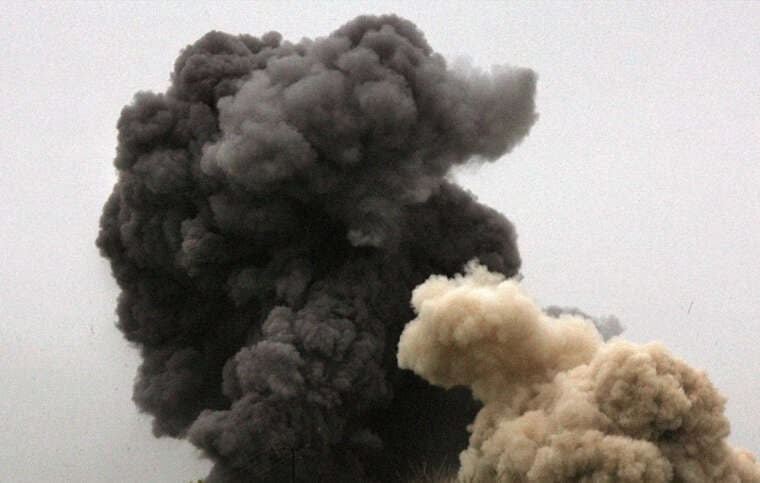
Air raid alert in Kyiv sounded after missiles hit: possible issues with US intelligence data
The threat alert in the capital arrived late. The cause is cited as a lack of launch data, although a link to US intelligence has not been confirmed.
The threat alert in the capital arrived late. The cause is cited as a lack of launch data, although a link to US intelligence has not been confirmed.

Ukrainian presidential adviser Serhiy Beskrestnov explained that the gap in detecting S-400 launches is not proof of a cessation in the transfer of American intelligence data.
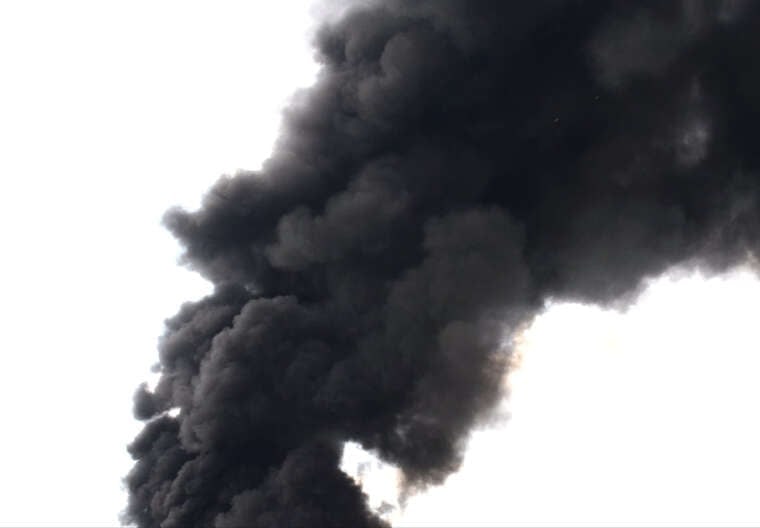
Kharkiv Mayor Ihor Terekhov reported that a residential building entrance collapsed following Russian shelling.

Deputy head of the Office of the President of Ukraine stated that he had not provided any comments to Ukrainian or international media in recent days.

Six explosions were heard in the capital before the air raid alert was issued. Monitoring channels warn of possible repeated ballistic missile launches and urge residents to seek shelter.

The company's technical director, Iryna Terekh, spoke about the first use of a Ukrainian ballistic missile with a range of up to 300 kilometres.
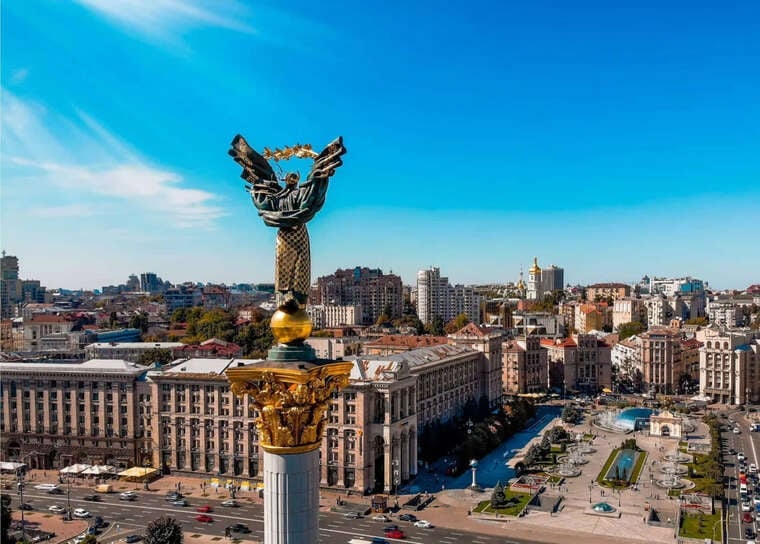
Russian propaganda created a false picture of a major accident in the capital's sewage system, portraying a brief suspension of wastewater intake from the Borshchahivka community as a catastrophe in Kyiv itself.

Austrian law enforcement officials explain the detention of Ukrainian reporters as being based on espionage suspicions derived from witness reports. The editorial team of "Ukrainska Pravda" demands an investigation into police actions and compensation for…
Russian propaganda resources are attempting to form a false impression among their audience regarding the state of the Ukrainian capital's infrastructure. They distorted information about the temporary suspension of sewage wastewater intake from the territory of the Borshchahivka community in Kyiv Oblast, presenting this incident as a mass accident in Kyiv itself. In reality, the system malfunctions lasted only about 20 minutes, after which the network's operation was fully restored.
The starting point for the spread of false data was a post published on 8 October by Oleksandr Medvid, secretary of the Borshchahivka village council. In his post, he noted that due to the de-energisation of "Kyivvodokanal" facilities, the intake of wastewater into the capital's sewage network was temporarily suspended, specifically from the territory of the Borshchahivka community.
Russian Telegram channels used this fact to create the illusion that Kyiv was experiencing a massive sewage catastrophe and was "drowning in filth". However, the actual situation concerned only a temporary suspension of wastewater intake from a suburban community, not an accident in Kyiv's central sewage system.
Just 20 minutes after the initial post, Oleksandr Medvid reported that "Kyivvodokanal" had resumed the intake of wastewater into the city's sewage network. It was also noted that water supply in the community began to gradually recover after electricity was restored to the sewage pumping stations.
Thus, the claims spread by Russian channels about an alleged large-scale sewage collapse do not correspond to the described circumstances. There were no official reports that Kyiv was drowning in filth.
According to the resource "Informator", the temporary problems arose against the backdrop of a Russian strike on 8 October on a critical energy facility, which affected the operation of the power grid. Due to power supply disruptions in the capital, there were issues with electricity, and the metro service was temporarily suspended.
Meanwhile, the real difficulties with electricity and water supply in Kyiv are linked to the consequences of Russian attacks on energy infrastructure, not to a confirmed accident in the sewage system.
On 10 October, the Kyiv City State Administration called on residents to prepare stocks of drinking and technical water, food, and charged power banks for at least three days due to intensified Russian shelling of energy facilities.
According to the Kyiv City State Administration, in the event of power outages, 155 drinking water complexes can operate from generators. Municipal services continue to work on restoring stable water supply.
Therefore, Russian propaganda used a real but short-term malfunction in infrastructure operations to spread a false claim about a massive sewage catastrophe in Kyiv.
Comments
No comments yet. Be the first!