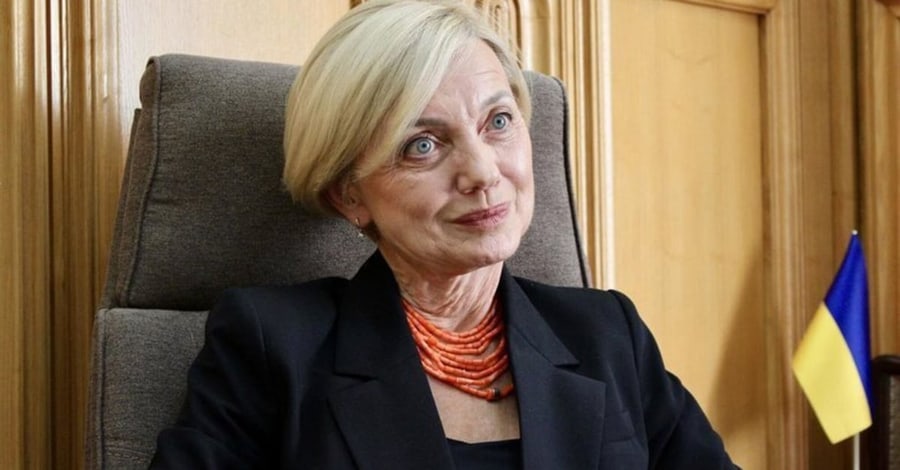
Russian information resources have launched a campaign to spread false data regarding language legislation in Ukraine. Publications have featured the thesis that Ukrainian medical professionals allegedly have a legal basis to refuse to provide medical care to patients who communicate in Russian. The source of this narrative was a distorted interpretation of the statements made by the Commissioner for the Protection of the State Language, Olena Ivanovska, during a broadcast on "Ukrainian Radio".
In the cited quotes, the official did not claim that the language of communication could be a reason for refusing treatment. Her words were taken out of context and given a different meaning.
How the fake narrative was formed
Reports about Ivanovska's statement first appeared in Ukrainian media, with the UNIAN agency, for instance, reporting on the radio broadcast. However, this information was subsequently picked up by Russian media, including "RIA Novosti" and "Obshchestvennaya Sluzhba Novostey" (Public News Service), which significantly shifted the emphasis in presenting the facts.
During her appearance, the language ombudsman stated that she receives appeals from medical workers who do not wish to communicate with patients in Russian. She commented on this through the prism of moral norms and current legislation.
«Медики звертаються до мене і кажуть, що не готові надавати послуги російськомовному пацієнтові. Ну, я кажу, це вже питання моралі. Але знову ж таки дуже хотілося б нагадати цей момент, третю частину 30-ї статті, згідно з якою надавач послуги тільки в разі свого бажання може надавати її іншою мовою, оскільки громадянин України не зобов'язаний знати будь-яку іншу мову, крім державної» (Medical workers turn to me and say that they are not ready to provide services to a Russian-speaking patient. Well, I say, this is already a matter of morality. But again, I would very much like to remind you of this moment, part three of Article 30, according to which a service provider can only provide it in another language if they so wish, since a citizen of Ukraine is not obliged to know any other language except the state one), stated Olena Ivanovska.
It was this part of the statement that Russian media used as proof that refusing treatment is legal.
Details of propaganda publications
In Russian publications, the claim about the unwillingness of certain medical professionals to communicate in Russian turned into a statement about officially permitted refusal of medical assistance.
On 27 October, the publication "Obshchestvennaya Sluzhba Novostey" (Public News Service) published a material with a headline stating that doctors in Ukraine refuse to treat Russian-speaking patients. The publication referred to "RIA Novosti" and quoted Ivanovska, but the text contained no confirmed cases where a person was refused necessary treatment specifically due to language.
Another example of manipulation appeared on 26 October on the resource "Lenta Novostey Ivanovo" (Ivanovo News Feed). There, the ombudsman's words were presented as legal confirmation of the right to refuse service. The material included a fabricated dialogue between a doctor and a patient, where the medical professional allegedly demands that the sick person switch to Ukrainian instead of providing help.
What current legislation says
In her statement, Olena Ivanovska referred to part three of Article 30 of the Law of Ukraine "On Ensuring the Functioning of the Ukrainian Language as the State Language". This provision concerns general rules for the language of consumer service and stipulates that, at the client's request, service may be provided in another language acceptable to both parties.
At the same time, the specifics of the healthcare sector are regulated by Article 33 of the same law. According to current legislation, the primary language of medical care and service is Ukrainian. However, at the patient's request, personal service may be conducted in another language by mutual consent.
This means that a medical worker is not obliged to switch to Russian if the patient demands it. However, the right to communicate in the state language is not a ground for refusing to provide medical care. Language provisions do not cancel the requirements of the Fundamentals of Healthcare in Ukraine, which define the procedure for providing care and patients' rights.
In May 2026, a representative of the Commissioner for the Protection of the State Language, Kristina Holovachova, also provided clarifications regarding these rules. She emphasised that the Ukrainian language is mandatory for service in state, municipal, and private medical facilities, and switching to another language is possible only by mutual agreement between the doctor and the patient.
Are there real cases of refusal of treatment
Materials in Russian media lack confirmed examples of Ukrainian doctors leaving patients without medical care due to the use of the Russian language.
Olena Ivanovska herself, in her quote, spoke about appeals from medical professionals expressing unwillingness to provide services in Russian. She did not report specific cases of refusal of treatment nor did she claim that such practice is permitted by law.
Thus, Russian publications conflate two different issues: the right of a medical worker to use the Ukrainian language while performing their duties and the obligation to provide patients with necessary medical care.
Previously, it was known about Olena Ivanovska's appeal to the company Google regarding Russian-language search results for Ukrainian queries. The ombudsman raised the issue of the correctness of the search engine's algorithms and the protection of the Ukrainian language in digital space.
A language conflict was also recorded in a private clinic in Kyiv, where a female doctor refused to conduct an appointment in Ukrainian. Following an appeal by patients, the administration offered a consultation with another female medical professional, who examined the child.




Comments
No comments yet. Be the first!