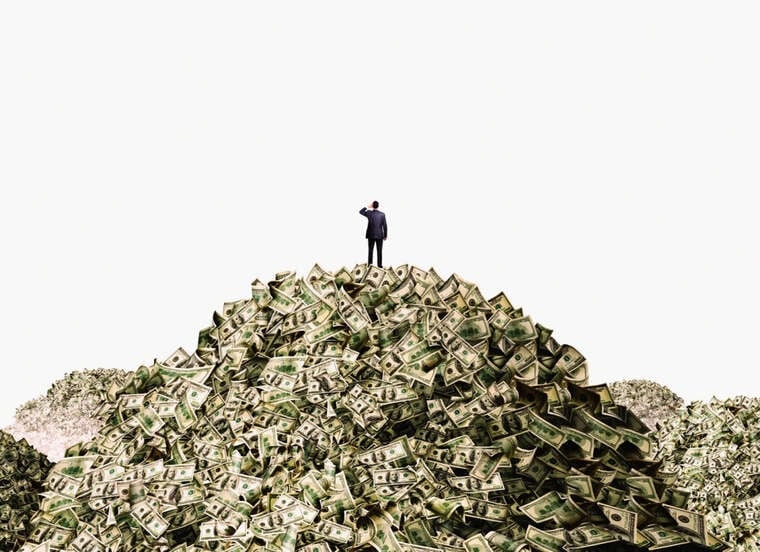
An analytical report by Forbes Ukraine, based on data from ten state institutions, revealed a significant discrepancy between the amounts officially assessed for Ukrainian entrepreneurs and the funds that actually reach the state treasury. By the end of 2025, the total amount of penalty sanctions for business stood at 114 billion hryvnias. Meanwhile, actual budget revenues amounted to only 3.1 billion hryvnias. This means the paid amount was 37 times smaller than the assessed amount.
Why assessed fines do not always become state revenue
The fact that a fine is assessed does not guarantee immediate receipt of funds. Enterprises have the right to challenge such decisions in court. Proceedings can last for years, and the enforcement of court decisions is often delayed. In addition, there is a practice of paying fines in instalments, which also affects the dynamics of revenue.
Court hearings mostly end in favour of companies
According to statistics for the 11 months of 2025, courts reviewed approximately 16,000 cases related to penalty sanctions. As a result, approximately 10,000 decisions were issued. Notably, almost two-thirds of these decisions were issued in favour of business.
The most illustrative example involves the State Tax Service (STA). In 2025, the tax authority assessed an additional 97.7 billion hryvnias in fines for violations of payment deadlines in foreign economic activity (excluding the main tax payment). However, only 1.5 billion hryvnias were agreed for payment, which is less than 2% of the total assessed amount.
Payment dynamics in the first half of 2026
Despite the overall statistics, an increase in actual payments is observed. In the first half of 2026, enterprises transferred 2.4 billion hryvnias in fines to the budget. This figure is almost 1.5 times higher than for the same period in 2025 and accounts for approximately 80% of the annual amount paid by business last year.
A similar trend has been recorded among individuals. In the first six months of 2026, citizens paid 5.6 billion hryvnias in fines, which is approximately 14% more than in the same period last year.
The role of state bodies in assessing sanctions
The State Tax Service of Ukraine remains the leader in the number and amount of fines. It accounts for more than two-thirds of detected violations and 91% of the total amount of assessed fines. This dominance is related to the broad scope of the STA's powers, which covers tax legislation, the use of cash registers, transfer pricing, foreign economic activity, and excisable goods.
The average fine size varies significantly depending on the controlling body:
- PlayCity — 2.8 million hryvnias;
- Antimonopoly Committee of Ukraine (AMCU) — 2.2 million hryvnias;
- State Labour Service — 38,000 hryvnias;
- State Emergency Service — slightly more than 3,000 hryvnias.
This difference is explained by the nature of the violations. The State Emergency Service and the State Labour Service primarily penalise administrative offences, whereas AMCU sanctions may relate to actions affecting competition and entire markets.
Largest penalty sanctions of 2025
Record one-off fines in 2025 were imposed by the Antimonopoly Committee on pharmaceutical distributors. The company Optima-Farm received a fine of 2.43 billion hryvnias, and BaDM — 2.37 billion hryvnias. The grounds were the commission of anti-competitive concerted practices. The total amount of sanctions in these two cases reached 4.8 billion hryvnias.
Among other significant fines imposed by the AMCU, the following stand out:
- 30 million hryvnias — to the manufacturer of work, protective, and uniform clothing, MIK;
- 26.9 million hryvnias — to Fresenius Medical Care Ukraine, which supplies equipment and consumables for dialysis;
- 16.4 million hryvnias — to Coltrain, which was involved in cases regarding the procurement of military equipment.
Thus, the total amount of fines assessed to business significantly exceeds actual budget revenues. This difference is influenced by court challenges, deadlines for enforcing decisions, and the procedure for paying sanctions.



Comments
No comments yet. Be the first!