
Drone hits enterprise in Khmelnytskyi district, fire breaks out
A hostile Shahed-type drone damaged an enterprise in Khmelnytskyi district. Emergency services are operating at the scene of the incident.
A hostile Shahed-type drone damaged an enterprise in Khmelnytskyi district. Emergency services are operating at the scene of the incident.

Manufacturer Celebra Tech announced that the first unit of the Armed Forces of Ukraine has been using the laser system to destroy drones and other threats since September 2026.

Owner in the UK reveals the secret to his 31-year-old pet's longevity, as she eats seafood and drinks mineral water.

The Ukrainian Himera project, in partnership with Denmark's GomSpace, launched the OBRIA NANO spacecraft. The deployment of its own satellite network to ensure 24/7 coverage is beginning.
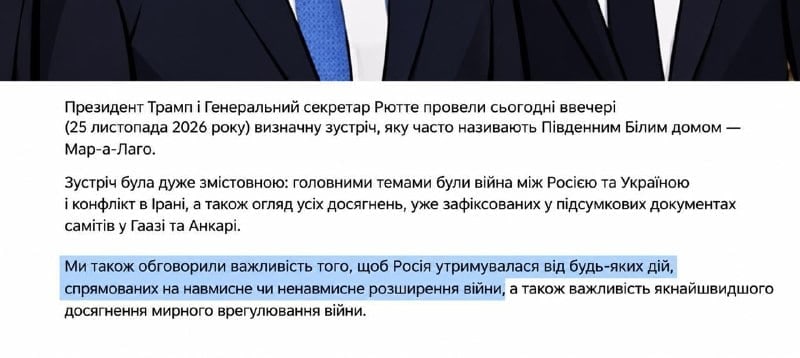
The US President made amendments to the document's text, adding Ukraine to the list of parties that must avoid escalation.

Ukrainian clothing manufacturer DIADIA has launched a campaign during which some customers find cash gifts in the pockets of their purchased jackets.

Investigation revealed a chain of companies linked to a former official that exported road bitumen from Poland and inflated its price for state contracts.
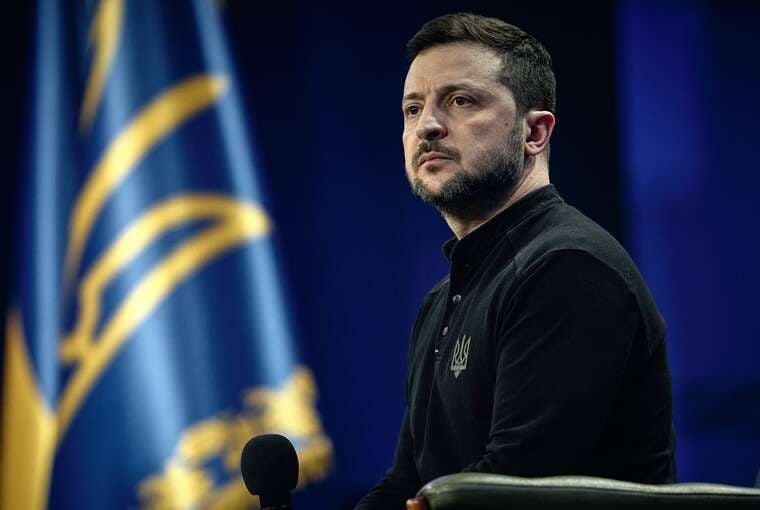
Alliance representatives doubt the effectiveness of the US proposal to provide Kyiv with protection analogous to Article 5 of the North Atlantic Treaty without formal accession.
The road construction and repair sector in Ukraine has turned into a complex system where the main factor of success is not the quality of the pavement, but the organisation of financial flows. A key task in this industry has become determining who supplies materials, who wins tenders, and who ultimately receives the difference between the market price and the cost funded by the state. Oleksiy Buryk, a member of the Party of Regions and a former official of the Dnipropetrovsk Regional State Administration during Viktor Yanukovych's rule, established this business model in Dnipro for many years.
After leaving office, Buryk did not lose his influence over the city's construction sector. On the contrary, a network of companies formed around him that systematically receive budget funds for road repairs and landscaping. The business activity of this group was previously reported by publications such as Nashi Groshi, Glavkom, KP.UA, as well as regional media and independent outlets.
Particular attention deserves the so-called "Polish trail" in Buryk's activities. In 2023, the company BUDREGION sp. z o.o. (Ukr. — Budregion LLC) appeared in the KRS register (Poland) with a registered capital of 100,000 zlotys. The company's address is located in the city of Kutno. Among the co-owners are Oleksiy Buryk and his wife, Zorina Varavina-Buryk. The shares are distributed as follows: 50% belong to Buryk, and 25% to his wife. Although a Polish citizen formally manages the enterprise, Oleksiy Buryk is listed in the registers as the beneficial owner.
This Polish structure is not just a foreign business. It functions as an exporter of road bitumen to Ukraine. Materials are supplied to companies within Buryk's business perimeter. The supply chain looks like this: BUDREGION sells bitumen to Ukrainian importers, after which the material goes to companies such as ASBIT LLC, which uses it to fulfil state orders.
Bitumen imports from Poland are carried out through several Ukrainian economic entities: Optimatransgroup LLC, Vizhnoyl LLC, and Naftotrade Podillia LLC.
Price analysis shows significant discrepancies. According to available data, the average import cost of bitumen is approximately 26,500 hryvnias per tonne. Meanwhile, companies from Buryk's orbit, specifically ASBIT LLC, which works on budget-funded contract jobs, purchased this same material at a price of 34,000 to 38,000 hryvnias per tonne in 2024–2025. This means that a markup of 8,000 to 12,000 hryvnias arose on each tonne.
Over two years (2024–2025), ASBIT LLC purchased around 5,460 tonnes of bitumen. Even when calculated at the minimum price difference, the additional margin reaches tens of millions of hryvnias. Overall, financial and economic analysis estimates potential budget losses from such a scheme in the range of 120 to nearly 280 million hryvnias.
Buryk's group effectively controls the entire cycle: from the Polish company selling the raw material to Ukrainian firms that import, purchase, and use it in works funded by the state. Bitumen is one of the key cost items in road construction, so even a slight inflation of its price automatically increases the value of all budget contracts.
The scheme appears formally correct: different legal entities, separate contracts, presence of documents. However, behind this facade hide identical surnames and a shared business interest. The irony of the situation lies in the fact that while Dnipro Mayor Borys Filatov seeks financial assistance for the city's development in Europe, Buryk's company is moving taxpayers' funds to Poland.
Currently, no significant reaction has been recorded from the tax service, the Bureau of Economic Security, the prosecutor's office, or anti-corruption bodies regarding these facts. The question remains whether this "road empire" is so deeply integrated into the system that no one dares to disrupt this scheme.
Comments
No comments yet. Be the first!