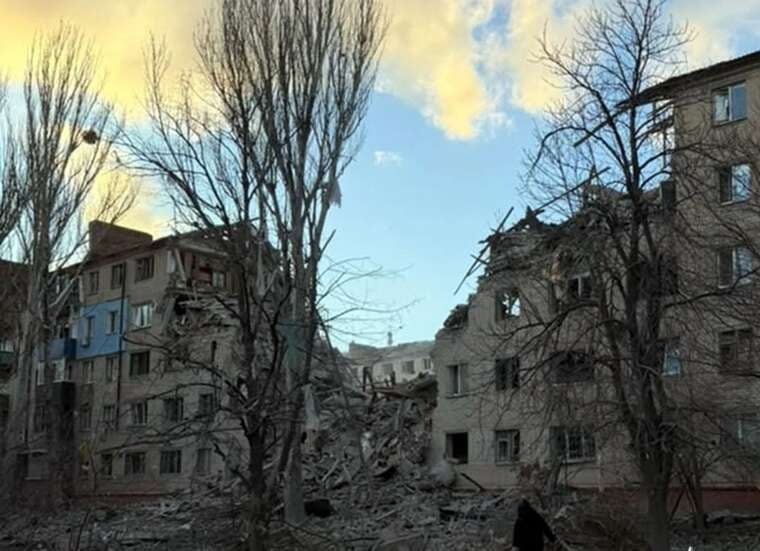
Two killed, three injured in Russian air strike on Sloviansk
Russian occupiers used a FAB-500 aerial bomb against a residential area in Sloviansk, resulting in the deaths of two residents and injuries to three others.
Russian occupiers used a FAB-500 aerial bomb against a residential area in Sloviansk, resulting in the deaths of two residents and injuries to three others.

US National Intelligence Director Jay Clayton backed Donald Trump after the publication of a photo with Vladimir Putin, calling the trilateral summit a key achievement in nuclear security.
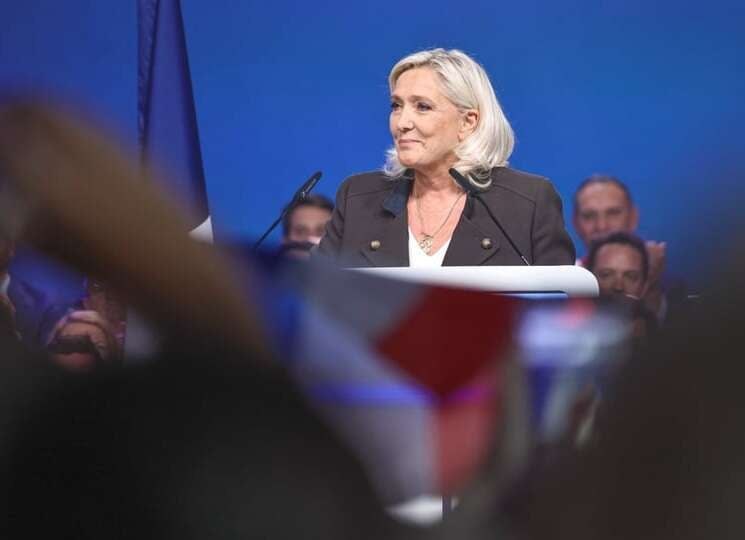
French presidential candidate Marine Le Pen confirmed to the Ukrainian ambassador that financial support for Ukraine would be halted due to budget constraints if she wins the election.
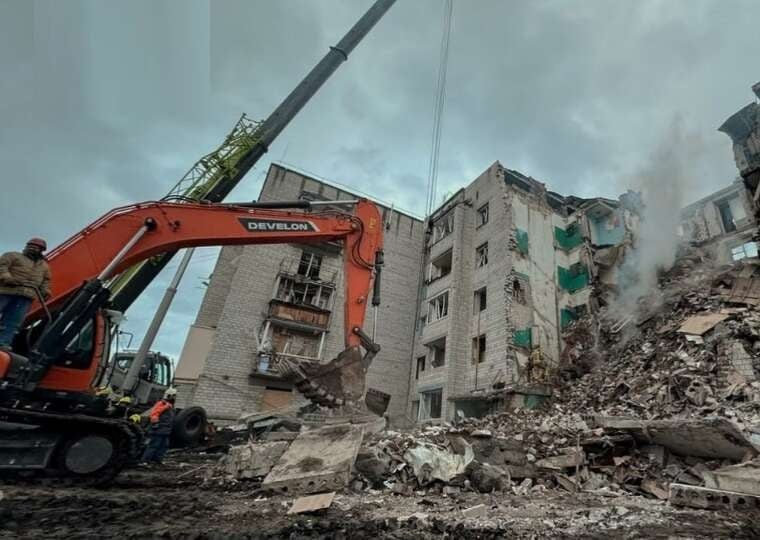
Ukrainian President reported on prolonged rescue operations in Kyiv Oblast following a suicide drone strike on a residential building, and noted the consequences of attacks in Vyshneve and Bilotserkivskyi district.

A jet-powered drone hit a railway station in Kharkiv Oblast, the building is fully engulfed in flames, and there are casualties.
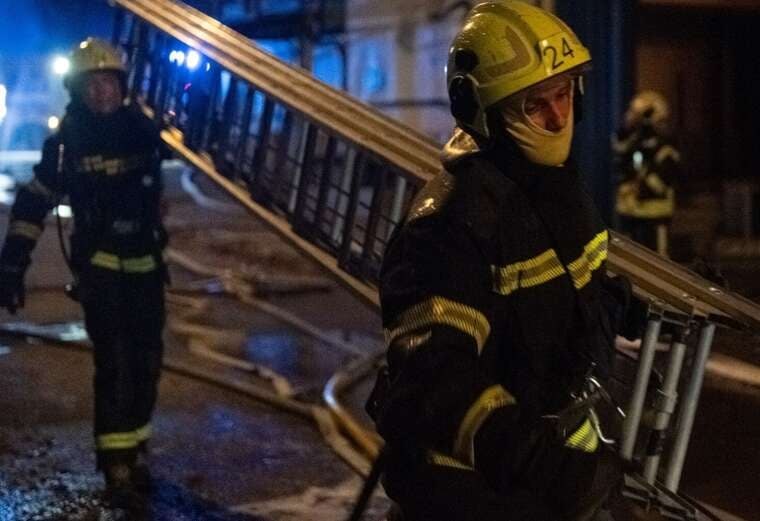
Interior Minister Ihor Vyhivskyi announced the rescue of a child following a strike on a residential building in Kyiv Oblast. The boy spent nearly 14 hours under the debris.
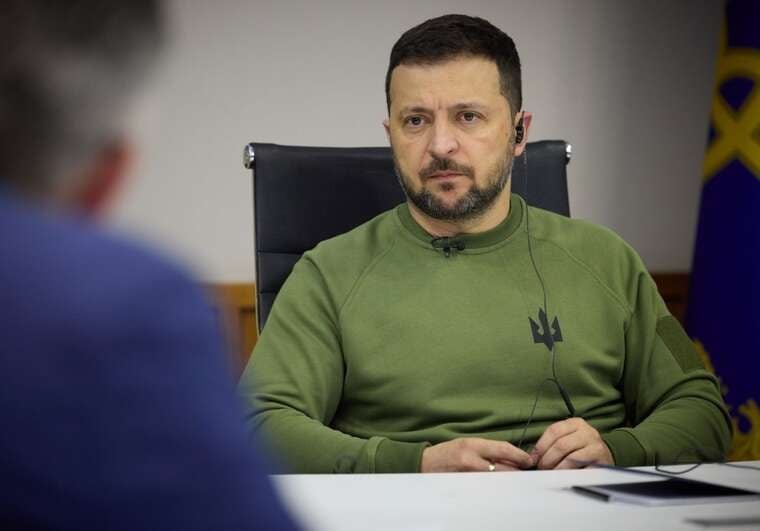
President stated that next week must be productive for state support and will boost the country's European integration.

Kateryna Kobernyk warns that the erosion of public trust in institutions of power is a desired outcome for Russia, which is actively working to achieve this goal.
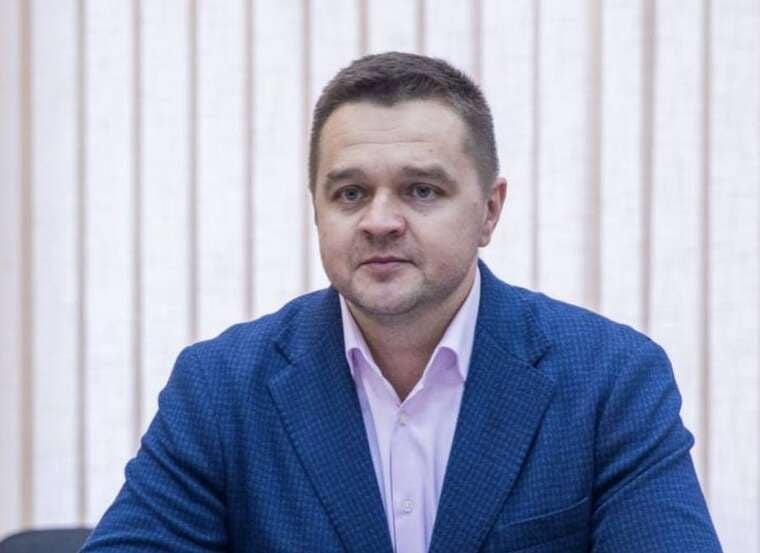
Law enforcement agencies are verifying the possible involvement of former Centrenergo CEO Yevhen Harkavoy, as well as Oleksiy and Yulia Tsarenko, in a scheme for obtaining illicit benefits. The events concern the period from 2024 to 2025, when the company carried out procurement. In the materials of the criminal proceedings, former head of the material and technical supply department Volodymyr Shchabelskyi is listed as the direct executor of agreements with suppliers. The role of the enterprise's senior management is currently being established.
According to the investigation's version, scheme participants received from 10% to 12% of the total value of concluded agreements from suppliers. Volodymyr Shchabelskyi, as noted in the documents, could have provided companies with confidential information in advance about upcoming tenders, technical specifications, and qualification criteria. This allowed potential winners to prepare documentation and goods before the official announcement of the procurement, based on a pre-agreed price.
An important element of the model was the dissemination of data about competitors. If another participant offered a lower price but refused to participate in the scheme, obstacles could be created for their further participation in the procedure. After the desired supplier was designated as the winner, Shchabelskyi ensured the signing of the contract. After delivery and payment by Centrenergo, he allegedly received an agreed percentage of the contract amount. It was this mechanism that allowed linking the size of the reward to the actual contract sum.
One of the recorded cases concerns cooperation with Stonecend LLC. According to the procurement register, in February 2025, Centrenergo concluded two contracts with this firm for the supply of basic inorganic chemicals for the amount of UAH 3.758 million and UAH 1.848 million. The total value of these supplies exceeded UAH 5.6 million.
The investigation is establishing that between 12 February and 13 May 2025, Volodymyr Shchabelskyi could have received UAH 655,900 in illicit benefits from Stonecend representatives. This amount, according to law enforcement's version, corresponded to 12% of the total value of the goods under the two contracts.
In total, according to the proceedings' data, Centrenergo officials could have received illicit benefits amounting to UAH 1.525 million. The origin of these funds, the method of their transfer, and the circle of recipients are the subject of further investigation.
The investigation is separately examining the possible participation of Yevhen Harkavoy. Sources in law enforcement agencies report that the version is that Shchabelskyi did not act independently, and agreements at the procurement level were linked to top management decisions.
Under this logic, Yevhen Harkavoy, as CEO, could have provided the necessary managerial decisions. Oleksiy Tsarenko, who was responsible for the security direction, is attributed a possible role in internal process control. Yulia Tsarenko, who oversaw the anti-corruption direction, could have possessed information about potential risks. These statements are subject to verification and do not indicate established guilt. A separate issue is the possible distribution of the funds received.
Law enforcement are verifying a version according to which 25% of the sum remained with Volodymyr Shchabelskyi, 50% went to the company's management, and another 25% to the Tsarenko family. Confirmation or refutation of such a distribution will be the task of further procedural actions.
Yevhen Harkavoy headed Centrenergo during the period covering part of the investigated procurements. In the company's public materials for 2025, he was named CEO. In December 2025, he publicly reported on the enterprise's financial results, stating a systematic improvement in indicators.
Regarding the Tsarenko family: Yulia Tsarenko worked in the National Police system and the Ministry of Justice before moving to Centrenergo. In the declarative data for 2025, it is noted that she received UAH 800,281 in salary from Centrenergo and UAH 33,377 in income from the Ministry of Justice. Oleksiy Tsarenko also received income from Centrenergo. Currently, statements about his specific role in the scheme belong to the investigation's version. The fact of employment or receiving a salary in itself is not evidence of participation in a crime.
Another case that attracted the investigation's attention is related to the procurement of pipes for the repair of the Trypillia and Zmiivka thermal power plants. In July 2026, the Security Service of Ukraine reported the exposure of a scheme to misappropriate over UAH 10 million of Centrenergo funds.
According to the special service's data, a company official together with supplier representatives organised the supply of old pipes instead of new ones. In 2025, Centrenergo procured pipes that, according to the contract, were supposed to be new. Instead, according to the investigation's version, part of the product was manufactured as early as 2008. Its appearance and marking were changed to present the goods as new. Expertise established enterprise damages in the amount of UAH 10.4 million.
The SBU publicly reported the involvement in organising this episode of the head of one of Centrenergo's departments and two representatives of private supplier companies. The special service's statement does not mention the established involvement of Yevhen Harkavoy or the Tsarenko couple in this specific scheme.
For the investigation, it remains fundamental to establish the link between individual procurement episodes and officials at different levels of Centrenergo management. If the version of former management's participation is confirmed by evidence, the subject of the criminal proceedings will become not only the behaviour of an individual procurement department employee, but also possible coordination of actions at several management levels.
Yevhen Harkavoy may find himself at the centre of a separate part of the investigation, as the described 2024–2025 procurements fall within the period of his leadership. At the same time, the final legal assessment of the actions of any officials can only be given by the investigation and the court after establishing all circumstances and proper procedural documentation of evidence.
Currently, individual facts regarding Centrenergo procurements, the pipe episode, and declarants' incomes are publicly confirmed. Information about the distribution of illicit benefits between Harkavoy, Shchabelskyi, and the Tsarenko family remains an investigation version. The further development of the case will depend on whether law enforcement can confirm not only the facts of individual illicit actions, but also the possible link between participants and the company's managerial decisions.
Comments
No comments yet. Be the first!