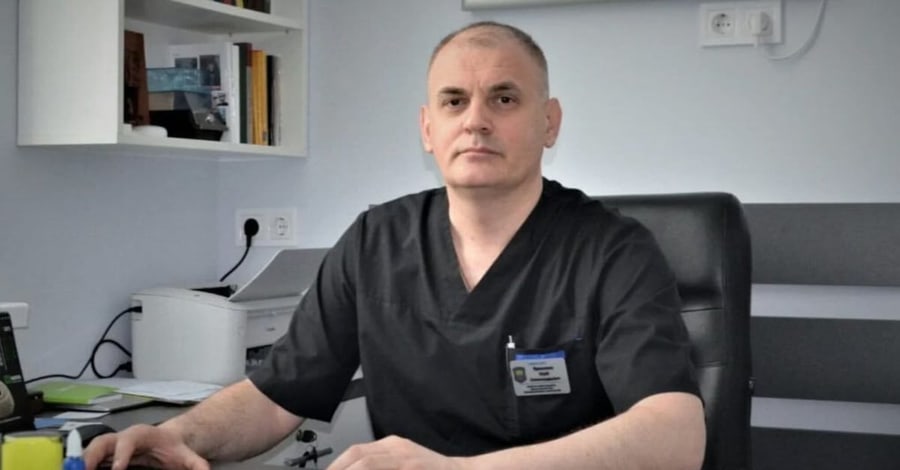
Ukrainian military medicine has undergone radical transformations since the start of the full-scale invasion. Instead of the predominance of gunshot and shrapnel wounds characteristic of the 2014–2022 period, doctors now face high-energy combined injuries, often caused by FPV drones. This was stated by Yuriy Yarmolyuk, the Chief Traumatologist of the Armed Forces of Ukraine and head of the Injury Clinic at the National Military and Medical Clinical Centre "Main Military Clinical Hospital".
Change in injury profile and resource consolidation
Yuriy Yarmolyuk took over the clinic in February 2022, a few days before the start of the major war. Although Ukrainian specialists had experience working with combat injuries since the ATO era, the scale and nature of the wounds have changed radically. The proportion of wounded servicemen reaches 55–60%, which requires the involvement not only of traumatologists but also vascular surgeons, internists, and specialists of other profiles.
A key decision was the creation of a Unified Medical Space, which integrated military and civilian facilities. This allowed for the optimisation of evacuation, patient distribution, and the provision of specialised treatment according to the nature of the injuries.
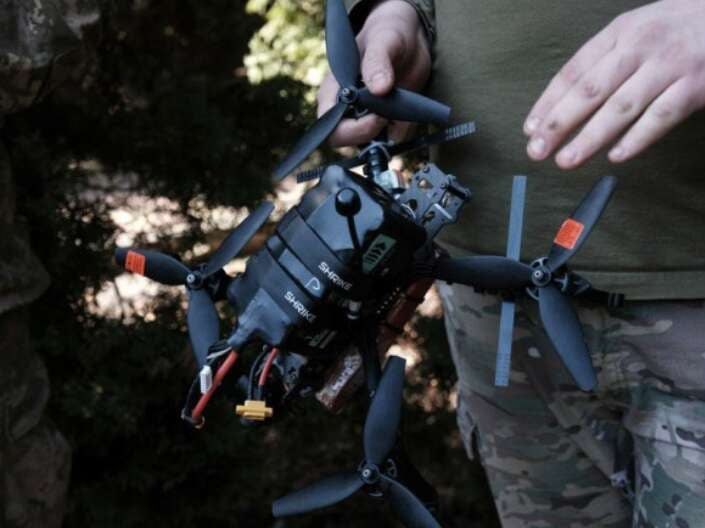
«Якщо у 2014–2022 роках переважали кульові та осколкові поранення, то сьогодні на перший план вийшли комбіновані ураження, зокрема ті, що виникають унаслідок застосування FPV-дронів» (If in 2014–2022 gunshot and shrapnel wounds predominated, today combined injuries have come to the fore, in particular those arising as a result of the use of FPV drones), explains the Chief Traumatologist of the AFU.
Such injuries often combine the effects of blast waves, thermal damage, and shrapnel defects, leading to massive tissue destruction and limb loss.
Amputations and rehabilitation pathways
The increase in the number of amputations is linked to the growing severity of combat wounds. The causes can vary: from traumatic limb avulsion during an explosion to irreversible changes in tissues due to prolonged tourniquet application. Sometimes the limb is anatomically preserved but loses functionality due to damage to nerves, vessels, or bones.
Crush syndrome, sepsis, and osteomyelitis pose a particular threat to the patient's life. The decision to amputate is made collectively, taking into account the condition of the tissues and the prospects for recovery.
«Між кінцівкою та життям пацієнта ми обираємо життя» (Between the limb and the patient's life, we choose life), Yuriy Yarmolyuk emphasises.
After amputation, the work of a multidisciplinary team begins: rehabilitation specialists, physiotherapists, and prosthetists. An individual programme for returning to an active life is developed for each patient. Among the promising technologies, the doctor mentions osteointegrated prosthetics, which is already being implemented in Ukraine.
Implementation of 3D printing and microsurgery
Despite the high workload, the hospital is actively developing its scientific component. External fixation devices, bone transport, and intramedullary frame spacers are used to treat chronic gunshot osteomyelitis. Allografts impregnated with antibiotics are used for bone grafting.
A separate direction is 3D modelling and printing of individual titanium structures. These implants allow for the replacement of complex bone defects in the limbs and pelvis, accurately reproducing the anatomy of a specific patient.
Doctors also perform complex microsurgical operations jointly with specialists from the O.O. Shalimov Institute, in particular the transfer of the fibula with soft tissues for shoulder reconstruction. Methods for using the Ilizarov apparatus are being refined, which shortens recovery times.
International exchange of experience
Ukrainian medical professionals actively share their findings with colleagues from the US, Israel, Germany, Austria, Poland, and the UK. Recently, Yuriy Yarmolyuk visited the United States, where he delivered eight presentations in Boston, Cambridge, and Providence. American specialists were actively interested in Ukrainian methods. Although the US also treats gunshot wounds, the nature of the injuries faced by Ukrainian doctors during the full-scale war often differs significantly.
During the trip, the doctor also visited a rehabilitation centre in Florida, where Ukrainian servicemen undergo prosthetic fitting, which allowed for an assessment of the full cycle of care.
Staff support and the future of the industry
High workload causes professional burnout among doctors, especially those working near the front line. To provide support, psychological assistance is organised, as well as quarterly meetings of leading regional traumatologists to discuss complex cases and master new technologies.
Among the future priorities, Yuriy Yarmolyuk mentions personalised treatment, robotic systems, and navigation technologies. He is convinced that Ukrainian medical professionals are no longer just adopting international experience but are themselves forming new approaches to treating combat injuries.
«Майбутнє травматології — це поєднання досвіду лікаря, новітніх технологій і персоналізованого підходу до кожної людини» (The future of traumatology is the combination of a doctor's experience, cutting-edge technologies, and a personalised approach to each person), Yuriy Yarmolyuk concludes.

Comments
No comments yet. Be the first!