Silence of the North Atlantic Alliance
To date, neither the Polish side, nor NATO Secretary General Mark Rutte, nor other representatives of the alliance have articulated the key thesis: the standard Kh-101 cruise missile physically lacks the capability to reach Polish territory.
According to analytics, projectiles launched over the western part of Volgograd Oblast would not have been able to cross the Polish border had they remained typical subsonic models. This implies that specially modernised versions of the weapon were used to strike a European state.
Discrepancies in range data
Critics may cite the declared range of the Kh-101, which is 2,800 km. However, these tactical and technical characteristics are not confirmed. As an example, one can cite the 9M723 ballistic missiles, which, according to official data, had a range of 500 km, whereas documentation released by the GUR of the Ministry of Defence of Ukraine indicated an actual range of 390 km.
A hypothetical consensus on the 2,800 km figure is possible only under the condition of a straight-line flight at a stable altitude without performing manoeuvres. However, in combat conditions, the missile is forced to constantly change its trajectory, altitude, and navigate around air defence (AD) zones and terrain features. These actions are accompanied by significant overloads and increased fuel consumption.
Actual impact deep inside the territory
Over Ukraine, fuel consumption for the Kh-101 increases manifold, which often prevents them from reaching even the western regions. However, in the case of the impacts in Poland, the missiles not only crossed the border but also advanced a significant distance:
- Novyi Lypovets — approximately 50 km;
- Rudnik nad Sanem — about 80 km;
- Molodych — approximately 28 km.
Hypothesis of modified warheads
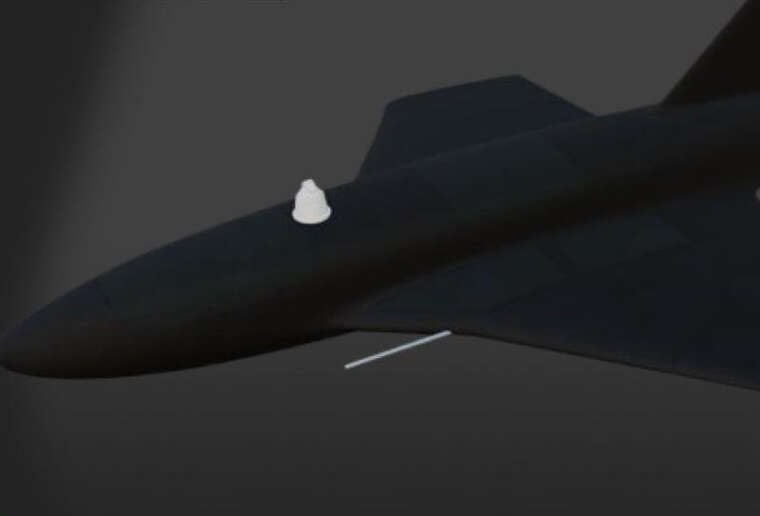
A logical conclusion is that Kh-101 missiles with a reduced warhead mass (approximately halved) were fired at Poland, which allowed for an increase in the fuel tank volume. Such projectiles underwent special preparation to penetrate Ukrainian airspace and strike Polish territory. Moreover, the use of such modified models is not the first instance.
Deliberateness of actions
Thus, the incident on 20 November, when three Kh-101 missiles hit Poland, is not a result of navigation error or electronic warfare. It indicates a deliberate, rather than one-off, strike on the territory of a country that is a member of the EU and NATO.
Meanwhile, the North Atlantic Alliance is not taking any corresponding measures. NATO representatives avoid acknowledging the fact that Russia is deliberately attacking Poland using missiles specifically adapted for such ultra-long-range strikes.





Comments
No comments yet. Be the first!