
UAV damages roof of six-storey building in Podil district of Kyiv
A drone strike on a residential building in Podil was recorded in the capital. Footage of the aftermath has been published online.
A drone strike on a residential building in Podil was recorded in the capital. Footage of the aftermath has been published online.

The Higher Anti-Corruption Court approved a plea deal with Mykola Fedik, who admitted to receiving improper benefits for facilitating residential construction.

The Alliance Secretary-General stated that there is no consensus among bloc members on granting Kyiv full member status.
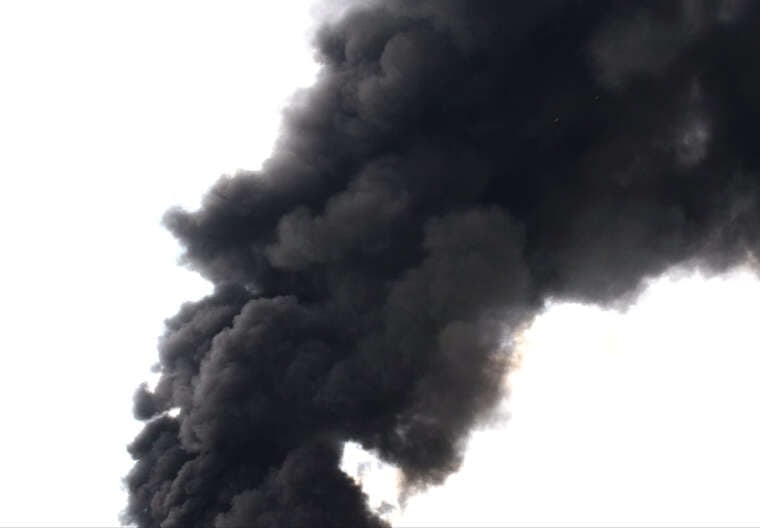
Kyiv Mayor Vitali Klychko confirmed a Russian drone hit a residential sector in the Podil district of Kyiv.

Former police officer accused of receiving undue benefit from a man sought by the TCC.
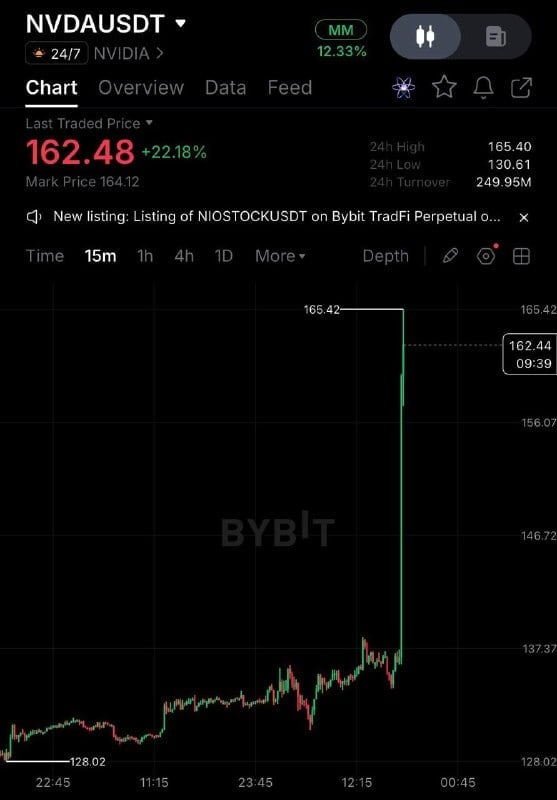
The chipmaker's governing body approved Jensen Huang's powers as president and CEO, triggering a surge in share price.
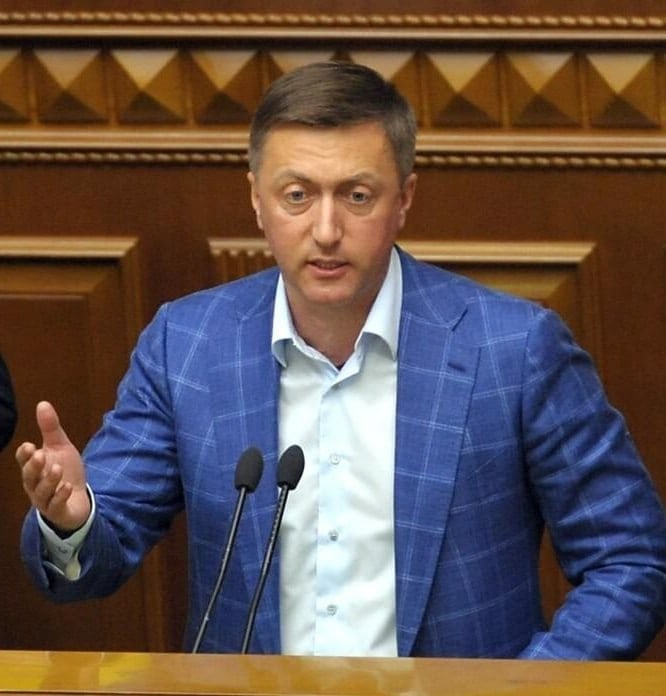
Court found Serhiy Labazyuk guilty of offering a $150,000 bribe to win tenders. His co-defendant, Denys Nazymov, received a six-year prison sentence.
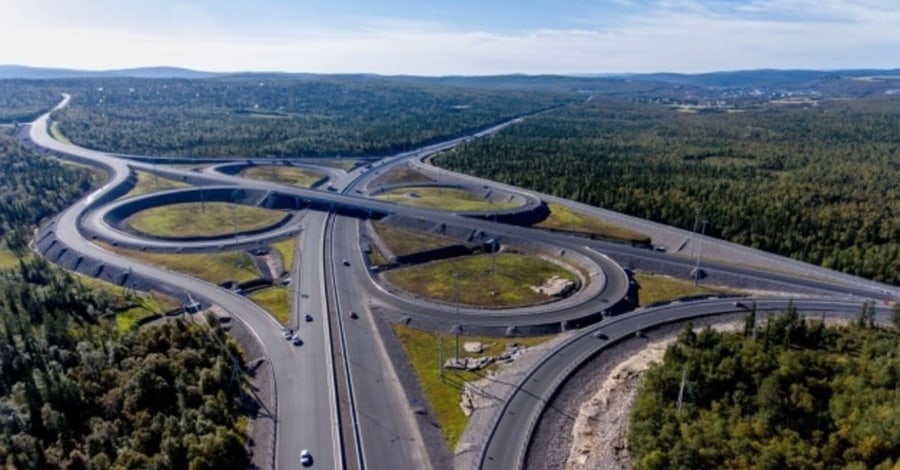
Drivers will need to account for the transition to digital vignettes in Austria and Belgium, restrictions on diesel vehicles in Italy, and strengthened enforcement of traffic violations across the EU.
Car trips across Europe will become more complex and expensive in 2027. Drivers face significant changes: from the full transition to electronic toll payment in Austria to the introduction of new environmental restrictions in Italy. In addition, the European Union will refine the system for exchanging information on traffic rule violations between member states.
A key change will be the implementation of the provisions of Directive (EU) 2024/3237, which EU countries must complete by 20 July 2027. This will allow for more effective recovery of fines for serious traffic violations committed abroad. The list of offences will include dangerous overtaking, driving against the flow of traffic, failure to maintain a safe distance, leaving the scene of a road traffic accident, and parking violations.
The mechanism also provides for mutual assistance in recovering fine debts exceeding 70 euros. It is worth noting that the new rules concern cooperation between EU member states and do not imply the automatic extension of all procedures to vehicles with Ukrainian registration.
Austria is completely phasing out paper vignettes. Their sale will cease on 1 December 2026, and from 1 January 2027, permission to use motorways will only be available in electronic format. The cost for passenger cars will change: a one-day vignette will cost 9.80 euros, and an annual one — 108.90 euros. It is important to note that digital vignettes for one year or two months, purchased by private individuals through the official ASFINAG store, are usually activated only after 18 days.
Belgium will introduce a digital vignette for passenger cars, vans, and campers weighing up to 3.5 tonnes, including those with foreign registration, from 1 May 2027. The annual fee will depend on the vehicle's environmental class and will range from 90 to 125 euros. Sales will begin on 2 April 2027, although final terms may change. Additionally, from 1 June 2027, an updated Road Traffic Code will come into force in Belgium, requiring a two-second following distance on roads with speed limits exceeding 50 km/h.
Croatia plans to launch the Crolibertas electronic system in 2027, which will replace traditional toll booths with automated fee collection using number plate recognition. This will allow motorways to be traversed without stops. The exact launch date has not yet been officially confirmed, so the previous payment procedure will remain in effect until then.
In Italy, restrictions on Euro 5 standard diesel cars will be introduced from 1 October 2027 in four northern regions: Lombardy, Piedmont, Veneto, and Emilia-Romagna. The restrictions will mainly affect urban areas with a population of over 100,000 people where air pollution is a problem. Specific conditions will be determined at the regional level. Drivers should remember that in certain cities, such as Milan, their own environmental zones (Area B) are already in place, and their rules remain in force regardless of the postponement of general regional restrictions.
In France, low-emission zones (ZFE) will continue to operate, with access determined by the Crit'Air environmental category. In Greater Paris and Lyon, restrictions already apply to vehicles in Crit'Air categories 3, 4, and 5, as well as unclassified vehicles. No nationwide ban on Crit'Air 2 vehicles is planned for 2027. Therefore, before travelling to France, it is necessary to check the specific city's rules, zone boundaries, and time restrictions.
Hungary will raise prices for electronic vignettes from 1 January 2027. For passenger cars in category D1, the tariffs will be as follows: one-day — 5,630 forints, ten-day — 6,990, monthly — 11,320 forints. An annual vignette for the whole country will cost 62,560 forints, and for a single county — 7,280 forints.
In Switzerland, the annual vignette will remain at 40 francs. The permit for 2027 will be valid from 1 December 2026 to 31 January 2028. Driving without a vignette will be penalised with a fine of 200 francs, with the mandatory purchase of a permit.
In Czechia and Slovakia, drivers will also use electronic vignettes, although the final retention of tariffs for 2027 still requires confirmation. A peculiarity is that one-day permits in these countries are valid until the end of the chosen calendar day, rather than for 24 hours after purchase.
In Spain, the V16 emergency beacon has become mandatory for vehicles with Spanish registration from 1 January 2026, replacing triangles and transmitting data to the DGT 3.0 system. However, an exception is provided for vehicles with foreign registration that are in the country in international transit mode: Ukrainian drivers may use traditional emergency triangles.
Changes will also affect commercial transport. In the Netherlands, per-kilometre toll rates for trucks will increase by 2.6% from 1 January 2027. In addition, the temporary 22.3% discount will expire at the end of 2026, which will further increase transporters' costs. In Poland, the e-TOLL system will continue to operate for trucks and truck combinations weighing over 3.5 tonnes, as well as buses. Most state motorways for passenger cars will remain free, but fees will have to be paid on certain concession sections.
Thus, in 2027, Ukrainian drivers will have to plan their trips more carefully: checking current tariffs, environmental requirements, local traffic rules, and purchasing digital vignettes in a timely manner, taking into account their activation periods.
Comments
No comments yet. Be the first!