
Cash Warren demands $3.5 million from Jessica Alba
Court ordered actress to pay ex-husband over $577,000 from HonorBar Inc profits.
Court ordered actress to pay ex-husband over $577,000 from HonorBar Inc profits.

76-year-old billionaire Larry Connor maintains his fitness with a staff of 15 specialists and regular medical procedures costing six-figure sums.

GUR head opens competition where intelligence officers dedicate fights to specific operations. Funds raised will go to the unit's needs.

Official found guilty of receiving improper benefit for facilitating removal from wanted list in electronic registry "Oberih". Sentenced to disciplinary battalion and confiscation of property.
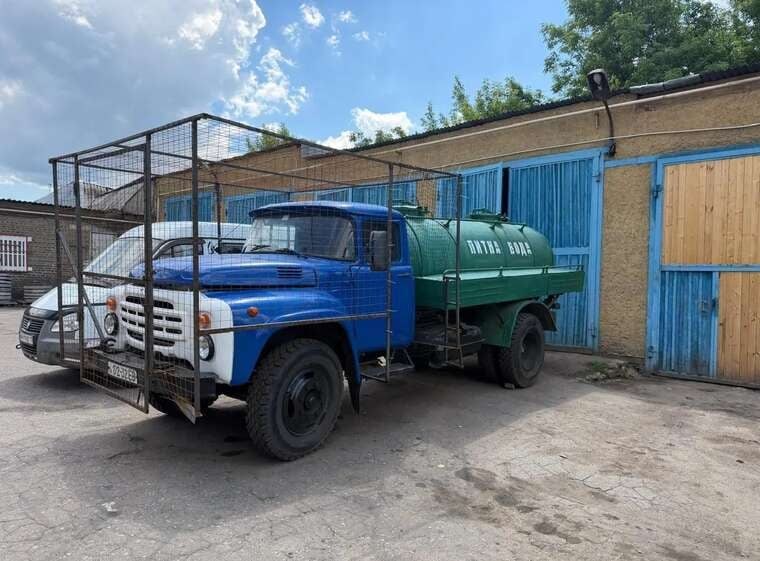
The head of the local water utility warned that without a cessation of hostilities, the city may lose central water. Alternative sources can provide for only a small fraction of the population.

Company linked to Kyiv City Council deputy Ihor Balenko has used a land plot in Pechersk district without a lease for years. City authorities and law enforcement cannot explain the legal basis for such use.

A large batch of undeclared silver items worth over €53,000 was found at the border with Turkey. The woman was released on bail with a travel ban.

The Ministry of Finance has drafted a bill providing for the automatic registration as VAT payers for first and second-group entrepreneurs whose annual income exceeds UAH 4.2 million.
The city of Kramatorsk in Donetsk Oblast is facing the threat of a complete loss of centralised water supply. If the security situation and the state of infrastructure continue to deteriorate, residents will have to rely on alternative sources, which, according to experts, are capable of providing for only 10–15% of the population. This was stated by Valentyn Yakovenko, the director of the local water utility.
He emphasised that the enterprise has the technical and human resources to restore the system, but stabilising the situation depends primarily on the cessation of hostilities.
According to Yakovenko, the worst-case scenario for the city is the complete absence of centralised water, which has already occurred in some neighbouring settlements. Although Kramatorsk has groundwater, boreholes, and private wells, their capacity is limited by geographical features.
The underground aquifer is accessible mainly in the old part of the city. In areas located at an elevation of over 100 metres, there are neither boreholes nor hand pumps. Therefore, the head of the enterprise estimates that alternative water supply will be able to meet the needs of only 10–15% of residents. In the event of a complete cessation of centralised supply, the majority of residents will find themselves in extremely difficult conditions, as there are virtually no available reserve sources for them.
Currently, centralised water supply in Kramatorsk is maintained, but the situation in different parts of the city varies significantly. In some districts, water appears daily, while in others, it is completely absent. Public services are trying to compensate for the disruptions by delivering water and using available distribution points.
According to Yakovenko, the enterprise receives and supplies approximately 3,000 cubic metres of water daily, but this is insufficient for stable supply to all districts. Where centralised supply is absent, residents can use hand pumps, boreholes, private wells, or purchase water. Donor organisations are providing assistance by distributing water, particularly for pensioners and low-income individuals.
Meanwhile, it is not possible to deliver water to all districts of the city. Some areas have effectively become inaccessible to public services due to the threat of attacks, so they cannot guarantee either regular delivery or accurate information about the water situation in these zones.
The critical situation has arisen due to several factors simultaneously. Among the main problems, the water utility director cites infrastructure damage, lack of electricity, and the danger to workers who are forced to repair networks under the threat of Russian attacks.
The deterioration began in spring, and the situation became critical at the end of summer and the beginning of autumn. A particularly sharp escalation occurred over the last three to four weeks. Public services cannot fully restore damaged facilities, even if they know exactly what needs to be done.
The reason lies in the danger to repair crews, who may become targets for Russian drones. In some cases, water utility workers do not have the opportunity to reach the site of an accident. Areas that were previously accessible under favourable conditions are now turning into closed zones, where public services no longer dare to go.
Despite the difficult situation, the water utility emphasises that the technical and human resources to restore the water supply system are available. The problem lies not in the lack of equipment or specialists, but in the security situation and hostilities.
Against the backdrop of the critical situation in the city, calls are being made for the organised evacuation of the civilian population. Journalist Yuriy Butusov stated that Kramatorsk and Sloviansk are subjected to Russian drone attacks daily, resulting in the deaths of peaceful residents. He emphasised the need for a special evacuation operation and called on the Supreme Commander-in-Chief's Headquarters to take responsibility for its organisation.
Ihor Zhdanov also called on the authorities and the military administration to urgently organise the evacuation of Kramatorsk residents, particularly families with children, as well as public service workers. According to him, the situation in the city is worsening weekly, houses remain without heating, and water and electricity may disappear for several days or longer.
An additional danger is posed by Russian missile and aerial strikes on residential areas, as well as drones that attack people on the streets and repair crews. Zhdanov notes that some residents are already leaving, but people who cannot evacuate on their own remain in the city, so they need organised assistance with departure.
Comments
No comments yet. Be the first!