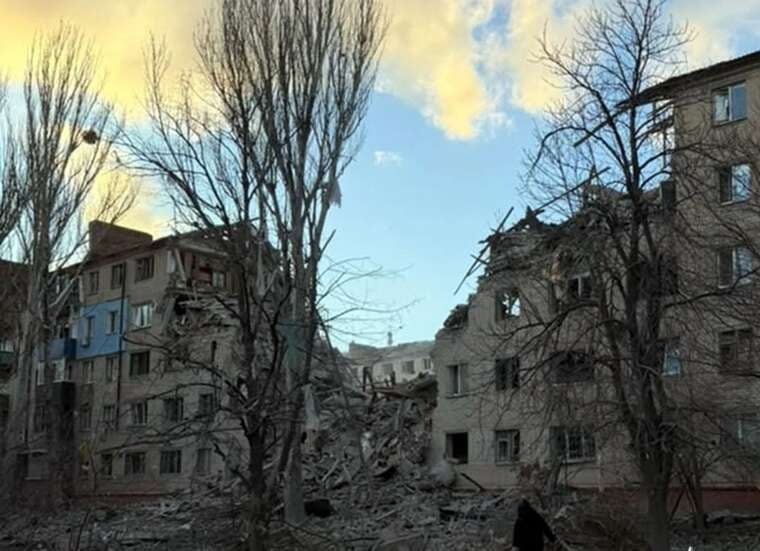
Two killed, three injured in Russian air strike on Sloviansk
Russian occupiers used a FAB-500 aerial bomb against a residential area in Sloviansk, resulting in the deaths of two residents and injuries to three others.
Russian occupiers used a FAB-500 aerial bomb against a residential area in Sloviansk, resulting in the deaths of two residents and injuries to three others.

US National Intelligence Director Jay Clayton backed Donald Trump after the publication of a photo with Vladimir Putin, calling the trilateral summit a key achievement in nuclear security.

French presidential candidate Marine Le Pen confirmed to the Ukrainian ambassador that financial support for Ukraine would be halted due to budget constraints if she wins the election.
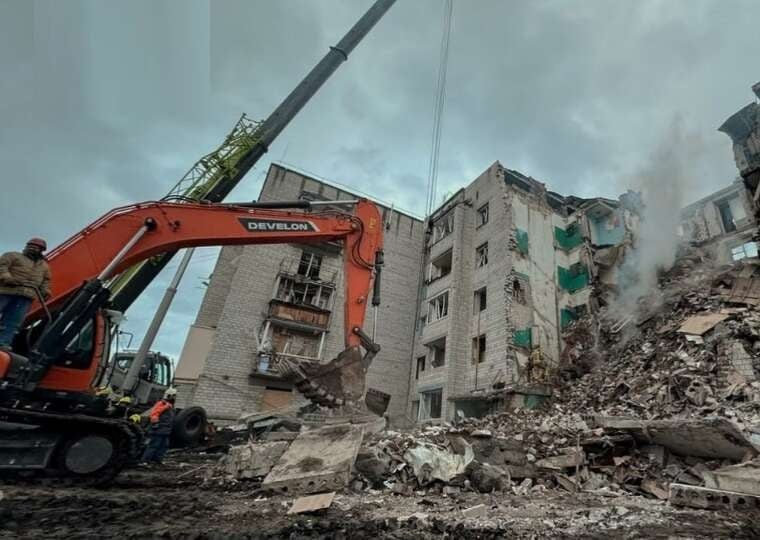
Ukrainian President reported on prolonged rescue operations in Kyiv Oblast following a suicide drone strike on a residential building, and noted the consequences of attacks in Vyshneve and Bilotserkivskyi district.

A jet-powered drone hit a railway station in Kharkiv Oblast, the building is fully engulfed in flames, and there are casualties.
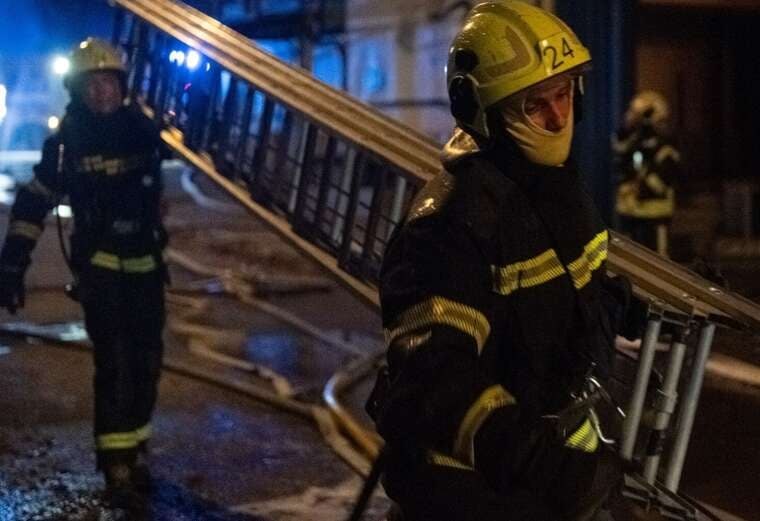
Interior Minister Ihor Vyhivskyi announced the rescue of a child following a strike on a residential building in Kyiv Oblast. The boy spent nearly 14 hours under the debris.
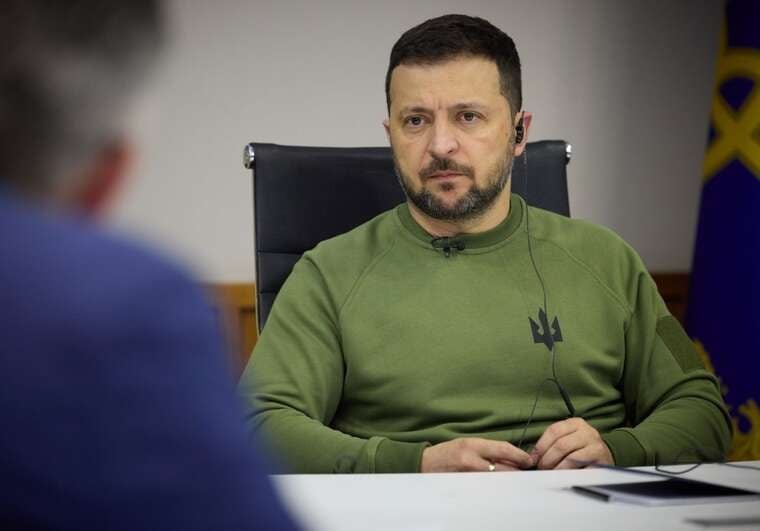
President stated that next week must be productive for state support and will boost the country's European integration.

Kateryna Kobernyk warns that the erosion of public trust in institutions of power is a desired outcome for Russia, which is actively working to achieve this goal.
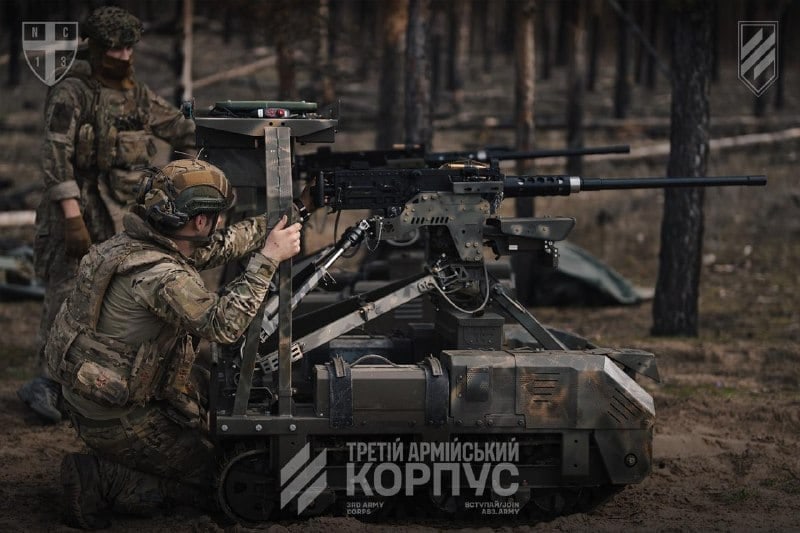
A Reuters article dedicated to the Third Army Corps' Operation Vivaldi sparked active discussion. Journalists focused on the high-tech aspect of combat operations — the mass application of unmanned reconnaissance complexes (UAVs). The article featured comments not only from ordinary soldiers and unit commanders, but also from Brigadier General Andriy Biletsky, who at the time of writing held the position of commander of the 3rd Army Corps and currently leads the 'Centre' grouping.
The Reuters publication is extensive and informative, yet it intensified the ongoing discussion in the information space regarding whether classic armoured vehicles have lost their significance in the context of modern military technologies. Although this approach to the essence of the issue is flawed, the topic remains debatable.
As noted by Brigadier General Andriy Biletsky, the integration of UAVs significantly transforms combat tactics. "Now a thousand objects can simultaneously be in the air and on the ground in the same area," the commander emphasised (Now a thousand objects can simultaneously be in the air and on the ground in the same area).
Despite the technological leap, a complete abandonment of armoured vehicles is a mistaken approach. Infantry advances must be carried out under the reliable protection of armoured vehicles. The concept of a unified combat formation, where UAVs and infantrymen act in coordination, is constantly being refined and tested in real combat conditions.
The Third Army Corps is today a leader in terms of adaptability and drone integration. The concept developed by it can serve as a model for other formations that are adapting their defensive and offensive actions. However, this does not diminish the importance of other branches of the military and technical means.
The technological breakthrough in the field of UAVs poses a sharp problem: how to combine new realities with traditional methods of conducting combat. Armoured vehicles remain critically important, but they require modernisation. For the rapid and safe movement of personnel through the frontline zone and in the area of the line of contact, mobile armoured vehicles with reliable mine protection are necessary.
In defensive actions and counter-attacks, the absence of armoured vehicles will inevitably lead to an increase in personnel losses. A similar situation is observed during the crossing of water obstacles, where dynamics and protection are key factors.
Regarding tanks, the issue concerns not only the tactics of their use, but also the general relevance of their functionality. As noted in analytics, the functionality of main battle tanks has virtually not changed since the time of the First World War. Western developers and manufacturers continue to adhere to outdated architecture and the concept of heavy combat machines, which no longer meet modern requirements. At the same time, a complete refusal of the presence of such equipment on the battlefield is incorrect.
The experience of Operation Vivaldi demonstrated how to fight in current conditions, while drawing attention to the problems of traditional equipment. It has not lost its relevance as a means, but its outdated concept of application and functionality have lost it. This experience can become the first stage of 'awakening' equipment manufacturers, and for Ukrainian manufacturers, it opens up wide possibilities for developing new solutions.
Comments
No comments yet. Be the first!