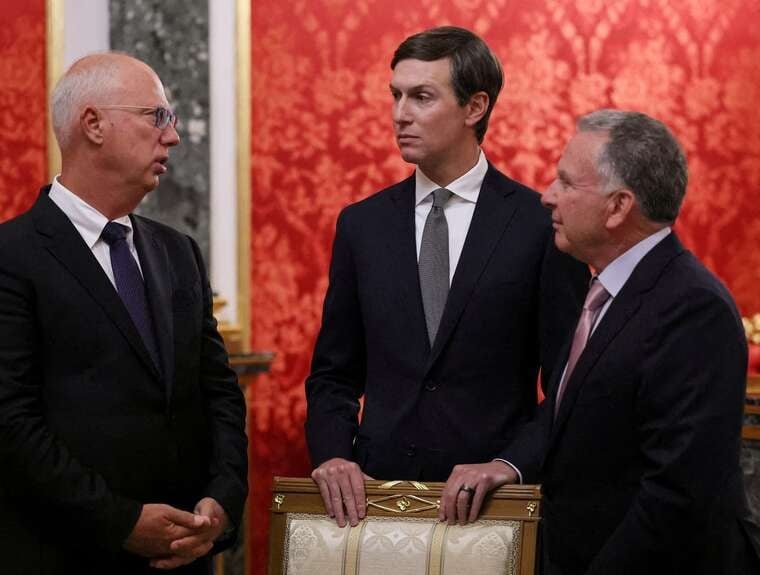
White House explores lifting sanctions on Dmitriev's RDIF for diesel deal
The Trump administration is considering lifting restrictions on the Russian Direct Investment Fund to facilitate the supply of Russian diesel to the US.
The Trump administration is considering lifting restrictions on the Russian Direct Investment Fund to facilitate the supply of Russian diesel to the US.

Flávio Bolsonaro left Brazil with his family and travelled to the US, despite a court order prohibiting him from leaving the country.

Chernivtsi court found Pavlo Kioresku guilty of failing to declare restricted goods while attempting to cross the border into Romania.

Taras Likunov explained how Oleksandr Kubrakov asked Semen Kryvonos to find specialists to address security issues at the railway due to corrupt practices.
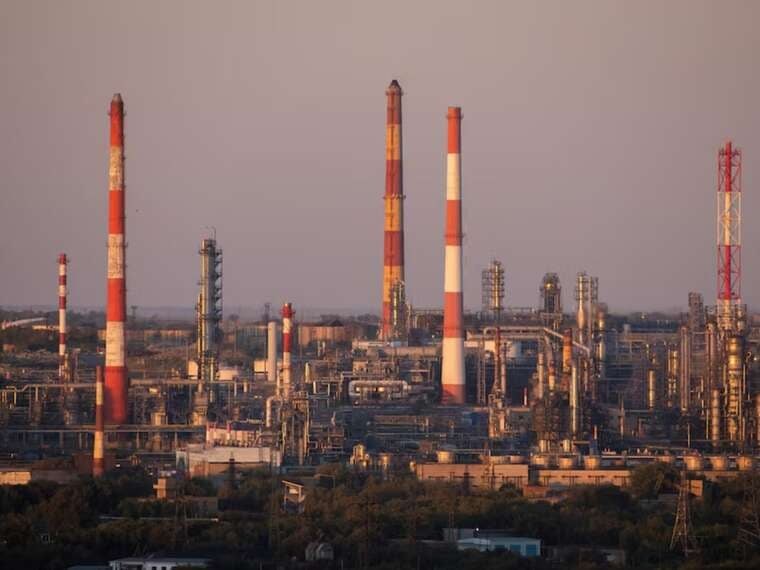
The halt in drone attacks allowed Russian oil refineries to increase crude processing volumes and diesel fuel production.

Former Party of Regions MP Dmytro Sviatash was placed in custody at a detention centre in Mjölby after attempting to enter Sweden.

The First Lady of the US stated that the quiet regime in Kherson Oblast now covers adjacent areas to allow the passage of humanitarian convoys.

The Supreme Court rejected the cassation appeal of the former head of the clearance department at Rava-Ruska. His dismissal, which occurred amid investigations into shadow payments at the customs post, has become final and lawful.
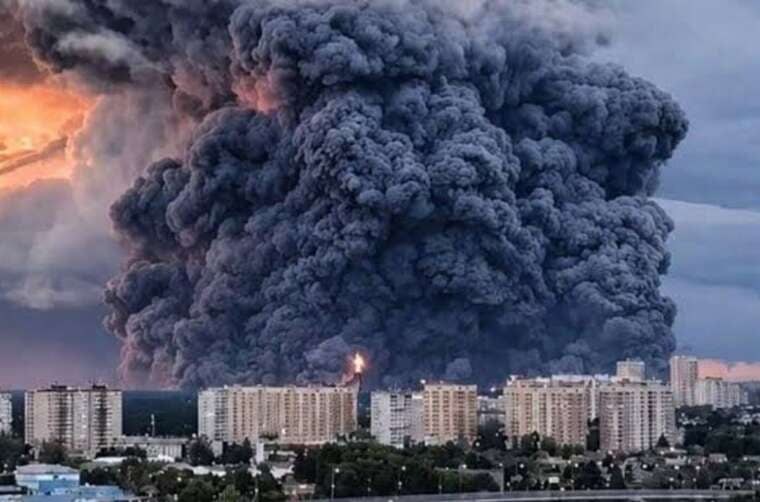
The leader of the Russian Union of Industrialists and Entrepreneurs (RSPP), Alexander Shokhin, publicly acknowledged that Russia is unable to provide full air defence for all major industrial facilities. He cited the significant size of these infrastructure complexes as the main reason.
According to Shokhin, many enterprises were designed during the Soviet era with the threat of nuclear war in mind. However, in the context of modern combat operations, such architecture has proven vulnerable to attacks by unmanned aerial vehicles.
The official warned that it is quite difficult to protect industrial complexes that stretch for several kilometres. This applies to metallurgical, chemical and other production facilities built to past standards, which did not account for modern types of threats.
In the USSR, production workshops were located at a significant distance from one another. This approach aimed to preserve at least part of production capacity in the event of a possible nuclear strike.
«Зараз ми розуміємо, що це непогано. Але, з іншого боку, комунікації дуже розтягнуті» ("Now we understand that this is not bad. But on the other hand, the communications are very stretched"), Shokhin complained.
It is important to note that Ukrainian strikes are directed not only at Russian oil refineries. Military enterprises, airfields, chemical plants, large data processing centres and other facilities are also targeted.
Last month alone, five oil refineries suspended oil processing due to damage and fires, including the Moscow Oil Refinery.
Recall that in August, Russian dictator Vladimir Putin signed a decree providing for the possibility of transferring enterprises and facilities that become targets of drone attacks to the state.
Comments
No comments yet. Be the first!