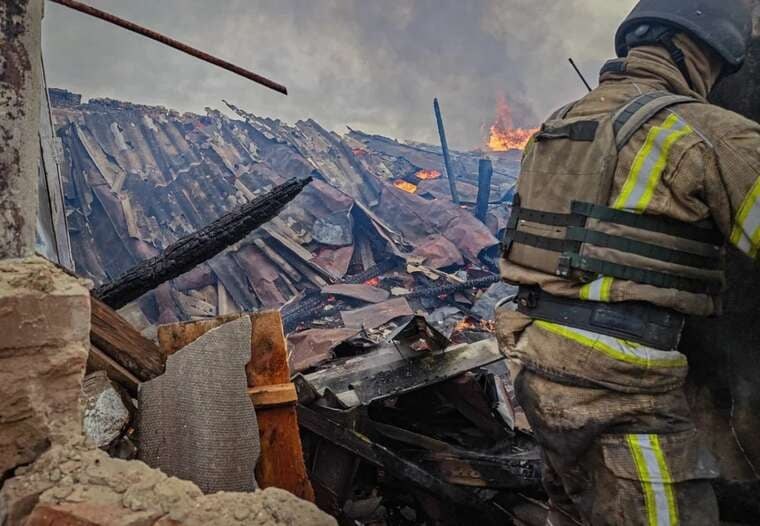
Three people injured in Russian drone strikes in Sumy region
The Russian army struck Sumy, Okhtyrka and Shostka districts with drones. Rescue services extinguished fires in buildings and vehicles.
The Russian army struck Sumy, Okhtyrka and Shostka districts with drones. Rescue services extinguished fires in buildings and vehicles.
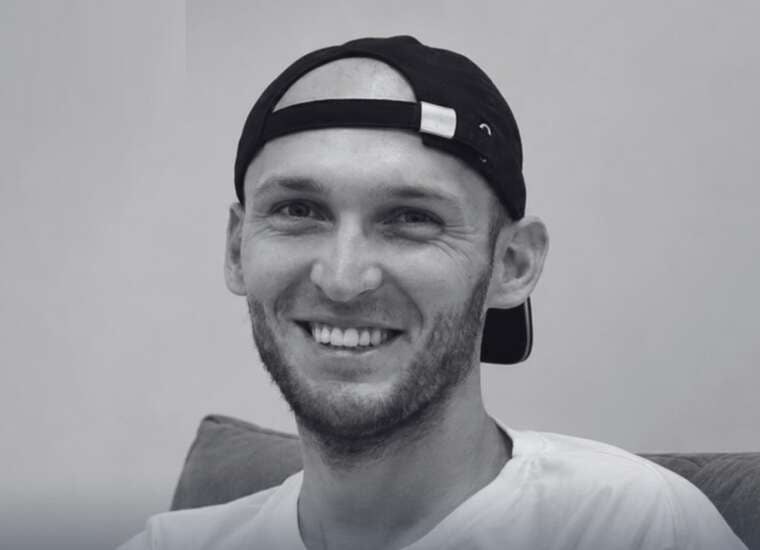
The volunteer, who evacuated people under fire and was one of the heroes of a documentary film, was killed while carrying out a combat mission.
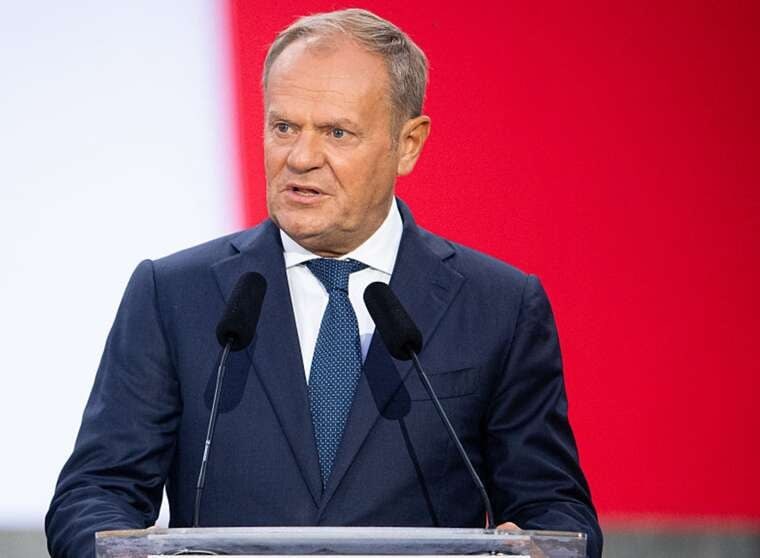
Polish Prime Minister Donald Tusk reacted sarcastically to the detention of Viktor Orbán's brother and the discovery of large sums of cash in hidden stashes during searches.
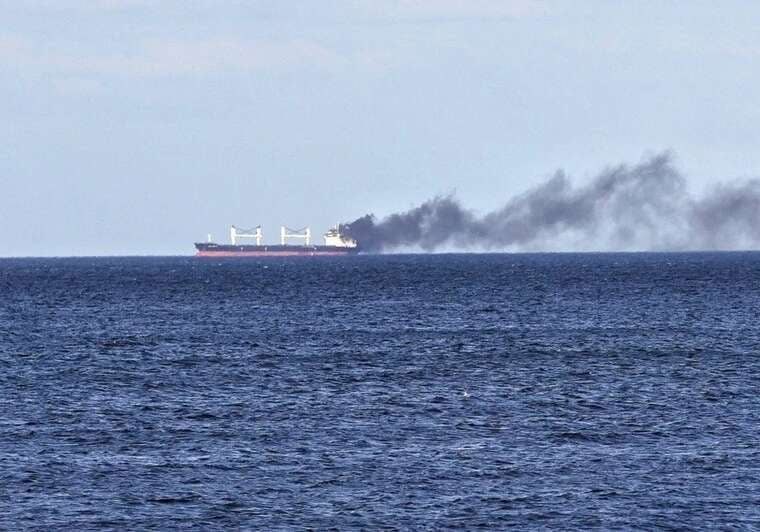
On Friday evening, a drone attacked the vessel Larissa 1 near Sfântu Gheorghe. The Romanian Defence Minister confirmed the incident; the investigation is ongoing.
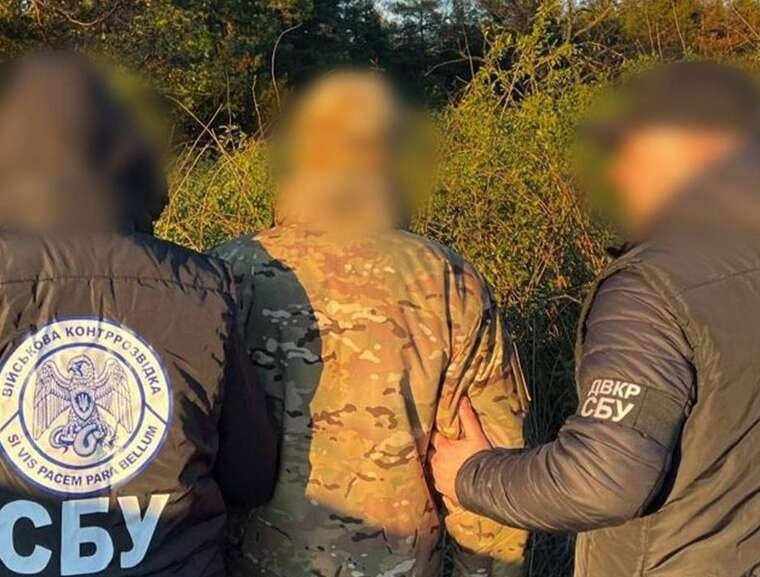
The SBU's military counterintelligence unit caught a senior officer receiving an improper benefit from subordinates for processing documents for rewards for destroying enemy equipment.
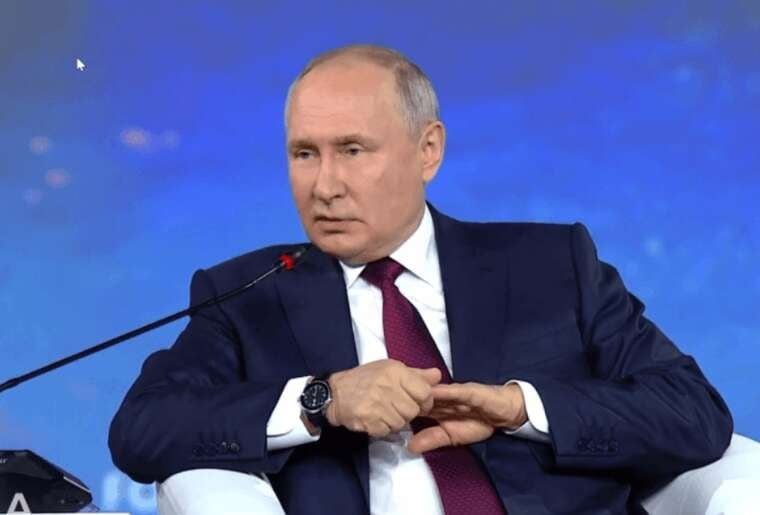
The Russian side insists that London renounce the use of its nuclear potential to protect other European states. This demand is part of the list of conditions for ending the war.
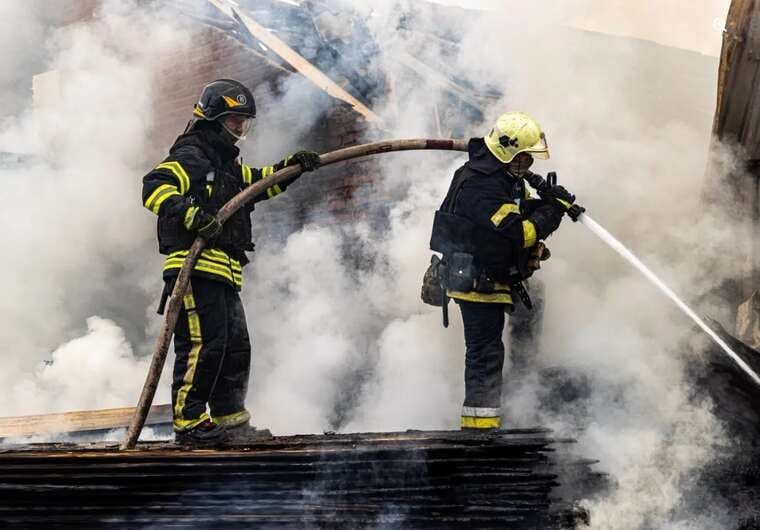
Russia attacked a critical infrastructure facility in Mena. Authorities report casualties and one injured.

The AI-generated influencer Kai Bradley has amassed a massive audience on Instagram and monetises it through the sale of an e-book, even though the character does not exist in reality.
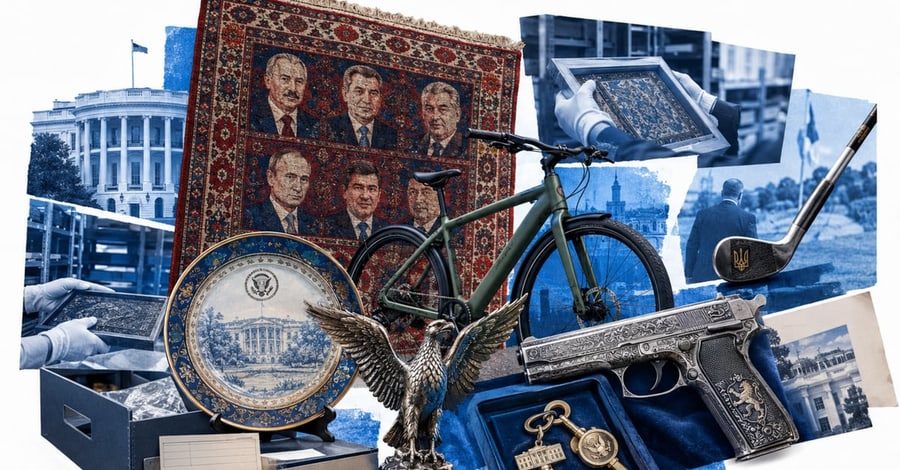
Protocol traditions provide that heads of state receive a wide variety of items as a sign of respect: from large carpets and electric bicycles to commemorative weapons and symbolic keys to residences. Some of these gifts have a clearly defined monetary value. For example, Petro Poroshenko received a plate worth $700 from Barack Obama, and a steel eagle sculpture worth $600 from Joe Biden.
However, the main mystery lies not in what was given, but in what happens to these items after the official ceremony. According to the rules, gifts should not simply disappear with the president. They are subject to accounting, transfer to responsible officials, and storage in the Presidents' Foundation of Ukraine, which operates under the V. I. Vernadsky National Library. Despite the existence of formal procedures, the public trail of many valuables breaks off at the stage of transfer.
The Presidents' Foundation of Ukraine was established in 1996 during the presidency of Leonid Kuchma. Its museum part collects souvenirs received by heads of state while in office. The total collection comprises approximately 1,900 documents and items.
It is important to understand that the Foundation does not act as a customs authority that independently tracks every item. It receives only what is transferred by the protocol unit of the Office of the President. The absence of a specific item in the Foundation's open description is not proof of its physical absence from the state collection, but conversely: if an item is not transferred to the Foundation, tracking its further fate in open sources becomes extremely difficult.
The standard scheme provides for: receiving the gift, its accounting, the transfer procedure, and subsequent storage either in a museum or in a special vault. However, basic questions remain open regarding many items: who accepted the item, what is its official value, does it have an inventory number, when exactly was it transferred, and where is it currently stored or exhibited. There are no answers to most of these questions in open access.
One of the most notable exhibits in the Foundation's collection is a large hand-woven wool carpet from Tajikistan, associated with the presidency of Leonid Kuchma. Its dimensions are 3 by 5 metres (15 square metres), which refutes widespread previous claims of 30 square metres. The carpet features portraits of leaders of CIS countries, including Kuchma, Boris Yeltsin, Alexander Lukashenko, as well as the heads of Georgia, Moldova, and Kazakhstan.
Despite the fact that the carpet was among the first relics transferred to the Foundation, open sources lack the exact date of presentation, confirmation that it was personally gifted by the President of Tajikistan, Emomali Rahmon, as well as the official museum name, inventory number, and value of the item.
During the time of Viktor Yanukovych, various souvenirs entered the Foundation, including the 2012 Olympic torch, a crystal boxing glove from the winners and medalists of the 2011 World Boxing Championship, the uniform of the Ukrainian national football team with the number 12, hockey gear, national costumes, and icons. A significant part of these items is associated with Euro-2012 and sporting events.
After Yanukovych's flight in 2014, journalists and law enforcement officers gained access to a mass of items left in the Mezhyhirya residence. Documents found there allowed establishing not only the gifts themselves but also their donors. Among the items discovered was a Bible with 105 original lithographs by Salvador Dalí, the value of which the Foundation then deemed impossible to determine without a special commission. Old prints were also mentioned, specifically Ivan Fyodorov's "Apostle" from 1574 and the "Menaion" from 1789, gifted by the then-head of the State Audit Service, Petro Andriev.
Among more recent but illustrative gifts was a silver "Swan" set (a vodka bottle stand and a caviar dish weighing over 1.2 kg) from deputy Volodymyr Makeienko. Prosecutor General Viktor Pshonka gifted an amphora from the Italian company Baldi, similar products of which cost approximately $8,000–10,000. A painting with amber, a golden pharaoh statuette, a globe that rotates on its own, and a statuette of Yanukovych himself with the inscription "Symbol of our victory," gifted by Dmytro Tymchenko, were also mentioned. Serhiy Kivalov handed over a copy of the Odesa student church of Saint Tatiana, about 30 centimetres high, and Volodymyr Lytvyn — an icon of Saint Victor and the old print "Apostle." Patriarch Filaret gifted a Bible in a leather binding. Journalists of the "Stop Censorship!" movement presented the president with a bicycle as a political action in support of freedom of speech.
It is important to distinguish between the official presidential collection and property found in a private residence. Not every valuable item from Mezhyhirya was a state gift, and not every gift remained there. The question of exactly how many items from Mezhyhirya were official gifts, what entered the state Foundation, and what remained private property, remains debatable.
The most documented case concerns Petro Poroshenko. In September 2014, during a visit to the US, Barack Obama gifted him a plate with a personalised inscription worth $700, and then Vice President Joe Biden — a stainless steel eagle sculpture for $600. The combined value of these items was $1,300.
The American side left a clear documentary trail, but the Ukrainian part of the story turned out to be less transparent. The presidential administration provided journalists with a list of Poroshenko's gifts, but neither the plate nor the sculpture was listed in it. The head of the Presidents' Foundation of Ukraine then stated that these two items were not in the Foundation. Journalists turned directly to Poroshenko, but did not receive an answer.
A separate story is the so-called "golden tank." For years, media reports appeared claiming that the Lviv Armoured Vehicle Plant had gifted Poroshenko a golden tank model. However, no reliable confirmation has been found in open sources that the tank was golden or that it was gifted by this specific plant. Instead, there is a confirmed fact about a tank model gifted to Petro Poroshenko by Alexander Lukashenko. The material, weight, and value of this model are not specified in available sources.
Volodymyr Zelensky's collection also includes items with a specific price. On 26 November 2019, during a visit to Estonia, President Kersti Kaljulaid presented him with an Ampler Stout electric bicycle worth €2,490. The frame bore the inscription: "To the President of Ukraine, Mr Volodymyr Zelensky." This gesture had a symbolic character, referring to the image of the hero of the series "Servant of the People." Technically, it was a serious city bicycle with an aluminium frame, an LG battery of 336 Wh, a 250 W motor, and Shimano hydraulic disc brakes. The range was from 45 to 100 kilometres. However, it is not publicly traceable what happened to the bicycle after the presentation: there is no open inventory number, museum description, or confirmation of transfer to the state collection.
In 2023, another event took place. On 28 April, the President of the Czech Republic, Petr Pavel, gifted Zelensky a special CZ 75 pistol with serial number 22 (RBL-022). This was a commemorative series created for the 100th anniversary of the Czech Order of the White Lion. The manufacturer Colt CZ Group confirmed that the weapon is a state gift. The pistol has hand engraving, an image of a lion, and gold elements. Since this is a weapon, the question of legal accounting arises. There is no information in open sources about the registration of this specimen in Ukraine, its place of storage, or transfer to the Presidents' Foundation. However, there is no reason to consider it Zelensky's personal combat weapon, as the gift had a symbolic state character.
Overall, Zelensky's collection of gifts is diverse. Among them are: a Hermès tie from then-President of the European Council Donald Tusk, a porcelain Pokémon statuette from Jack Ma, an edition of Shakespeare's works, a bowl from Joe Biden, a tray from Antony Blinken, a paperweight in the shape of eagles from the US Congress, a ceramic amphora from the President of Israel, Isaac Herzog, and a hussar statuette from the President of Hungary. According to published data, by the end of 2019, Zelensky had received 181 gifts, in 2020 — another 12, and by November 2021, the total number reached 285.
A separate category is gifts with deep emotional or diplomatic content. In 2025, Zelensky handed a golf club to Donald Trump, which had been gifted to him by junior sergeant of the Armed Forces of Ukraine, Kostiantyn Kartavtsev, who lost a leg at the beginning of the full-scale invasion. The club was engraved with "Together we will achieve peace." Trump accepted the gift and recorded a video thank-you. In return, Zelensky received symbolic keys to the White House from Trump, which in protocol means the status of a desired guest.
Predecessors used similar symbolism. Viktor Yushchenko gifted Angela Merkel an embroidered shirt (vyshyvanka) embroidered with beads. Leonid Kuchma gifted Volodymyr Putin a bottle of vintage "Massandra" port wine, bottled in the year of the Russian president's birth. Zelensky handed Pope Francis a painting about deceased Ukrainian children and an icon of the Mother of God, painted on the remains of a bulletproof vest, and to the new Pope Leo XIV in 2025 — an icon of "The Mother of God with the Child."
The Ukrainian state has institutions (the Presidents' Foundation, the protocol service) and rules for accounting for gifts. However, there is a lack of a simple open catalogue where citizens could see full information: date, donor, item, value, inventory number, place of storage, and exhibition status.
Thus, Poroshenko's American plate has a known price but an unknown public fate. Kuchma's carpet exists, but its exact history of presentation and value are unknown. Zelensky's bicycle has a model and price, but there is no confirmation of its transfer to the Foundation. The pistol from Petr Pavel has a serial number and state gift status, but information about its further accounting is missing. The absence of an item in an open catalogue is not proof of misappropriation, but the question of where property received by the head of state while performing duties is currently located remains entirely legitimate, especially when it comes to valuable items or weapons.
Comments
No comments yet. Be the first!