
Three people injured in Russian drone strikes in Sumy region
The Russian army struck Sumy, Okhtyrka and Shostka districts with drones. Rescue services extinguished fires in buildings and vehicles.
The Russian army struck Sumy, Okhtyrka and Shostka districts with drones. Rescue services extinguished fires in buildings and vehicles.

The volunteer, who evacuated people under fire and was one of the heroes of a documentary film, was killed while carrying out a combat mission.

Polish Prime Minister Donald Tusk reacted sarcastically to the detention of Viktor Orbán's brother and the discovery of large sums of cash in hidden stashes during searches.

On Friday evening, a drone attacked the vessel Larissa 1 near Sfântu Gheorghe. The Romanian Defence Minister confirmed the incident; the investigation is ongoing.

The SBU's military counterintelligence unit caught a senior officer receiving an improper benefit from subordinates for processing documents for rewards for destroying enemy equipment.
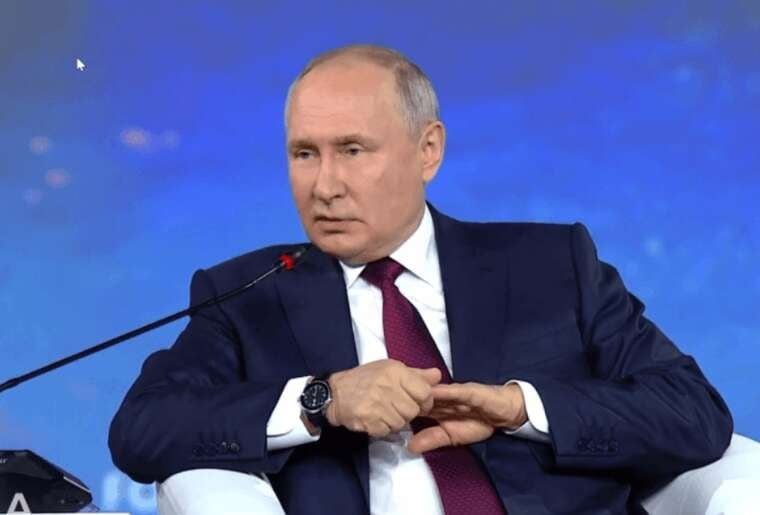
The Russian side insists that London renounce the use of its nuclear potential to protect other European states. This demand is part of the list of conditions for ending the war.

Russia attacked a critical infrastructure facility in Mena. Authorities report casualties and one injured.

The AI-generated influencer Kai Bradley has amassed a massive audience on Instagram and monetises it through the sale of an e-book, even though the character does not exist in reality.
A story is spreading across Australian social media that highlights the new risks associated with the use of artificial intelligence. A fictional culinary influencer has accumulated a significant audience in a short time and begun to derive financial benefit from their "followers," despite not physically existing.
In July 2026, an account belonging to a tanned blonde named Kai Bradley appeared on Instagram. The character posted videos with recipes for healthy dishes and talked about healthy eating. The audience grew to 400,000 followers, which allowed the "blogger" to launch the sale of his own cookbook, Kai’s Kitchen. Despite the fact that characteristic AI artefacts are noticeable in the video clips — unusual body movements, food disappearing from the frame — the content is actively consumed. The videos receive thousands of likes and hundreds of comments from real people who perceive the author as a living person.
Journalists from the Australian publication news_com_au established that Kai Bradley is a completely virtual character. At the time of the investigation, he was selling a 67-page e-book containing 52 recipes. The journalists were unable to determine whether the appearance of a real person had been used in his creation.
Many buyers leave negative reviews. One of them, Steph, reported that she paid 27 Australian dollars (approximately 1,500 rubles) for the collection but had not received it even after several weeks. At the same time, she was convinced that she was communicating with a real influencer. Other clients complain that the book lacks recipes from popular videos, which is why they made the purchase in the first place.
According to Instagram data, the account is managed from the United States, while the character positions himself as an Australian. Although the platform provides for the labelling of content created with the help of AI, most of Kai Bradley’s clips do not have such markings.
Against the backdrop of the growing popularity of AI technologies, the number of such virtual bloggers is increasing, making it difficult for users to distinguish fictional characters from real people. A study published in October 2026 in the academic journal Social Media + Society showed that experiment participants distinguished real photographs from AI-generated ones no better than by random guessing.
Another study conducted by the company Clutch in 2026 revealed that 86% of those surveyed had encountered AI content on social media, but only 40% were aware of the existence of virtual influencers. At the same time, such characters can be used not only to attract an audience but also to sell goods of dubious quality or fraudulent schemes.
Comments
No comments yet. Be the first!