Abnormal statistics in Skvyra district
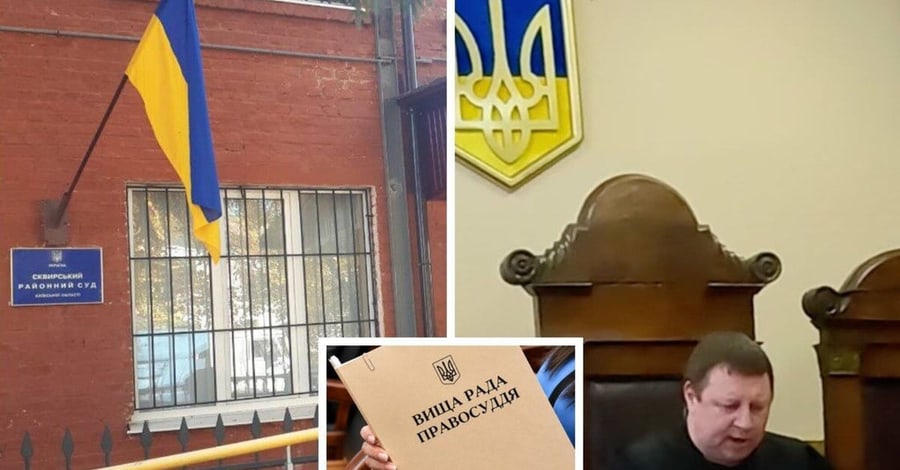
The Skvyra District Court, located in the city of Skvyra in Bila Tserkva Raion of Kyiv Oblast, is in a suspended state according to Opendatabot data. Despite this, the instance stands out among other district courts in the oblast with specific statistics: it has issued a significant number of rulings establishing the fact of a child being raised independently by a father. In the context of general mobilisation, such judicial acts have practical significance, as they can become grounds for obtaining a deferment from conscription.
An analysis of open sources and the court registry conducted by the editorial team revealed a sharp disproportion. In most district courts in Kyiv Oblast, cases of this type are isolated:
- Bila Tserkva City District Court — two cases (No. 357/10920/24, No. 357/17547/25).
- Brovary Court — two cases (No. 361/11889/24, No. 361/5128/24), in one of which the applicant explicitly stated the aim of obtaining a deferment.
- Kyiv-Sviatoshyn Court — two cases (No. 369/16184/25, No. 369/23167/25).
- Makaryiv Court — one case (No. 370/2162/25).
- Rokytne Raion — one case (No. 375/2255/25), where a serviceman referred to discharge and crossing the border.
- Baryshivka Court — one satisfied claim (No. 355/2373/24).
- Fasiv Court — refusal in case No. 381/95/25 citing the risk of artificially creating grounds for exemption from mobilisation; this case reached the Supreme Court.
The opposite picture is observed in Skvyra district, where dozens of cases regarding the independent upbringing of children by a father have been recorded.
Disciplinary proceedings against Oleksandr Kovalenko
In 2026, the High Council of Justice opened a disciplinary case against Oleksandr Kovalenko, a judge of the Skvyra District Court, who, according to Opendatabot data, heads this instance. According to an HCC act dated 02.09.2026, the judge reviewed over a hundred cases on establishing the fact of independent upbringing. Another 20-plus cases mentioned in the document concerned deprivation of parental rights, determination of a child's place of residence, and alimony. The HCC notes that all these claims were satisfied, indicating a 100% success rate in these categories.
The basis for the investigation was a complaint from Anna Borysenko, a lawyer with the "AutoMaidan" public organisation. As the publication "Antikor" reported, her statement covered over 100 cases. The complainant indicated that the judge allegedly did not involve guardianship authorities, did not ascertain the children's opinions, reviewed cases too quickly, and that some rulings could be linked to obtaining deferments.
Oleksandr Kovalenko himself denies these allegations. At this point, only disciplinary proceedings exist, and the judge's guilt has not been established. On 30 September, the Second Disciplinary Chamber of the HCC suspended the review of the case pending receipt of additional materials.
The media outlet "Law and Business" noted that the activist collected over a hundred cases in three years, yet this did not prevent the chamber from scheduling a hearing less than a month after the proceedings were opened.
Judge's profile and declarations
Oleksandr Kovalenko has headed the Skvyra Court since February 2024. The CourtHelp service counts over 20,000 rulings and orders issued by him since 2015, of which 3,256 were issued in 2024 alone. Approximately 80% of his practice consists of civil cases.
In 2024, as "Antikor" reported, the judge awarded $812.86 million from Russia's "Sberbank" in a case regarding assets in Sochi, after which he replaced the creditor with a company from Delaware (USA).
In his annual declaration for 2025, the judge stated: a judge's remuneration of 1.11 million UAH, an apartment of 46.2 m² in ownership, another apartment in use, a land plot of his wife's area of 1.2 hectares, and 8,700 US dollars in cash. In July 2025, he purchased a Toyota Corolla for 1.6 million UAH; the declaration also lists a loan of 914,000 UAH. The judge's wife received 281,800 UAH from the sale of movable property in the same year.
In 2023, the publication "Moya Kyivshchyna" published a material referring to an anonymous post claiming that the judge and his secretary could not confirm their own powers during a hearing. There is no official confirmation of this story.
Supreme Court position and expert assessments
In October 2024, the Grand Chamber of the Supreme Court concluded that the fact of a child being raised unilaterally is not established in separate proceedings, but only as a circumstance in a dispute between parents. The Cassation Civil Court added that a child living with the father does not constitute independent upbringing and does not grant an automatic deferment, and the Territorial Centre for Mobilisation and Social Support (TCSS) has the right to challenge such rulings.
Ihor Bondarchuk, head of the NGO "Stop Corruption", comments on the situation, posing questions to the judicial system:
«На Київщині ВРП уже аналізує десятки рішень одного лише Сквирського суду щодо самостійного виховання дітей. Частина таких рішень може впливати на мобілізаційний статус чоловіків. У Білоцерківському суді також є принципова справа, яка дійшла до Верховного Суду. Чому судова практика настільки різниться в різних районних судах і які запобіжники повинні не дозволити перетворити сімейне судочинство на механізм оформлення відстрочок?» (In Kyiv Oblast, the HCC is already analysing dozens of rulings from the Skvyra Court alone regarding the independent upbringing of children. Some of these rulings may affect the mobilisation status of men. The Bila Tserkva Court also has a landmark case that has reached the Supreme Court. Why does judicial practice differ so much in different district courts, and what safeguards should prevent family litigation from becoming a mechanism for formalising deferments?)
According to the conclusions of a comparative analysis, in most courts in the oblast, such cases are reviewed only in claim proceedings. The defendant must be the other parent, and the children's services are mandatorily involved as a third party. If the plaintiff is a person liable for military service, the TCSS or a military unit may be involved in the case. Without a conclusion from the guardianship authority and an act of housing inspection, the case is not reviewed. Children over 10 years old are always questioned, and younger children are also heard. This approach was confirmed by the Supreme Court in June 2026, emphasising the TCSS's right to challenge rulings that could become grounds for a deferment.
«Верховний Суд давно дав чітку відповідь. Те, що мати живе окремо чи навіть за кордоном, ще не означає, що батько виховує дитину сам. Якщо вона телефонує дитині й цікавиться її життям, вона вже бере участь у вихованні. Так само не підходить "домовленість" батьків чи нотаріальний договір: від сімейних обов'язків не можна відмовитися на папері», — пояснює Ігор Бондарчук. (The Supreme Court has long given a clear answer. The fact that the mother lives separately or even abroad does not mean that the father is raising the child alone. If she calls the child and is interested in their life, she is already participating in their upbringing. Similarly, a "settlement" between parents or a notarial agreement is not acceptable: one cannot renounce family obligations on paper), explains Ihor Bondarchuk.
At the same time, the Supreme Court does not close the path for those who have truly been left alone with a child. For example, the Obolon Court in Kyiv established such a fact for a father this year, whose child's mother disappeared under special circumstances. At the same time, the court emphasised that the issue of deferment is resolved by authorised bodies.
«Подібні рішення дійсно виправдані в окремих випадках, коли за ними стоїть справжня трагедія або потреба захистити інтереси дитини. Але кожне "конвеєрне" рішення без органу опіки, без опитування дитини і без представника держави дискредитує тих батьків, яким захист справді потрібен. І голова суду, хоч і не може вказувати суддям, як вирішувати справи, має бачити статистику свого суду та знати обов'язкові позиції Верховного Суду», — наголошує голова правління ВГО «Стоп корупції». (Such rulings are indeed justified in individual cases where a real tragedy or the need to protect a child's interests stands behind them. But every "conveyor-belt" ruling without a guardianship authority, without questioning the child, and without a state representative discredits those parents who truly need protection. And the head of the court, although unable to instruct judges on how to decide cases, must see the statistics of their court and know the mandatory positions of the Supreme Court), emphasises the head of the board of the NGO "Stop Corruption".
The StopCor team sent requests to the Skvyra District Court, the HCC, and the High Qualification Commission of Judges. The editorial team is ready to give the floor to judge Oleksandr Kovalenko to express his position. Until the HCC's decision, the judge is considered to have not committed a disciplinary offence.






Comments
No comments yet. Be the first!