
Vape liquids worth 250,000 hryvnias seized at Polish border
At the Krakivets-Korchova border crossing, customs officers prevented the import of 280 bottles of nicotine liquids and 117 cartridges of French manufacture.
At the Krakivets-Korchova border crossing, customs officers prevented the import of 280 bottles of nicotine liquids and 117 cartridges of French manufacture.

The occupied peninsula is degrading: critical petrol shortages, Ukrainian military fire on land corridors and a destroyed bridge crossing complicate life for residents.

The Patrol Police stated that only public transport vehicles may cross from the right bank to the left bank via the South Bridge. Different restrictions apply to trucks and passenger cars in the opposite direction.
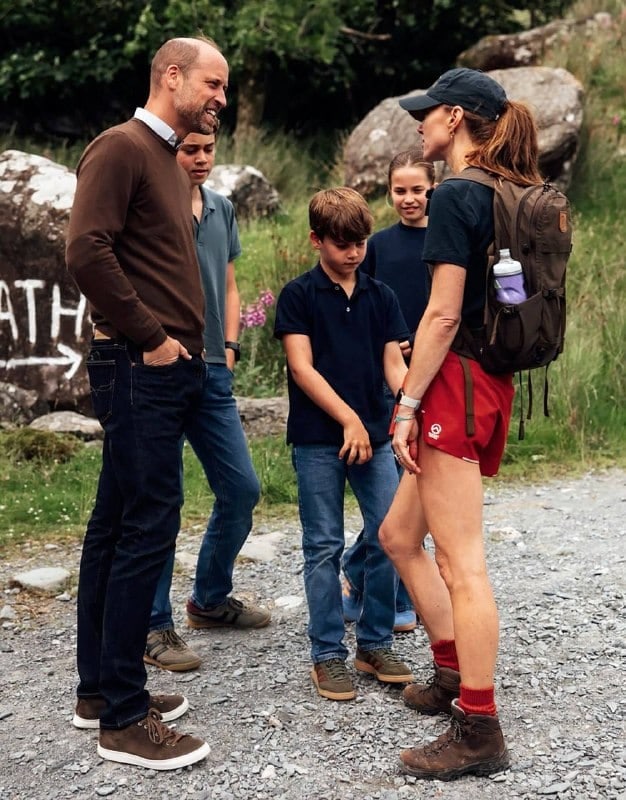
Prince William's wife described the profound changes her personality underwent following her cancer diagnosis. The film's premiere is scheduled for late November.

Massive withdrawals from USDT and USDC indicate a full exit of investors from crypto assets, rather than a loss of trust in the tokens, against the backdrop of tightening state regulation.

Researchers from Israel have developed an AI that identifies risks of liver problems, insomnia, and diabetes based on body movement recordings.
According to experts, the country may have around 26.2 million residents by early 2030, with gender imbalance and societal ageing intensifying.

The actor expects to clear the debt on his Hollywood property only at the age of 66, while being forced to constantly rent accommodation in various cities worldwide due to work commitments.
Even before a patient voices their complaints, a doctor may notice certain signs of their well-being. The way a person moves through a room often contains early clues about their health. Recently, scientists developed an artificial intelligence system that analyses whole-body movements. The study showed that such data is linked not only to the condition of the legs but also to sleep quality, diabetes, and liver function.
The results were published in the journal Nature Medicine. A team of scientists from the Weizmann Institute in Israel analysed movement recordings from 3,328 adults. The medical community has long tracked changes in walking speed, balance, and posture, even referring to walking speed as the "sixth vital sign".
«Коли ми розпочали цей проєкт, ми вірили, що рух може розповісти багато про ваше здоров'я» (When we started this project, we believed that movement could tell a lot about your health), said study author Adam Gabet, a computer scientist at the Weizmann Institute, to ScienceAlert.
Under controlled conditions, participants performed five tasks: walking on a treadmill at a speed of 3 kilometres (approximately 1.9 miles) per hour and at a comfortable pace, walking in place, rising from a chair, and a balance test in a resting state. A depth scanning camera recorded joint positions in three-dimensional space.
Researchers trained the AI by hiding parts of the movement recordings and forcing the system to reconstruct the missing fragments. To fill in the gaps, the algorithm had to understand how different parts of the body move in coordination. The model converted these movements into numerical patterns, which were compared with detailed medical data: test results, anthropometric indicators, presence of diseases, and lifestyle characteristics.
The algorithm identified statistically significant associations with 1,887 out of 3,210 health characteristics studied. Movement patterns provided information that went beyond standard measurements, such as step speed or length.
Some of the discovered links related to age and the amount of fat tissue, while others pointed to health characteristics that at first glance have nothing to do with walking.
One important aspect concerned the liver. Doctors assess liver fibrosis (scarring) by measuring organ stiffness. Researchers found that movement patterns could predict liver stiffness, with prediction accuracy comparable to blood test indicators.
The link to sleep was also unexpected. Torso movements, that is, the areas between the shoulders and hips, carried information related to sleep and physical exertion.
«Мене вразило те, як сильно якість сну впливає на наше тіло» (I was struck by how strongly sleep quality affects our body), Gabet noted.
The model was able to predict indicators related to sleep apnea — a condition in which breathing repeatedly stops or becomes restricted during sleep. Associations with insomnia and sleep duration on the night before the study were also identified.
These results suggest that sleep health is reflected in movement patterns, although the study does not prove that the system can diagnose sleep disorders.
Gabet noted that traditional walking studies often focused on the legs, leaving upper body movements under-studied. The team's findings indicate that whole-body analysis may reveal information that traditional measurements miss.
Adding movement patterns to a model that already accounted for age, body mass index, visceral fat, and height improved the prediction of conditions such as diabetes, depression, insomnia, and medication use.
Researchers hope that movement analysis will eventually become a complement to routine medical check-ups. A short test without the need for blood draws or invasive procedures could help doctors detect changes that require further investigation.
However, the results do not prove that sleep problems or diseases cause specific walking patterns. The study was cross-sectional, meaning it recorded participants at a single point in time, so it is impossible to determine which factor appeared first.
Participants were generally healthy and predominantly Ashkenazi Jewish adults living in Israel, so the results may not apply to other populations to the same extent. The system also depended on a specific type of depth scanning camera and its software. The company Newton Tech, which manufactures this system, became a co-author of the study.
Gabet noted that related studies from their laboratory yielded results that were confirmed in other groups, but this model still requires independent testing.
«Перед медичним впровадженням будуть потрібні клінічні дослідження, які покажуть чітке розділення з хорошою специфічністю» (Before medical implementation, clinical studies will be needed that show clear separation with good specificity), he added.
Currently, researchers plan to investigate whether changes in movements can appear before signs of disease, which could potentially allow for earlier detection of health problems.
Comments
No comments yet. Be the first!