The recruitment of foreigners has become part of a war that extends far beyond Ukraine's borders. For some, it is a chance to escape poverty; for others, an opportunity to obtain a new passport or start life in another country. Russia exploits these aspirations to replenish its army with people from various corners of the world, while promises of a better life can turn into participation in hostilities.
Promises that lead to war
In the documentary "Predatory Recruiting: The Story of Evans," produced by the hromadske team, Kenyan athlete Evans Kibet tells how he ended up in the Russian army. He says he agreed to travel to Saint Petersburg for a cultural event where he was supposed to share his training experience. In Russia, he claims he was offered documents in Russian, the content of which he did not understand. It later turned out that it was a military contract.
Recruitment mechanisms vary. People may be offered civilian jobs as security guards, drivers, cooks, builders, or logistics workers. Others are invited to cultural and sporting events, educational programmes, or university admissions. Then they are offered to sign military contracts.
In some cases, according to testimonies from foreigners, the military nature of the offer is concealed until their arrival in Russia. In others, people know they are signing a military contract but may not understand its terms or have a realistic idea of future service.
Human rights and international advocacy expert Maria Tomak explained why the term "predatory recruiting" is used to describe such practices. In her words, it means enlisting for military service "through mechanisms of coercion, deception, and exploitation of a vulnerable position."
At the same time, the expert notes that Russia often does not recruit foreigners directly but engages recruitment agencies and local brokers who seek people in their own countries. Intermediaries may assist with visas, tickets, and documents, meet candidates, and escort them to the place where contracts are signed. Afterwards, in some cases, passports and phones are taken from the recruits, their movement is restricted, or threats are made against those who try to refuse service. Promised payments may be delayed or not arrive at all.
However, it is important not to lump all foreigners into a single category. Some may voluntarily seek an opportunity to earn money and consciously join the army. Others may agree to a contract without knowing the true conditions. And some, as the foreigners themselves claim, did not even understand that they were being hired to participate in a war.
Scale of recruitment
According to data from the Coordination Headquarters on the Treatment of Prisoners of War, the Ukrainian side has identified nearly 49,000 foreigners from 59 countries who have signed contracts with the Russian armed forces.
The number of such contracts is growing every year. Thus, in 2022, 94 foreign contracts were recorded; in 2023, 4,067; in 2024, 8,877; and in 2025, 16,085. In the first nine months of 2026, a further 16,168 contracts were signed, which is more than in the entire previous year.
Andriy Yushov, Deputy Head of the Coordination Headquarters on the Treatment of Prisoners of War, suggested during a discussion of the hromadske film that Russia's plan is likely to recruit 18,500 foreigners per year. He added that this plan will most likely be exceeded in the near future.
"Every month, 1,800 foreigners agree to go and kill Ukrainians," says Yushov.
The most common countries of origin for recruits are Uzbekistan, Tajikistan, Belarus, and Kazakhstan. At the same time, the number of people from Africa and Latin America is growing rapidly. In the first nine months of 2026, contracts were signed by 1,449 citizens of Colombia, 699 citizens of Burundi, 530 citizens of Zimbabwe, and 503 citizens of Peru.
These data alone do not allow determining how many people signed contracts knowingly and how many ended up in the Russian army through deception or coercion. They also do not cover all foreigners fighting on the side of Russia. However, the figures show that Russia is increasingly actively involving people from other countries in the war.
Consequences for families and international reaction
The consequences of recruitment are evident in the case of Kenya, where Evans Kibet is from. According to Kenyan media reports, the families of men who went to Russia are demanding that the authorities explain how their relatives ended up in the war and establish the fate of those missing and killed.
For example, in an article by the Standard newspaper dated 27 October, which is in hromadske's possession, it is mentioned that families are demanding answers from President William Ruto ahead of the "Russia – Africa" summit. The issue has also been discussed in the Kenyan parliament: families want to know who recruited their relatives, what happened to them, and who should be held accountable for the consequences.
For families, this is not just a matter of searching for missing persons but also a demand to establish those responsible for recruitment and possible deception. They call on the authorities to investigate the activities of intermediaries, clarify the circumstances of Kenyans being sent to Russia, and establish systematic accounting of people who ended up in the war so that families can receive truthful information about their fate.
The price of a "better" life
Why do people agree to such offers? The answer does not come down to a single motive. For some, it is a chance to earn an income that is difficult to make at home. For others, it is an opportunity to legalise their status in Russia or obtain citizenship. Some may consciously choose military service, counting on payments. Others are looking for civilian jobs and do not expect to end up on the front line.
It is precisely economic vulnerability that makes recruiters' promises effective. A high salary, a paid trip, and the prospect of a new legal status may seem like a real way out of a desperate situation. If a person has already arrived in another country, does not speak the language, has lost access to their passport, or depends on an intermediary, refusing the proposed terms becomes much more difficult.
Research by human rights organisations
In April 2026, Truth Hounds, the International Federation for Human Rights (FIDH), and the Kazakhstan International Bureau for Human Rights published a study following interviews with prisoners of war. The study describes not isolated cases of recruitment but a global system for enlisting foreigners into the Russian army. It covers countries in Asia, Africa, and Latin America, and among its tools are promises of highly paid civilian work, Russian citizenship, and other benefits.
Researchers also found signs of the involvement of Russian state structures in creating conditions for such recruiting and concluded that in individual cases, it bears the hallmarks of human trafficking.
"Many of these people understood what they were agreeing to. But some of them were deceived or forced to join the Russian army. And in any case, it was Russia that turned them into cogs in its war machine and threw them onto the most dangerous sections of the front," said Alexis Deswaef, President of FIDH.
Later, in September 2026, Amnesty International published its own study on the recruitment of foreigners into the Russian army. The report describes offers of civilian work that ended in military service, as well as cases where people in Russia with unstable migration status may have been pressured with threats of deportation or criminal prosecution.
According to testimonies cited in the report, some foreigners were sent to the front line after brief training. Human rights defenders also documented the seizure of documents, restrictions on movement, and threats against those who wanted to leave service.
At the same time, Ukrainian data indicates that not all foreigners consider themselves deceived. According to the results of a survey of foreign prisoners of war conducted by the Coordination Headquarters on 20 October this year, 46.7% of respondents said they signed the contract for Russian citizenship, and only 28% stated that they did not know they would be fighting against Ukraine.
Is it possible to prove Russia's involvement?
The Russian authorities deny the illegal recruitment of foreigners and insist that they join the army voluntarily. In March 2026, Russian Foreign Minister Sergey Lavrov stated during a press conference with his Kenyan counterpart that "no one is hired, just as no one is recruited in the case of the 'special military operation.' Volunteers get there in full compliance with Russian legislation."
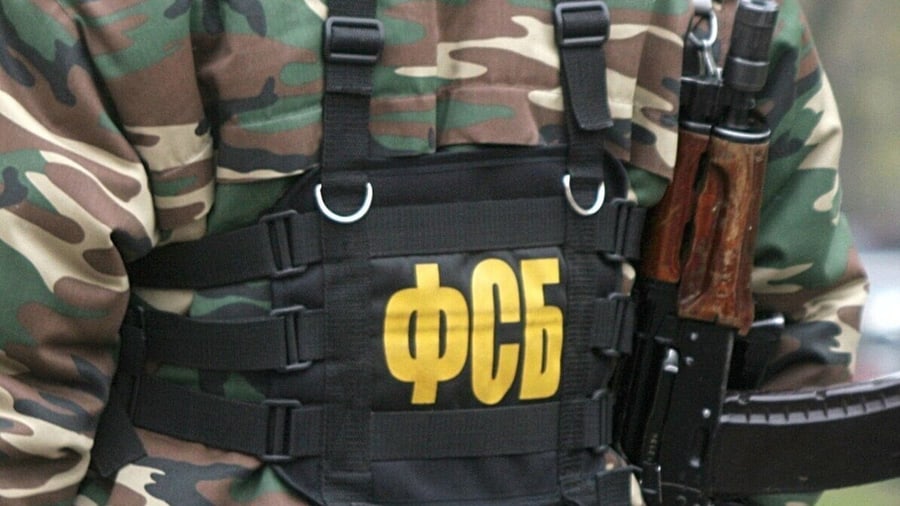
However, according to data from the Coordination Headquarters, 41.4% of the surveyed foreign prisoners of war were recruited through military commissariats or recruitment points. This already indicates the role of official Russian structures in some cases.
Here, it is necessary to distinguish between two levels of responsibility. The first is the criminal responsibility of a specific recruiter, official, or commander, which requires evidence of their actions and role. The second concerns the state, which organises recruitment into its own army and cannot automatically shift responsibility for abuses to intermediaries if its structures participate in the process or accept people recruited through deception.
At the same time, it is legally difficult to prove the responsibility of the Russian state itself. Maria Tomak explains that the Russian authorities try to distance themselves from the recruitment process, presenting it as a voluntary decision by foreigners.
"So it's not us who are recruiting – they come to us themselves and mobilise. We have nothing to do with it," – this is how the expert describes the position of Russian diplomats in various countries. In her words, Russia consciously does not publicise its role in recruitment, which complicates the collection of evidence necessary for legal prosecution.
The researcher said that she is looking, together with colleagues, for international mechanisms that would allow holding Russia or those coordinating recruitment accountable. Among the possible tools, she mentions UN mechanisms and the International Criminal Court, but notes that defining the appropriate crime and gathering sufficient evidence will not be easy.
"I think it is currently difficult to make an amazing and so unambiguous case that the ICC would immediately react to it. That is, this is a complex task, and holding Russia accountable immediately is very difficult," says Maria Tomak, human rights and international advocacy expert.
Andriy Yushov agrees that the process of holding accountable will be lengthy but emphasises that diplomatic work is already underway. In his words, Ukraine is interacting with the governments of countries whose citizens ended up in Ukrainian captivity or became victims of "predatory recruiting." One direction of this work is the Stop Russian Recruiters campaign, implemented by Ukraine and the Coordination Headquarters with the participation of the Ministry of Foreign Affairs.
Yushov also allows for the use of national legal mechanisms: countries of origin of the recruited individuals can investigate the actions of recruiters within their own jurisdiction, as well as raise the issue of the Russian government's responsibility for actions against their citizens.
"This is definitely not just a problem for Kenya alone or Ukraine alone. It is a global threat, and the responses must also be global and collective," Yushov concludes.
Author: Viktoriia Kolomiets


Comments
No comments yet. Be the first!