
Police suffered burns from Molotov cocktails during mass protests in France
Clashes between demonstrators and law enforcement took place in Paris and other French cities on 31 October, during which security forces sustained burn injuries.
Clashes between demonstrators and law enforcement took place in Paris and other French cities on 31 October, during which security forces sustained burn injuries.

AI agents are generating an increasing amount of code on GitHub. Over the year, the number of changes grew sixfold, and the platform expanded its infrastructure by 4 million processor cores.

On 1 November, a traditional joint prayer will be held at Lychakiv Cemetery for those who died in the Ukrainian-Polish confrontation of 1918–1919.

Ukrainian model and former Khlivniuk girlfriend Natalia Gotsiy appeared in Baku with Roman Abramovich

Six people were injured as a result of enemy strikes on the Sumy and Konotop communities. Rescue services extinguished fires and inspected the affected areas.

Head of Donetsk Regional Military Administration reported that on 31 October, Russian forces killed one civilian and injured eight other residents of the region.
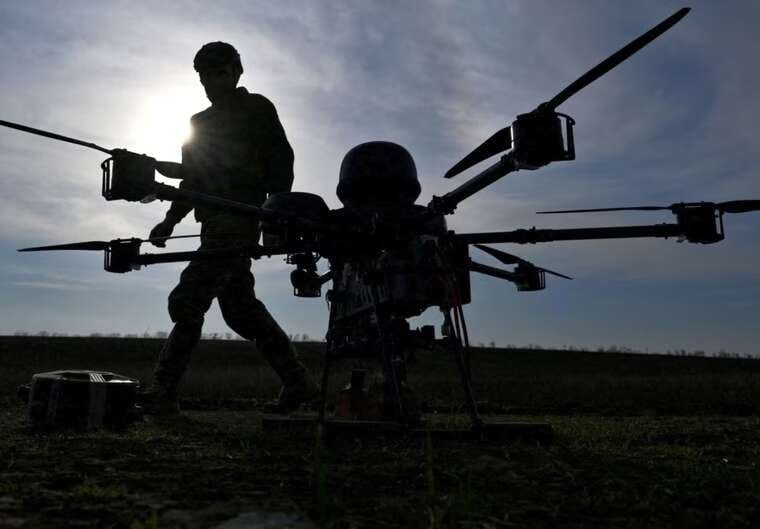
According to the command of the Unmanned Systems Forces, Ukrainian drones killed or wounded 16,796 Russian soldiers in October, the highest figure since the start of the full-scale war.

Head of Khmelnytskyi Regional Military Administration Serhiy Tyurin reported on prolonged attacks by Russian drones on energy infrastructure, leading to emergency power outages.
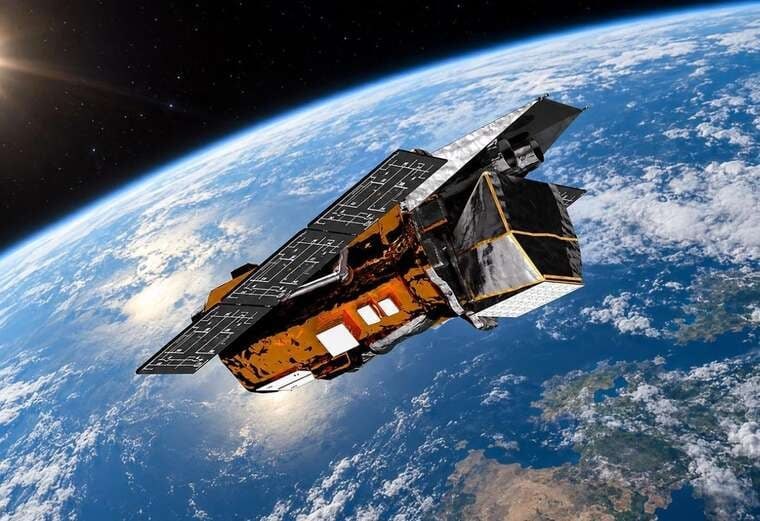
The Swift space telescope, developed by the US National Aeronautics and Space Administration (NASA), will soon enter the dense layers of Earth's atmosphere. This spacecraft, which has been in orbit for 22 years, has lost the ability to maintain its designated altitude. According to Associated Press, most of the 1.5-tonne structure will burn up during the fall. However, there is a possibility that individual components, specifically tungsten parts (a metal denser than lead) and sections of the mirror systems, will survive.
Most likely, these fragments will end up in the ocean. However, the potential impact zone covers significant territories: Africa, Australia, India, South-East Asia, as well as Central and South America.
NASA stated that scientific observations ceased on 20 October, and since then the spacecraft has continued to descend. The main cause was high solar activity, which creates additional drag for satellites in low Earth orbit, making it increasingly difficult to maintain altitude. Swift began losing altitude last year.
The agency attempted to save the telescope by deploying a specialised spacecraft developed by Katalyst Space Technologies. However, this plan failed due to technical malfunctions in the rescue module. This summer, the rescue mission was unsuccessful, and the rescue spacecraft itself fell into Earth's atmosphere at the end of September.
The Swift observatory was launched in 2004. The initial planned mission duration was only two years, but the spacecraft continued to function for 22 years. The primary area of research was gamma-ray bursts — the most powerful explosions in the universe. Over its entire operational period, the space telescope recorded more than 2,000 such events.
Comments
No comments yet. Be the first!