
The Economist calls for strict limits on 'mirror life' research
The British publication warns of the risks of creating artificial organisms with altered molecular spatial orientation, which could become an uncontrollable threat.
The British publication warns of the risks of creating artificial organisms with altered molecular spatial orientation, which could become an uncontrollable threat.

The speaker of the Iranian parliament stated that Tehran refuses to open the strategic strait until Washington accepts conditions based on the Islamabad memorandum.

Budget analysis shows courts receive less funding than law enforcement agencies, compounded by a high volume of complaints against investigators arising from bureaucracy.
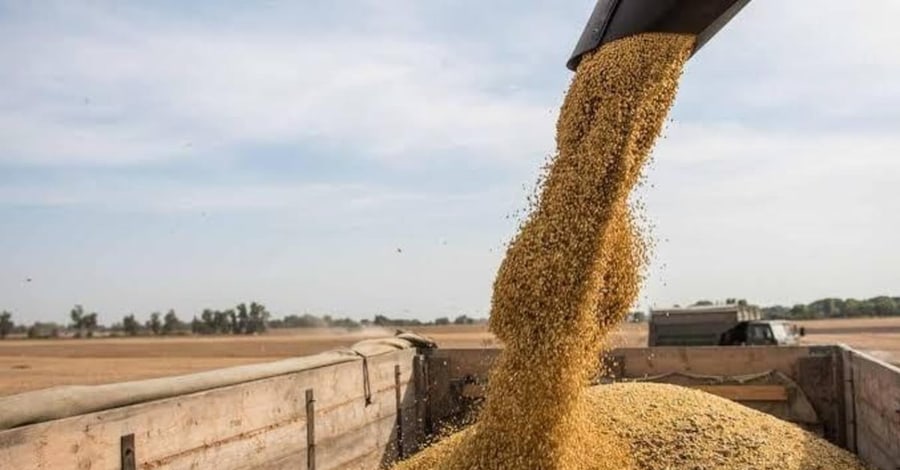
Neighbouring countries stated they cannot double the volumes of Ukrainian agri-product shipments. This threatens the loss of around 30 million tonnes of exports and a 35–40% reduction in sown areas.

Russian law enforcement officers detained Teimuraz Gogiasvili, who is accused of dismembering the wife and daughter of Moscow restaurateur Mamuka Tsereteli.
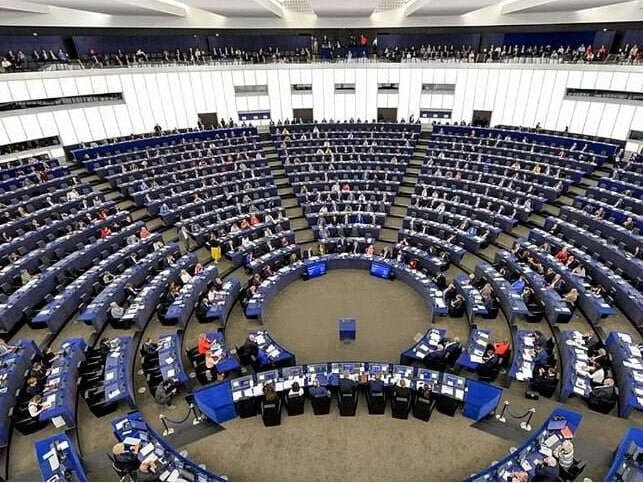
A group of parliamentarians called on the European Commission to resume discussions on the mechanism for using Russian funds to support Kyiv.

Thousands of people took to the streets in South Korea to express dissatisfaction with the head of state's actions. Protesters accused the president of threatening national security and corruption.

Court seizes assets in a house in Kyiv linked to the former Interior Minister. Investigation established illegal rental and possible concealment of property through foreign structures.
The governments of Poland and Romania have officially stated that they cannot and do not plan to significantly expand throughput capacity for the transit of Ukrainian agricultural products. This information is reported by the publication POLITICO, citing the reaction of European partners to an appeal by Ukrainian Minister of Agrarian Policy and Food Taras Vysotskyi.
The appeal to colleagues in the EU came against the backdrop of the prolonged blockade of Ukrainian Black Sea ports. Due to Russian strikes on port infrastructure and attacks on shipping in the Black Sea, Kyiv is seeking alternative routes for exporting grain and other agri-products.
Romania, which is one of the key hubs for exports via the Danube and the port of Constanta, explains its position with internal priorities. Romanian Minister of Agriculture Barna Tancos noted that the interests of domestic farmers remain a top priority for Bucharest.
According to the official, the current water level in the Danube and additional volumes of Ukrainian grain are already creating excessive strain on the country's port infrastructure. He emphasised that Romania physically cannot double the number of rail trains, road shipments, or increase port throughput capacity.
Meanwhile, Bucharest is attempting to optimise existing logistics chains. In July this year, Ukraine, Romania, Moldova, and the European Commission reached an agreement to strengthen "solidarity corridors", develop the Danube logistics cluster, and increase port throughput capacity.
Poland adopted a similar position. A representative of the country's Ministry of Infrastructure stated that the department is not preparing any changes aimed at increasing the transit of Ukrainian agricultural products in the near future.
The reluctance of neighbouring countries to expand transit creates an additional problem for Kyiv, as land and river routes cannot fully replace deep-water ports. According to data from the Ukrainian government, around 80% of agricultural exports in 2026 were accounted for by sea shipments.
Currently, via alternative rail, road, and river routes, it is possible to export only approximately half of the potential volume of produce. If the situation does not change, Ukraine may fail to export around 30 million tonnes of agri-products during the current marketing year.
The government also appealed to the European Union to allocate around €1.1 billion to compensate for additional logistics costs. According to an estimate by Taras Vysotskyi, such funds could stimulate additional exports of up to 20 million tonnes of produce.
Logistical difficulties are already going beyond the issue of exports. Since farmers are selling less produce, they receive less revenue, which complicates the conduct of autumn works and preparation for the next season.
The minister warned that if the current restrictions persist, Ukraine may lose a significant portion of its sown areas next year. According to his calculations, if the situation does not improve by spring, the sown area could shrink by 35–40%.
This is of critical importance for the economy, as the agricultural sector accounts for around 17.5% of the country's GDP and nearly 56% of export revenues. Therefore, logistics problems affect not only farmers but also the overall economic state of the country.
The European Commission does not rule out a joint response to this crisis. European Commissioner for Agriculture Christophe Hansen stated that the situation needs to be resolved with a view to food security, but Brussels has not yet announced specific financial commitments.
Individual countries are ready to support alternative routes. Germany reported work on strengthening export routes for Ukrainian products through Europe. Kyiv is also considering Dutch and German ports as additional directions for grain exports.
Comments
No comments yet. Be the first!