
Journalists uncover hidden assets of MP Vatsak: $3.5m car fleet and state losses
Investigation reveals network of luxury cars in Gennadiy Vatsak's circle and series of violations in his business causing multi-million losses to state budget.
Investigation reveals network of luxury cars in Gennadiy Vatsak's circle and series of violations in his business causing multi-million losses to state budget.

Law enforcement officers discovered a contraband batch of electronics in a minibus crossing the state border via the Krakovets – Korchova checkpoint.

A court in Chernihiv has sentenced the head of a military medical commission to prison for establishing and leading an organised group that issued fictitious medical certificates.

Officers Mykola Savchenko and Ihor Voloshko rescued a woman and her grandson from the rubble after a Russian shelling. During the evacuation, Savchenko lay on top of the child to protect him from a new UAV launch.

Mass march in Canada for affordable education ended in riots. Police used tear gas, and three demonstrators were detained.

Major tech giants are financing their own clients to purchase their services. The IMF has allocated $1.4 trillion to such cyclical deals.

The Ukrainian tennis player secured a victory in the final round of the group stage with a score of 6:3, 3:6, 6:1 and will continue her campaign at the tournament in Indian Wells.

The Cabinet of Ministers approved a bill on updating the strategy, which provides for the restoration of war-damaged territories and the integration of EU requirements.
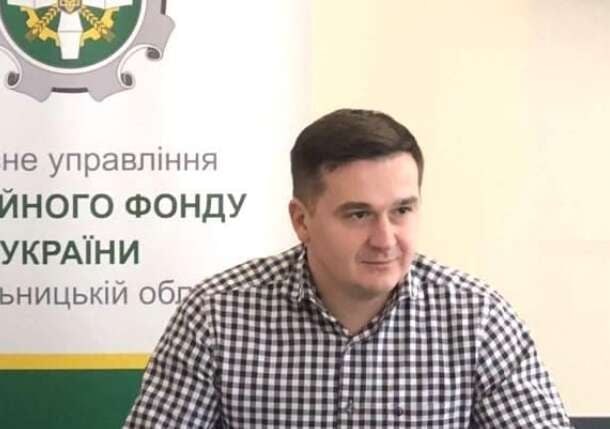
Officials of the Main Directorate of the Pension Fund of Ukraine in Khmelnytskyi Region successfully won court cases to restore their disability groups. The courts ruled that the reviews conducted by the Institute for Assessing Functional Status of an Individual contained significant procedural violations. Although the state launched a large-scale review of previously established disabilities following the high-profile scandal involving the head of the local Medical and Social Expertise Commission (MSEC), Tetiana Krupa, most of the appeals filed by the officials resulted in their favour.
In October 2024, during searches at Tetiana Krupa's residence, law enforcement officers found millions of dollars in cash. Media outlets published photos of her husband, Volodymyr, lying on a bed covered with dollar banknotes. It emerged that the Krupa family possessed significant assets, and dozens of prosecutors in the region had disability status. This scandal led to the liquidation of the MSECs, whose functions were transferred to expert teams of doctors in medical institutions from 1 January 2025. Pension assignment remained under the jurisdiction of the Pension Fund.
In September 2026, Volodymyr Krupa and his son Oleksandr, the former head of the regional Pension Fund office, planned to travel abroad for a medical examination. Their defence asked the High Anti-Corruption Court to allow remote participation in the hearings, and the court granted this motion. This event drew attention to the fact that two years after the searches, the disability issue turned out to be broader than just the case involving the prosecutors and the Krupa family.
Investigations showed that at least 8 out of the 11 Pension Fund officials who went to court received their disability status before 2020. At that time, the regional office was headed by Olha Zaiarniuk, who had led the institution since the early 2000s. According to sources, she maintained friendly relations with Tetiana Krupa.
Family ties were also notable: Olha Zaiarniuk's younger son, Ivan, a judge at the Commercial Court, has a disability and was involved in a case concerning preferential cars. Her daughter-in-law, Alina, who worked at the Pension Fund until 2025, has been receiving a disability pension since 2018. Her older son, Taras Zaiarniuk, worked as a doctor at the Khmelnytskyi Regional MSEC in 2023, which was then headed by Krupa. After Olha Zaiarniuk was dismissed in November 2020, Oleksandr Krupa took over as head of the regional Pension Fund, leading the institution until October 2024.
In 2020, law enforcement officers uncovered a suspected scheme for the misappropriation of bonuses for employees of the regional pension fund. According to the investigation, the then-head of the institution, Olha Zaiarniuk, together with the chief accountant, Larysa Melnyk, organised a system where subordinates were awarded bonuses on the condition that they returned a portion of the money to the management. To collect cash from district branches, law enforcement claimed that even the Pension Fund's official driver was used. According to the investigation, more than 211,000 hryvnias were collected in this manner in just June and July 2020. During the search of Zaiarniuk's office, 74,000 hryvnias and 29,000 euros were seized.
The criminal proceedings involved Oksana Teliacha, head of the department for the application of pension legislation; Nataliia Dubchak, head of the department for citizen services; and Lesia Bondarenko, deputy head of the department and head of the methodology and organisation of citizen services unit. The court temporarily suspended Zaiarniuk, Teliacha, Melnyk, and Dubchak from their positions. Teliacha was placed under night house arrest, while Zaiarniuk, Melnyk, and Dubchak were required to post bail. The procedural status of Bondarenko is unknown. It was after this scandal that Olha Zaiarniuk left her position as head of the Main Directorate of the Pension Fund in Khmelnytskyi Region. Former chief accountant Larysa Melnyk has not worked at the institution since the beginning of 2022. Meanwhile, after a four-year break, court hearings in the case of suspected bonus misappropriation have resumed.
However, the scandal did not end the careers of Teliacha, Dubchak, and Bondarenko. All of them remained in managerial positions and participate in public events of the Pension Fund. For example, Bondarenko took part in an online meeting with entrepreneurs in 2025, while Teliacha and Dubchak met with students during the institution's Open Day in 2026. We attempted to clarify how Teliacha and Dubchak returned to their positions by sending a request to the Main Directorate of the Pension Fund. However, as of publication, no response had been received.
Thus, to recall, these three officials later found themselves among those who sought through the courts to overturn the results of the review of their own disability status. For all three, this overturning was successful.
Following the National Security and Defence Council decision of 22 October 2024 on reviewing officials' disabilities, the cases of many Pension Fund employees were subjected to review. In the cases of Oksana Teliacha, Lesia Bondarenko, and Nataliia Dubchak, the reviews were conducted pursuant to letters from the Security Service of Ukraine (SBU) and the Bureau for Investigative Activities (BIA) or following a BIA application. However, the courts established that the disabilities were cancelled in absentia, without the personal participation of the individuals or a medical examination.
Oksana Teliacha, who received a permanent Group II disability in 2017, claimed that she was not notified about the hearing. The court noted that the protocol did not specify the reason for her absence or the format of the review. Nataliia Dubchak, who was assigned Group II in 2019, stated: "I went there, I was hospitalised for five days. During the examination, they only took a urine test and a finger prick blood test. No one referred me for an additional MRI or any other examinations. They only assessed the documents I had brought with me at that time. And based on the results of that so-called examination, I was declared healthy. Accordingly, I did not agree with this decision and went to court" (I went there, I was hospitalised for five days. During the examination, they only took a urine test and a finger prick blood test. No one referred me for an additional MRI or any other examinations. They only assessed the documents I had brought with me at that time. And based on the results of that so-called examination, I was declared healthy. Accordingly, I did not agree with this decision and went to court).
Lesia Bondarenko was also not properly notified, and the decision was made without a new examination. The court ruled that letters from the SBU and BIA are not procedural decisions that could serve as a basis for a review.
On 29 October 2025, the Khmelnytskyi District Administrative Court overturned both decisions of the expert team regarding Oksana Teliacha, emphasising that the violation of the right to participate is not a formal one. In Nataliia Dubchak's case, the court also overturned the deprivation of her disability group, and the appellate court upheld this decision. On 20 April 2026, the court granted Lesia Bondarenko's claim, finding the expert team's decision of 19 February 2025 unlawful.
After the disability status was cancelled, the Pension Fund stopped payments: to Teliacha from 1 April, and to Dubchak from 1 July 2025. Teliacha also faced a demand to return approximately 695,000 hryvnias, which the fund considered overpaid. On 16 April 2026, the court partially granted her claim: it obliged the Pension Fund to restore payments to Teliacha and cancelled the recovery. On 5 June 2026, the court granted Dubchak's claim, obliging the restoration of the pension from 1 July 2025. On 21 and 28 October 2026, the Seventh Appellate Court in Vinnytsia confirmed that the Pension Fund had no grounds for failing to restore the pensions. Nataliia Dubchak commented: "As of today (the conversation took place on 4 November 2026. — Ed.) my pension has not yet been restored. And I again submitted requests for public information to two directorates — the one where I work, and to Dnipro, to find out on what basis my payments have not been restored yet, despite the court decision" (As of today (the conversation took place on 4 November 2026. — Ed.) my pension has not yet been restored. And I again submitted requests for public information to two directorates — the one where I work, and to Dnipro, to find out on what basis my payments have not been restored yet, despite the court decision).
Lesia Bondarenko also went to court against the Pension Fund, but on 31 August 2026, the court only opened the proceedings. She refused to disclose details: "This is my personal matter. I do not think I have to disclose it to you" (This is my personal matter. I do not think I have to disclose it to you).
Another eight Pension Fund officials also won first-instance court cases due to procedural violations. Oksana Rybchynska and Yulia Kovalchuk had their disability status cancelled in January 2025, but the investigator's rulings from the BIA, which the Institute relied on, were dated 31 January — meaning they appeared later than the review results. Both won their court cases.
Vitaliy Hlushov was offered to undergo an examination by 18 March 2025, but his disability was cancelled on 26 February. He commented: "The Institute notified me with a significant delay. And accordingly, they simply removed the group without an examination. I understand that they just removed it and that was it" (The Institute notified me with a significant delay. And accordingly, they simply removed the group without an examination. I understand that they just removed it and that was it). The court granted his claim, and the appeal left the decision unchanged.
Courts also overturned decisions regarding Oksana Lagdan, Tetiana Bondarchuk, Valentyna Chubar, and Halyna Kostyuk due to in absentia reviews and lack of proper notification. Lyudmyla Pytlyk, who was assigned Group III in 2022, also won her court case after an in absentia review based on a BIA letter. She noted: "He (The Institute. — Ed.) did not notify me in any way. They did not invite me. They did not offer to provide additional documents" (He (The Institute. — Ed.) did not notify me in any way. They did not invite me. They did not offer to provide additional documents).
The officials received disability pensions, although none of the current employees had yet reached retirement age. Lesia Bondarenko assured that she does not use privileges at work. Nataliia Dubchak reported that doctors recommended she avoid stress, but work at the Pension Fund is associated with overloads. Vitaliy Hlushov noted that he cannot lift heavy objects.
The situation with disability reviews raises questions about equal access to this procedure. While ordinary citizens and military personnel spend years proving their health limitations, the heads of one institution were massively awarded permanent disability groups. The state, having taken up the task of checking for abuses after the scandal, failed to conduct the review in a way that its results would withstand judicial scrutiny due to gross procedural errors by the Institute.
Comments
No comments yet. Be the first!