
Odesa City Council prepares to adopt 17.3 billion hryvnia development plan for 2026–2027
The agenda for the 28 October session includes a draft containing 330 measures. Funding is planned from city and state budgets, as well as grants.
The agenda for the 28 October session includes a draft containing 330 measures. Funding is planned from city and state budgets, as well as grants.

Israeli Prime Minister posted an AI-generated photo of a mushroom cloud over Tel Aviv, citing an existential threat from Iran.

Maxim Orekhov is linked to Denis Povetkin's project promoting binary options. The publication's author claims possible affiliate payouts based on user losses.

The MP stated that a general discharge of military personnel is not planned. The Ministry of Defence is preparing criteria for specific categories of defenders, taking into account injuries and length of service.
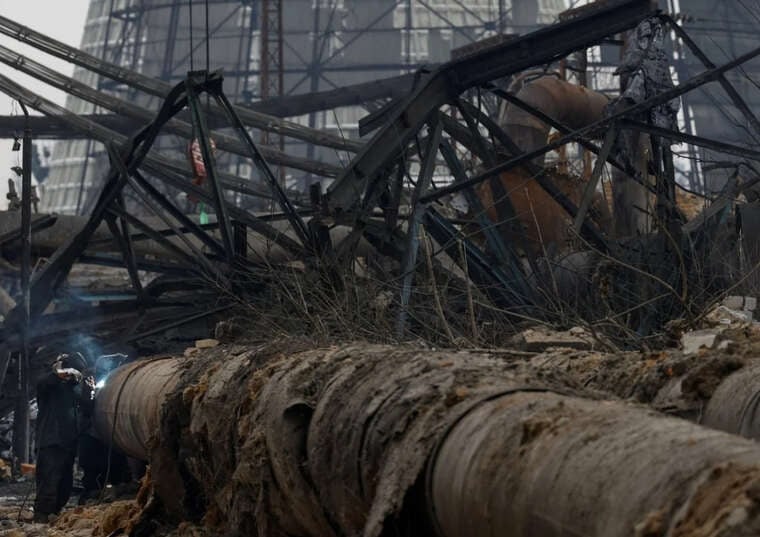
Energy Research Centre director Oleksandr Kharchenko stated that the capital's energy system could end up in a closed loop of emergency repairs and blackouts.

The Polish Boxing Association has temporarily suspended Ukrainian Andrii Velykovskyi from professional bouts for medical reasons following his defeat by Cuban Rafael Garcia.

The anti-corruption agency recorded significant discrepancies in the reporting of local council deputies. Some materials have been transferred to law enforcement, and one indictment is already in court.

Border guards from the Chop detachment of the State Border Guard Service discovered 4,000 packs of smuggled cigarettes in a wagon carrying iron ore coils on the Uzhhorod – Matiyevtsi route.
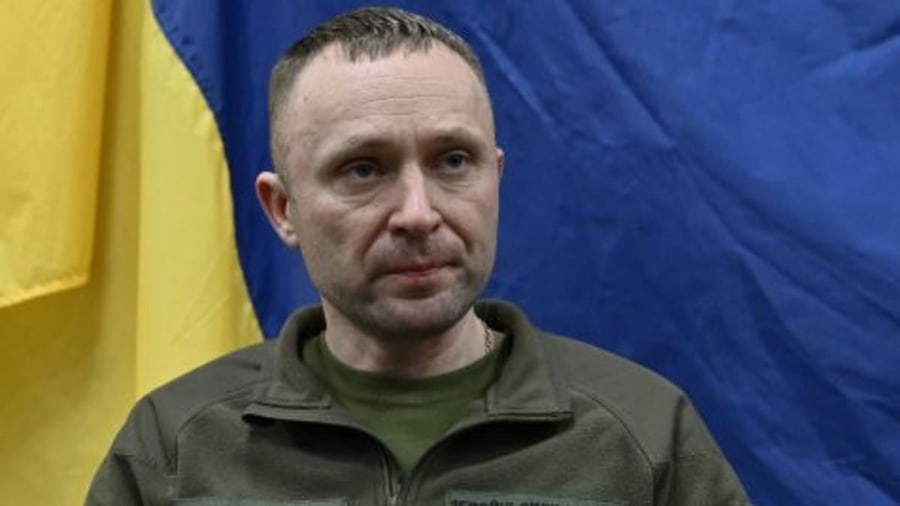
In October 2026, a discussion arose in society regarding a document that media and social media users unofficially called the "Drapatyi Order". This refers to Order No. 423 of the Commander-in-Chief of the Armed Forces of Ukraine dated 6 October, which is attributed with new rules for handling military-liable individuals during their stay at Territorial Centres for Recruitment and Social Support (TCCs). Specifically, it concerns rules regarding phones, guarantees of access to a defender, and requirements for video control.
Despite active discussion, during the fact-checking process, no official confirmation of the full text of the order could be found. Without an authentic document, it is impossible to accurately establish its wording, effective date, and scope of application. Therefore, any claims about new restrictions or rights should be treated cautiously, relying on current legislation.
One of the key aspects subject to interpretation is the question of detention powers. According to Article 262 of the Code of Ukraine on Administrative Offences, administrative detention for violations of military registration rules and mobilisation legislation is carried out exclusively by police representatives. TCC employees do not independently have such powers.
Thus, the common claim about a ban on detention requires clarification: it relates to the lack of authority for recruitment centre officials to independently detain individuals, rather than a general ban on lawful detention, which may be carried out by the police in the established procedure.
The handling of smartphones has become a separate subject of discussion. Being present at a TCC in itself is not grounds for the automatic confiscation of a gadget. The legislator provides for separate procedures for the seizure of items, which are carried out by authorised persons.
It is important to distinguish between the seizure of a device, the review of its contents, and the restriction of the right to record. The legality of each of these actions depends on specific circumstances and compliance with procedural requirements, rather than the mere fact of a person's presence in a TCC premises.
The right to defence and lawyer assistance existed before information about the new order appeared. The State system of free legal aid emphasises that every detained person has the right to defence, as well as to confidential communication with a lawyer.
Regarding video control, officially published rules already exist. The Ministry of Defence reported that from 1 September 2025, TCC representatives are obliged to use chest-mounted video cameras (body cameras) in notification groups. Recording must be continuous, except in cases specified by the regulations.
The storage period for video materials on the VSP server is 30 days, with the possibility of extension if necessary. It is important to note that these requirements concern the personal equipment of employees and do not automatically confirm the installation of fixed video surveillance cameras in all TCC premises.
Reports on the implementation of a new mobilisation procedure should be assessed in the context of current laws. An internal order cannot independently create additional grounds for restricting citizens' personal freedom or seizing their property.
Recall that earlier, information appeared about a document regulating the procedure for delivering military-liable individuals to TCCs and interaction with the police. The materials explained that the formalisation of delivery does not mean an automatic decision on mobilisation. It is also known that in Ivano-Frankivsk region, a court fined a TCC officer for violating video recording and storage requirements for body camera recordings, as the inspection revealed the absence of a significant part of video materials and improper storage of files.
Comments
No comments yet. Be the first!