
Cat Zeus Travels by Train Alone: 59 Kilometres to London
Four-year-old cat Zeus has once again become a participant in a railway adventure, travelling almost 60 kilometres without a ticket. The owner uses two trackers to monitor his movements.
Four-year-old cat Zeus has once again become a participant in a railway adventure, travelling almost 60 kilometres without a ticket. The owner uses two trackers to monitor his movements.

US President signed an order requiring the Attorney General to ensure swift and irreversible punishment for those sentenced to death at the federal level.

The author suggests that the current market drop is the final stage of panic selling, after which announcements of state reserves and a sharp rise in the asset's value may follow.

Analysis highlights the contradiction between rhetoric on Bitcoin's worthlessness and government actions to create strategic reserves and a legal framework for controlling digital assets.
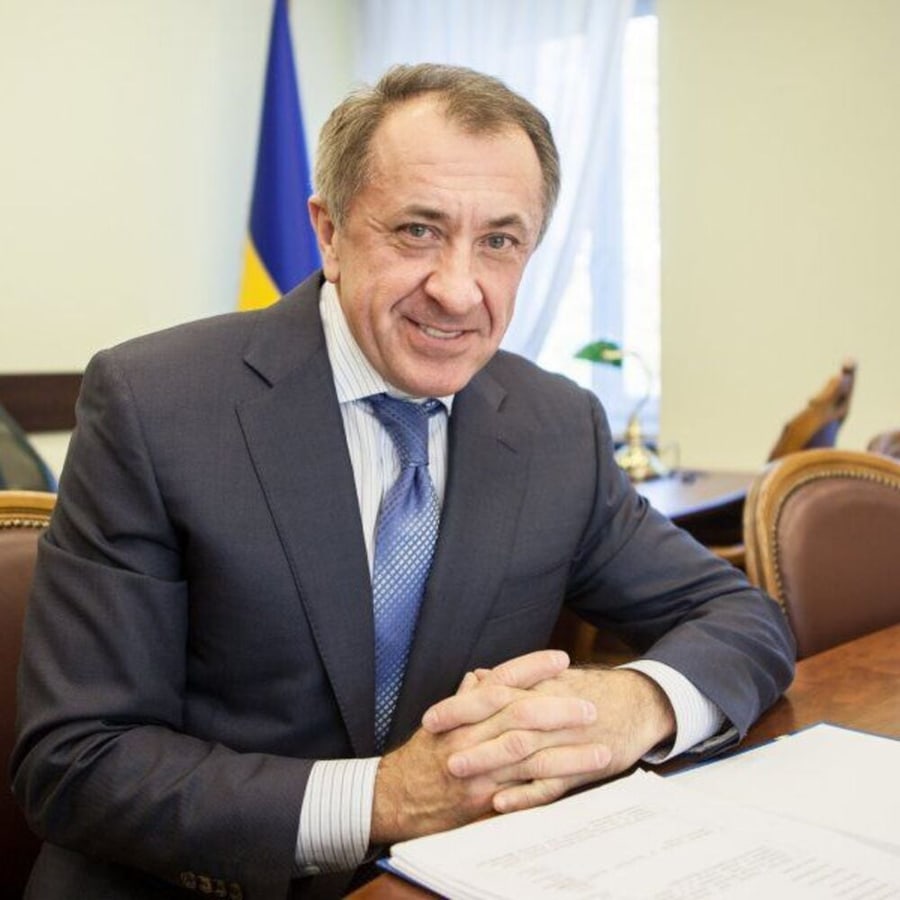
A review of the key stages in the biography of Bohdan Danylyshyn, who headed the National Bank of Ukraine from 2016 to November 2023.
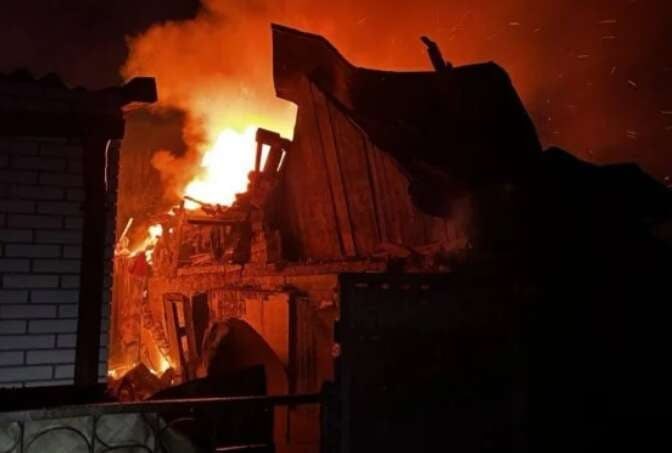
Ukraine's Defence Minister reported record missile production rates in Russia. Analysis indicates a critical global shortage of interceptor production capacity.

Economist Oleg Pendzyn noted that shortfalls in state revenue due to Russian strikes on the Ukrainian economy reached the projected annual figure as early as November.

In the recording, a man, presumably Storozhuk, instructs notification groups to find two people each by the end of the day.
Ukraine's Defence Minister Yevheniy Khmara spoke at the NATO Parliamentary Assembly in Berlin. He stated that the Russian side produces one ballistic missile every five hours.
The prominent politician also noted positive dynamics for Kyiv: over the past months, Ukrainian forces have destroyed 16 Russian Iskander operational-tactical missile systems and S-300/400 air defence missile systems.
Experts note that the increase in the production rate of Russian 9M723 missiles has been observed for several years. If in 2021 one missile was produced every two to three weeks, this figure has now reached two to three units per day.
Today, Russia is capable of producing over 1,000 9M723 variant missiles annually. Intercepting them requires an average of 2,000 PAC-3 interceptors.
Lockheed Martin's production capacity allows for the release of approximately 750 PAC-3 interceptors per year. Japan is the only licensed manufacturer in the world. However, Mitsubishi Heavy Industries' capacity is only 50-60 missiles per year. Moreover, Japanese legislation prohibits the export of weapons to countries in a state of war.
Thus, given the need for 2,000 interceptors, global annual PAC-3 production is just over 800 units. Furthermore, the ballistic missiles Russia uses to bombard Ukraine also include the 5V55 (S-300) and 48N6DM (S-400). Therefore, the ballistic threat significantly exceeds 1,000 9M723 missiles.
The author of the text criticises the use of the term "ballistic" to describe all threats. In his opinion, this narrows the understanding of the problem, as many dangerous missiles are not ballistic but require interception by systems such as Patriot or SAMP/T.
Such missiles include:
It is proposed to use a more precise term — "Hard-to-Intercept Missiles" (HTIM). This allows for a broader assessment of the scale of the threat.
It is important to consider that similar stockpiles of HTIM are accumulating daily not only in Russia but also in North Korea and Iran. As a result, according to the author, the world is losing the race in missile and interceptor production to tyrannies and dictatorships.
Comments
No comments yet. Be the first!