Change in practice for distributing recovered funds
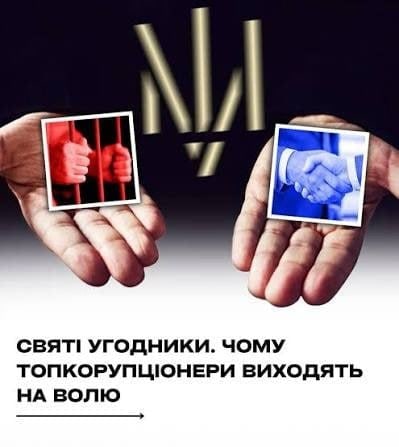
A new trend has emerged in the practice of the High Anti-Corruption Court, as well as in plea deals concluded by the National Anti-Corruption Bureau (NABU) and the Specialised Anti-Corruption Prosecutor's Office (SAP). A portion of funds obtained from suspects is being directed not only to the state budget but also to the accounts of charitable funds.
Financial indicators and recipients
According to the official response from the SAP to an information request, the total amount transferred to private charitable organisations under such agreements is 334.57 million UAH. The distribution of these funds is as follows:
- «Повернись живим» (Come Back Alive) — 272.88 million UAH;
- «Спільнота Стерненка» (Sternenka Community) — 51.89 million UAH;
- Serhiy Prytula Foundation — 2.5 million UAH;
- Other funds («Герой України» (Hero of Ukraine), «Код нації 47» (Code of the Nation 47), etc.) — approximately 6–7 million UAH.
A separate agreement with Serhiy Pashynskyi is noted, which provides for the transfer of an additional 100 million UAH to the «Спільнота Стерненка» (Sternenka Community). These funds are to arrive along with significant amounts designated for the state budget and the «Повернись живим» (Come Back Alive) fund.
Transparency issues and legal risks
The «Спільнота Стерненка» (Sternenka Community) fund was registered as a legal entity only in January 2025, so there are no receipts prior to this period. It is stated that the funds received were used for the purchase of FPV drones and other equipment for the Armed Forces of Ukraine. However, public reporting on the use of these funds is absent.
In total, under plea deals, the SAP reported approximately 2.9 billion UAH for the needs of the Defence Forces (including funds, special accounts, war bonds, etc.). However, a significant portion of this money does not go directly to the Ministry of Defence or the state budget, but through private funds.
This practice is criticised for several reasons:
- Lack of a clear legislative mechanism that would explicitly allow directing such funds to specific private funds.
- No systematic state control over the further use of these funds after transfer.
- Lawyers point to potential risks of abuse of office when selecting recipients.
- Some High Anti-Corruption Court judges have already refused to approve agreements where funds went to private funds instead of state special accounts.






Comments
No comments yet. Be the first!