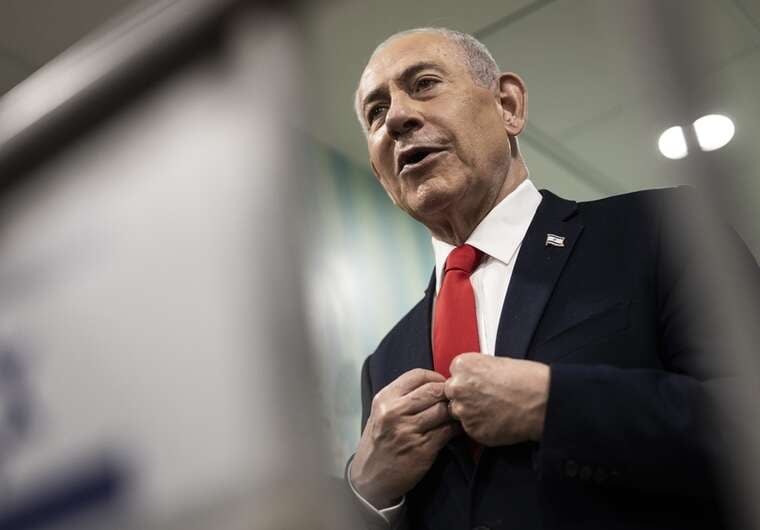
Netanyahu's Likud retains lead in Israel, Eisenkot's Yashar takes second place
With over 76% of votes counted, the incumbent Prime Minister's party receives 27%, while the opposition force led by the former Chief of Staff scores 20%.
With over 76% of votes counted, the incumbent Prime Minister's party receives 27%, while the opposition force led by the former Chief of Staff scores 20%.

Eva Misharova comments on Igor Komarov's pre-death videos, claiming he read a dictated text under pressure rather than revealing his own knowledge of fraud schemes.

Ukrainian President explained why the search for a new head of the Kyiv City Administration is dragging on, mentioning talks with several politicians and officials.
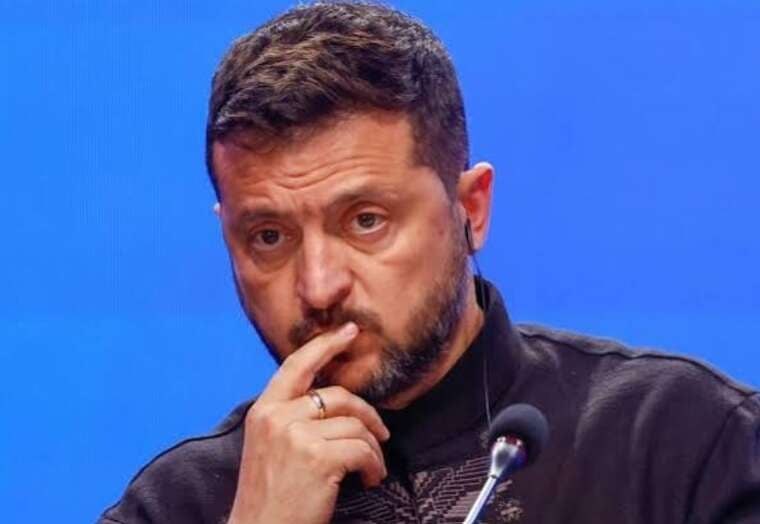
Ukrainian President urged avoiding repetition of historical precedents of dividing the world into spheres of influence during potential summit with Trump, Putin and Xi Jinping.
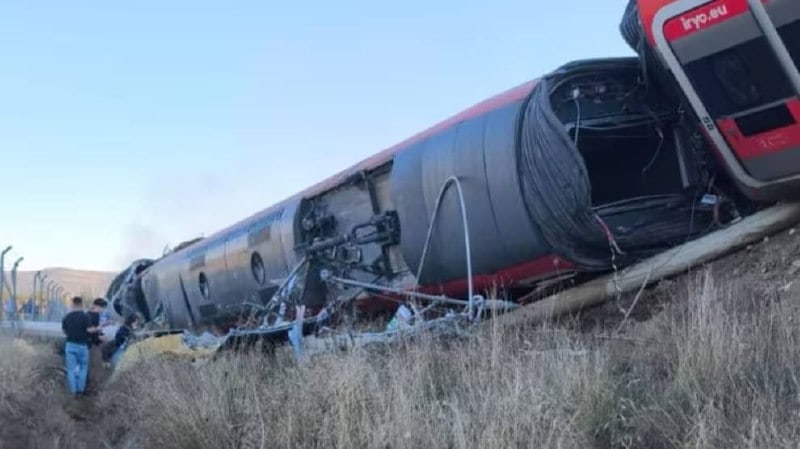
Two passenger trains collided in Spain on the morning of 28 October. Emergency services are at the scene, and traffic on the Madrid–Andalusia section has been temporarily suspended.

Customs officers at the Mohyliv-Podilskyi border crossing discovered a hidden compartment containing tobacco products in a semi-trailer. The Moldovan driver was detained.
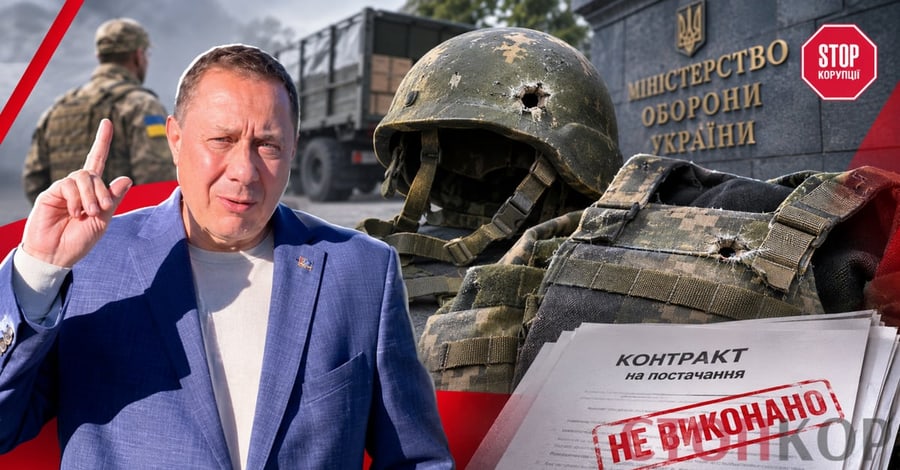
Investigation reveals systemic violations in the procurement of helmets and body armour for the Armed Forces of Ukraine. Some companies secured contracts worth hundreds of millions but failed to fulfil their obligations, resulting in substantial fines.

Commercial court ruled in favour of the prosecution regarding the dismantling of a fence enclosing over 2,100 sq m of communal land.
New data from the Kyiv International Institute of Sociology (KIIS) records the resilience of public sentiment in the face of military challenges. The study, conducted from 16 to 25 October 2026, indicates that a significant portion of the population maintains readiness for a prolonged confrontation with Russia, despite attacks on infrastructure and international uncertainty.
The main finding of the poll is that 63% of respondents state their readiness to endure the war for as long as necessary. A further 5% of citizens assess their endurance as within one year. However, there is another part of society: 21% of those surveyed believe they can withstand such circumstances for a period ranging from a few months to half a year. 11% of study participants were unable to clearly determine their position.
KIIS experts note that compared to the previous stage of the poll, conducted from 8 to 16 October, no significant shifts in responses are observed. This confirms the stability of public consensus on the necessity of continuing resistance despite the difficult situation in the energy sector and external pressure.
An analysis of data by region revealed certain differences in attitudes towards the duration of the war:
Sociologists emphasise that the interpretation of these regional differences must take into account the statistical margin of error and the sample size in each specific region.
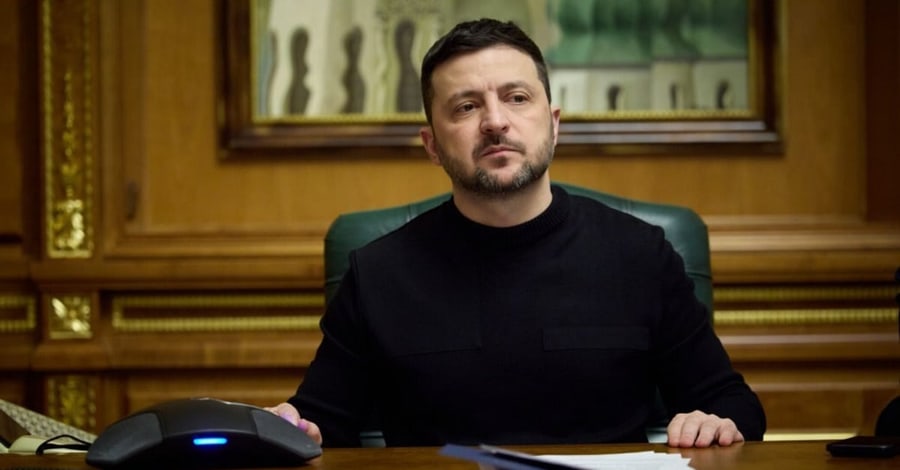
A separate block of the study is dedicated to the level of trust in President Volodymyr Zelensky. Overall, 62% of Ukrainians stated that they trust the head of state, while 35% expressed distrust. The trust balance stands at +27 percentage points.
Sociologists recorded a clear positive dynamic throughout October:
KIIS suggests that such dynamics may be partially explained by the effect of societal cohesion in the face of external pressure. At the same time, researchers do not rule out the influence of methodological factors on the difference between the results of individual poll waves.
Researchers also found out how Ukrainians view possible large-scale Russian strikes on energy infrastructure. 76% of citizens are convinced that even in the event of the enemy attempting to leave the population without electricity, heat, and sewage, Ukraine is obliged to continue armed resistance.
The opposite opinion is held by 15% of respondents, who believe that under such circumstances it would be worth agreeing to Russia's demands, even if this would effectively mean capitulation. A further 9% of poll participants did not determine their position.
Also, 80% of those surveyed support continuing strikes on Russian oil refineries, even in a scenario where the US threatens to limit or stop aid to Ukraine, and Russia does not take on reciprocal obligations. 11% of respondents expressed opposition to such actions.
The KIIS study was conducted via telephone interviews from 16 to 25 October 2026. The total sample comprised 828 adult citizens of Ukraine residing in government-controlled territory.
The sample did not include residents of temporarily occupied territories or Ukrainians who left the country after 24 February 2022. The formal statistical margin of error for indicators close to 50% does not exceed 4.4 percentage points. Sociologists warn of possible additional deviations characteristic of studies conducted under conditions of active hostilities.
Comments
No comments yet. Be the first!